Thailand has two coasts with opposite weather, and picking the wrong one for your month is the most common way an otherwise good trip gets rained on. The Andaman side, meaning Phuket and Krabi, is best from November to April. The Gulf side, meaning Koh Samui and Koh Phangan, holds up later into the year and gets its worst weather in November.
The best places to visit in Thailand below are grouped as most people travel: Bangkok first, then either the islands or the northern hills. Doing both islands and Chiang Mai in under ten days means two internal flights and a lot of airport time.
What are the best places to visit in Thailand?
The best places to visit in Thailand are Bangkok's Grand Palace and Wat Pho, the beaches of Phuket and Krabi, the limestone karsts of Phang Nga Bay, Chiang Mai's old city temples, and Ayutthaya's ruins. The Andaman coast is best from November to April.
- The Grand Palace and Wat Phra Kaew, Bangkok
- Wat Pho and the Reclining Buddha
- Wat Arun
- Chatuchak Weekend Market
- Ayutthaya
- Phuket
- Phang Nga Bay and James Bond Island
- Krabi and Railay Beach
- Phi Phi Islands
- Chiang Mai old city
- Doi Suthep
- Elephant sanctuaries near Chiang Mai
- Chiang Rai and the White Temple
- Pattaya
- Koh Samui and the Gulf islands
1.The Grand Palace and Wat Phra Kaew, Bangkok
The royal complex built in 1782, holding the Emerald Buddha, a 66 cm jade figure that is the most revered object in the country and gets its robes changed by the King three times a year.
It is the busiest attraction in Thailand and it is worth queueing for. Go at opening rather than mid-morning.
Dress code: strictly enforced. Shoulders and knees covered for everyone, no see-through fabric, no sandals without a back strap. Cover-ups are rented at the gate but the queue for them is long. Open 8.30am to 3.30pm.
2.Wat Pho and the Reclining Buddha
A ten-minute walk from the Grand Palace, holding a 46-metre gilded reclining Buddha with mother-of-pearl inlay on the soles of its feet.
Wat Pho is also the birthplace of Thai massage and still runs a school on site, which is the correct place to have one rather than a shopfront on Khao San.
Combine: Grand Palace, Wat Pho and Wat Arun across the river are one long morning. Take the cross-river ferry to Wat Arun for a few baht rather than a tour boat.
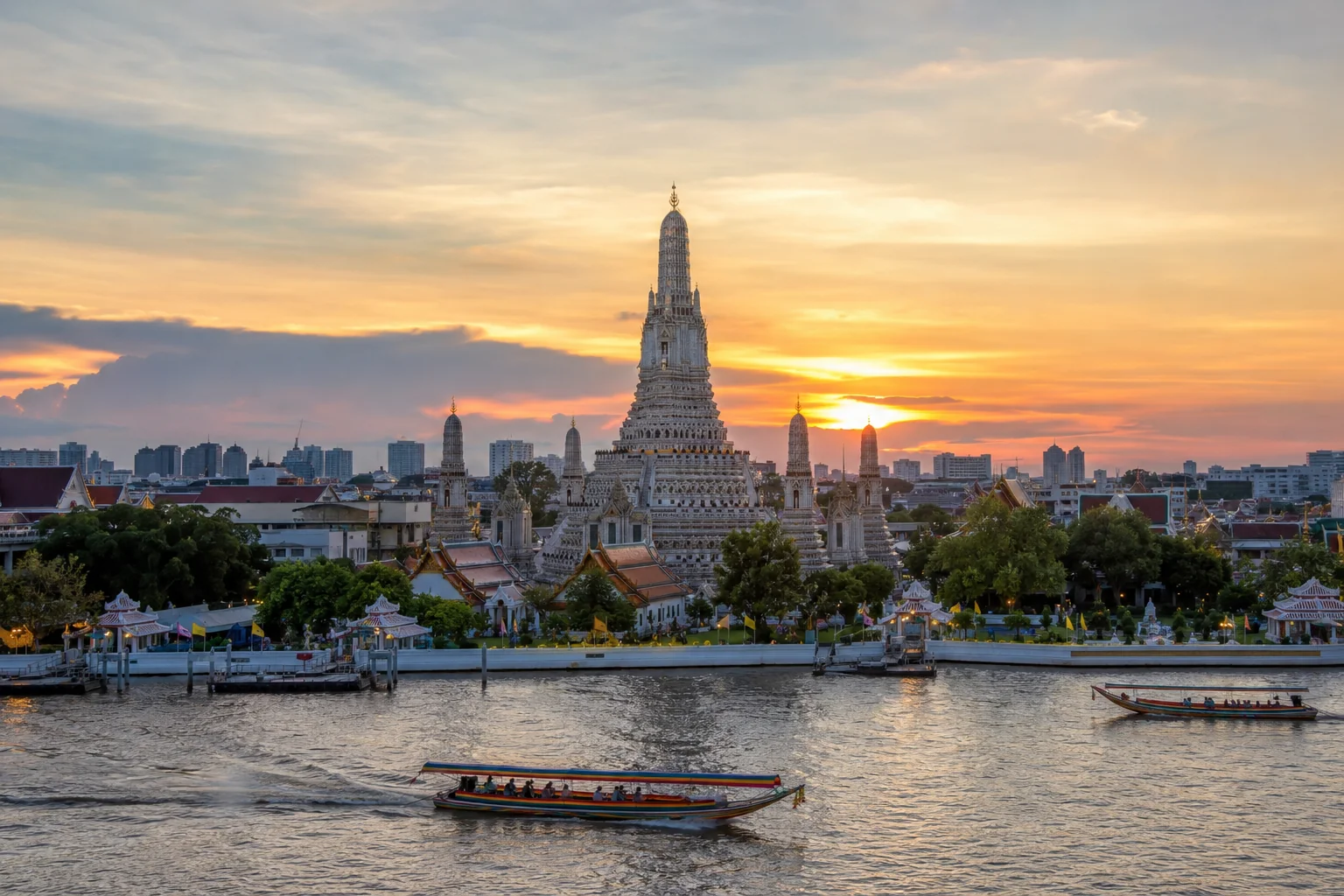
3.Wat Arun
The Temple of Dawn, on the Thonburi bank, its central prang encrusted with broken Chinese porcelain that was originally ballast in trading ships.
It is better at sunset from the opposite bank than up close in daylight, though you can climb the steep steps partway.
Best view: from a riverside restaurant on the Bangkok side after dark, when it is lit. The cross-river ferry from Tha Tien runs until around 9pm.
4.Chatuchak Weekend Market
Fifteen thousand stalls over 35 acres, open Saturday and Sunday, selling everything from ceramics to secondhand denim to plants.
It is genuinely possible to lose several hours and your sense of direction here. The numbered sections and the clock tower are the only reliable landmarks.
When: Saturday and Sunday only, roughly 9am to 6pm, with a smaller Friday night wholesale session. Go early; by noon the aisles are shoulder to shoulder and the heat under the roof is significant.
5.Ayutthaya
The Siamese capital from 1350 until the Burmese destroyed it in 1767, now a UNESCO site of brick prangs and headless Buddhas 80 km north of Bangkok.
The Buddha head grown into the roots of a fig tree at Wat Mahathat is the image everyone knows.
Getting there: about 90 minutes by train from Bangkok's Krung Thep Aphiwat, or a day trip by road. Hire a bicycle at the station; the ruins are spread over several kilometres and walking between them in the heat is a mistake.
6.Phuket
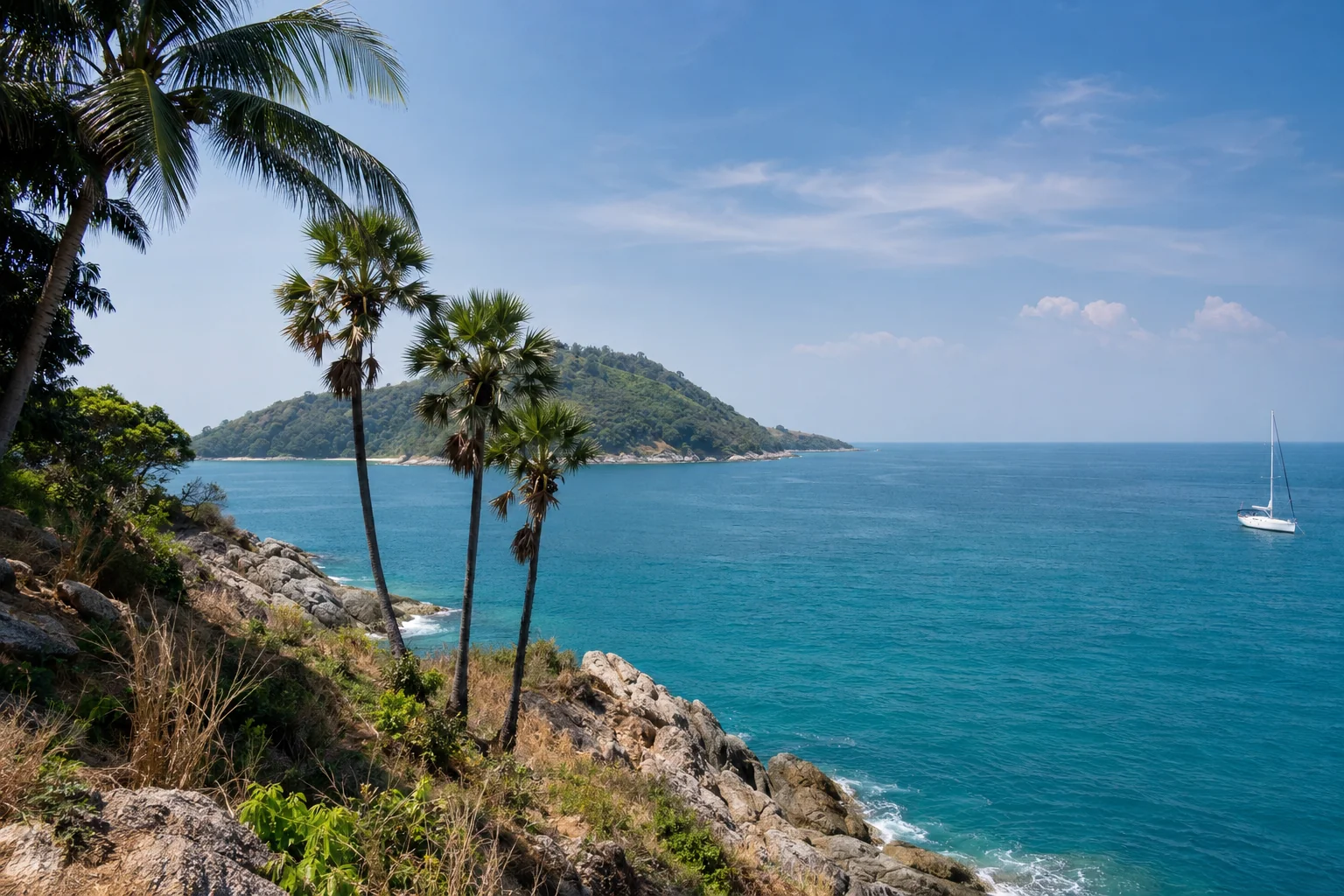
The largest island in Thailand, connected to the mainland by bridge, and the base for most Andaman itineraries. Patong is the loud end; Kata, Karon and Nai Harn are progressively quieter going south.
Old Phuket Town, with its Sino-Portuguese shophouses, is the part most beach visitors miss entirely.
Which beach: Patong for nightlife, Kata and Karon for families, Nai Harn and Bang Tao for quiet. Monsoon swells from May to October make swimming dangerous on the west coast; take red flags seriously.
7.Phang Nga Bay and James Bond Island
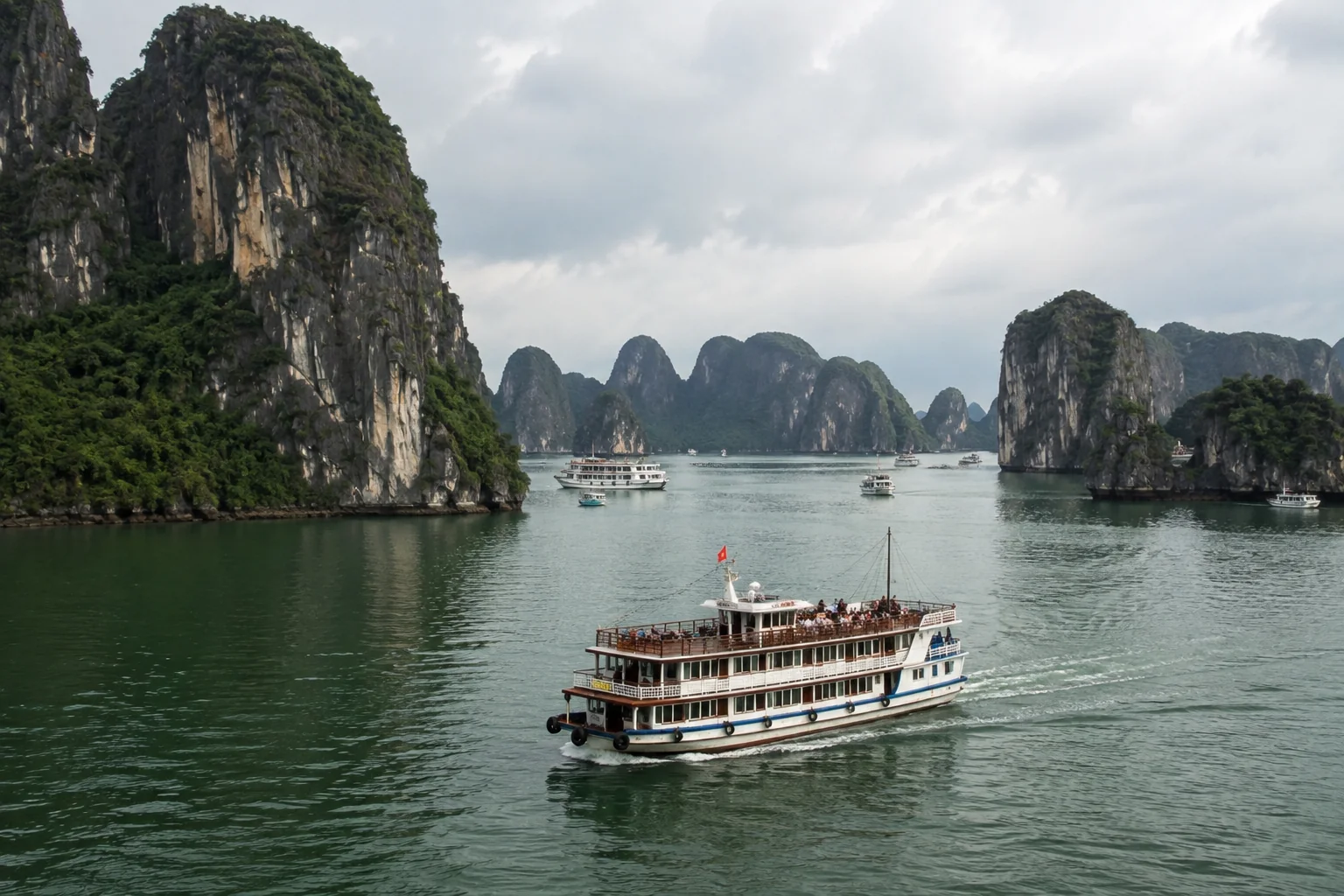
Limestone karsts rising vertically out of shallow green water, with sea caves and hongs you enter by canoe at the right tide. Khao Phing Kan appeared in The Man with the Golden Gun and has been called James Bond Island ever since.
Go by longtail from Phuket or Krabi, and pick an operator that runs the canoes rather than just circling the rocks.
Tide matters: the hongs, the collapsed caves inside the karsts, are only accessible at certain tides. Ask the operator whether your departure time actually gets you inside them.
8.Krabi and Railay Beach
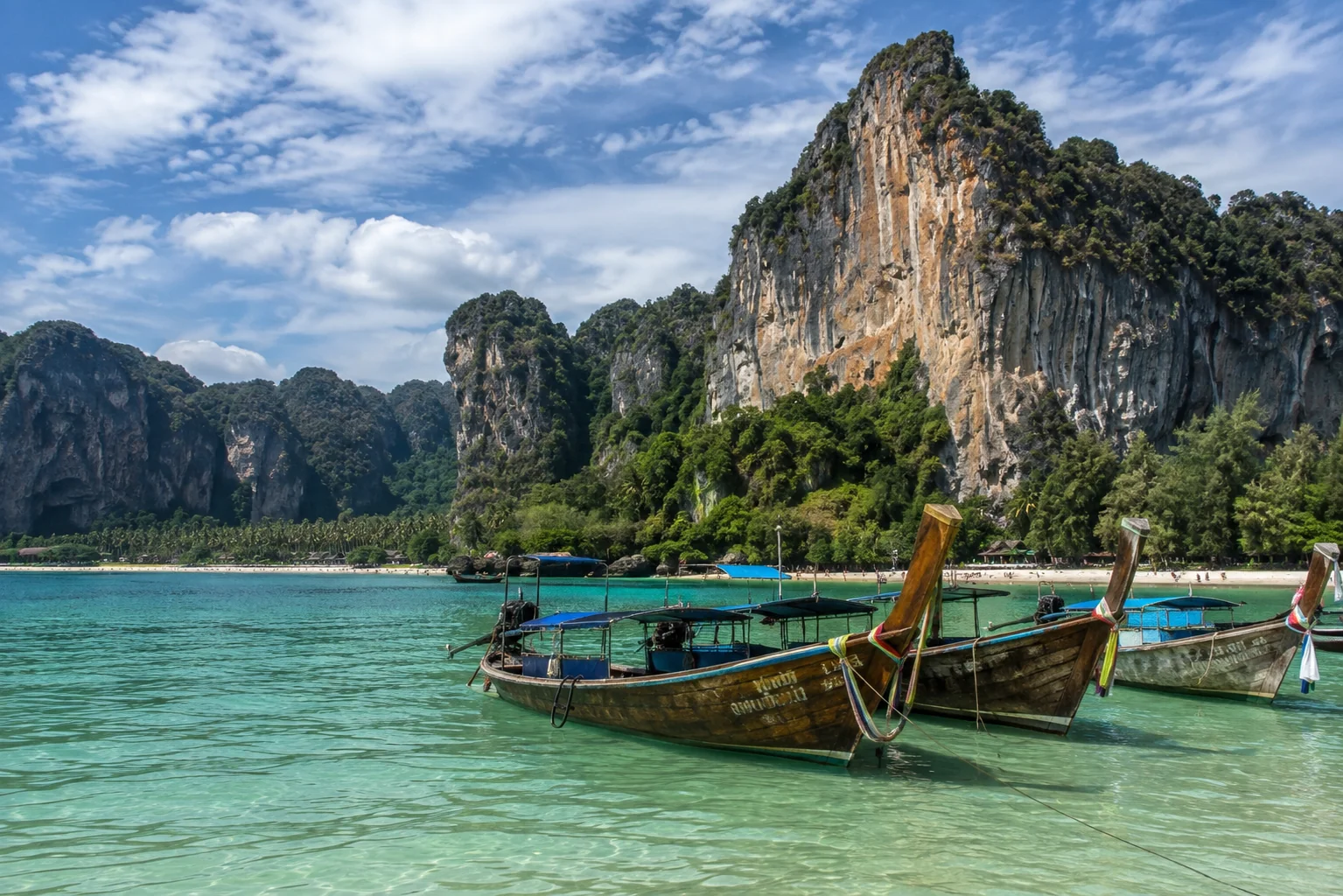
Railay is cut off from the mainland by headlands, so you arrive by longtail from Ao Nang even though it is not an island. Limestone walls rise straight off the sand, which is why it is one of the best-known climbing spots in Asia.
Ao Nang is the practical base; Railay is the one worth the boat.
Longtail boats: run on a fill-and-go basis from Ao Nang, roughly 15 minutes, and stop after dark. Last boats from Railay are around 6pm, later in high season. Confirm before you settle in for sunset drinks.
9.Phi Phi Islands
Two main islands between Phuket and Krabi. Phi Phi Don has the accommodation and the nightlife; Phi Phi Leh is uninhabited and holds Maya Bay of The Beach fame.
Maya Bay was closed for years to let the reef recover and reopened with strict limits. Swimming in the bay itself is no longer permitted.
Maya Bay rules: visitor numbers and boat access are capped, boats moor at the rear of the island, and the bay closes annually for reef recovery, usually August to September. Book through an operator that holds a current permit.
10.Chiang Mai old city
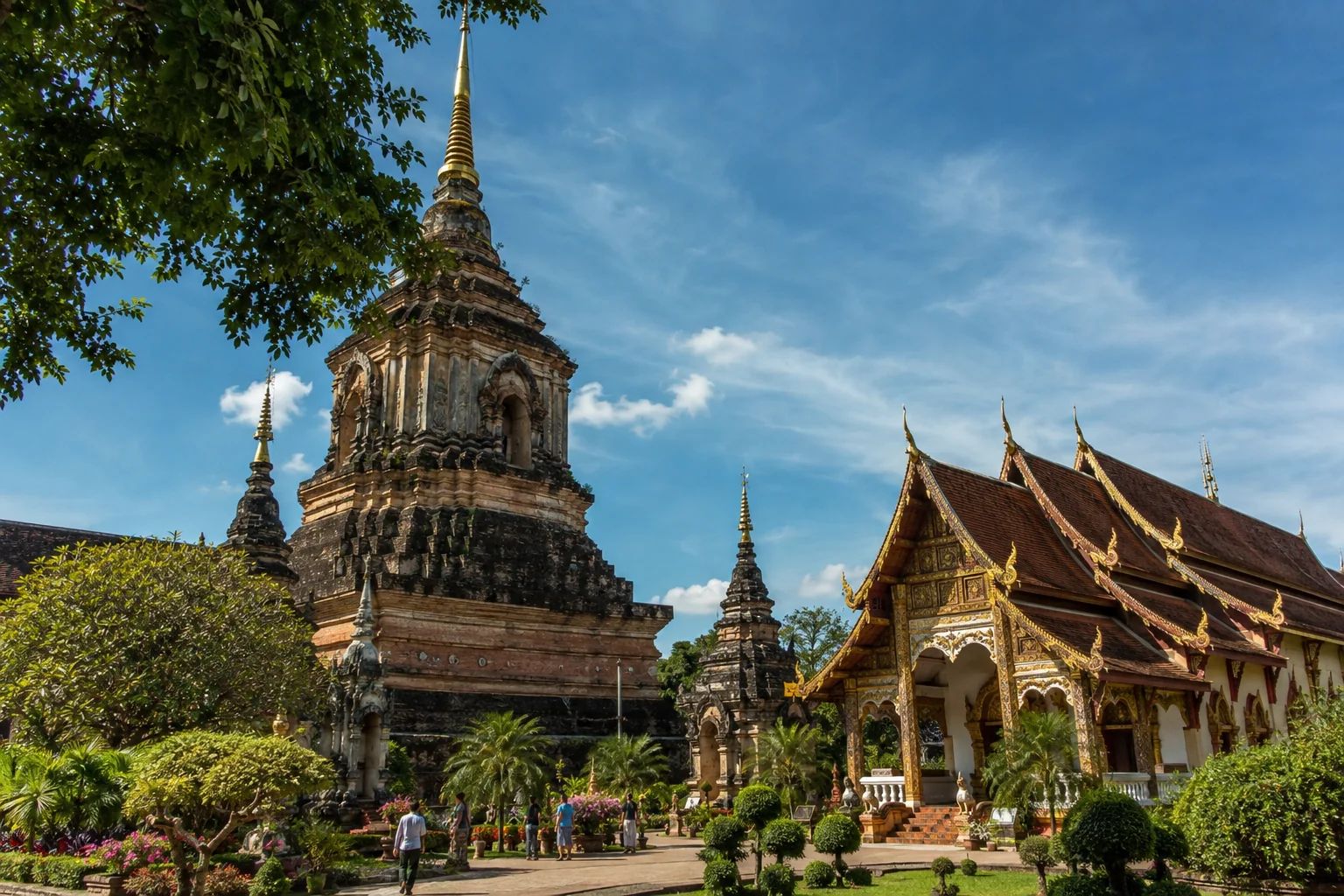
A walled square of moat and temples in the north, at 300 metres and noticeably cooler than the coast. Wat Chedi Luang, Wat Phra Singh and around thirty others sit inside the walls.
It is the only Thai city you can cover properly on foot, which after Bangkok is a relief.
Avoid March and April: agricultural burning across the north fills the valley with smoke, and Chiang Mai regularly records the worst air quality of any city in the world during those weeks.
11.Doi Suthep
The temple on the mountain above Chiang Mai at 1,073 metres, reached by 306 naga-flanked steps or a funicular, with the whole valley laid out below the terrace.
Legend has it a white elephant carrying a relic climbed the hill, trumpeted three times and died on the spot, which settled the question of where to build.
Timing: early morning for haze-free views and monks' chanting; late afternoon for the light. Songthaews run up from Chiang Mai University gate. Dress code applies as at any working temple.
12.Elephant sanctuaries near Chiang Mai
There are genuine rescue and retirement sanctuaries in the hills around Chiang Mai, and there are places that call themselves sanctuaries while still offering rides.
The distinction matters. No ethical facility puts a saddle on an elephant or runs a bathing session where visitors scrub animals on demand all day.
How to check: no riding, no performances, no chained animals, no unlimited bathing sessions, and observation from a distance rather than constant contact. Ask directly before booking. We only work with facilities that meet these.
13.Chiang Rai and the White Temple
Wat Rong Khun, three hours north of Chiang Mai, is a contemporary art installation in the form of a temple, begun in 1997 by artist Chalermchai Kositpipat and still unfinished.
The bridge in crosses a field of reaching hands representing desire. It is strange, immaculate and entirely unlike anything else in the country.
Day trip length: Chiang Rai is 3 hours each way from Chiang Mai, making a long day. The Blue Temple and Black House are usually combined on the same run. Overnight if you can.
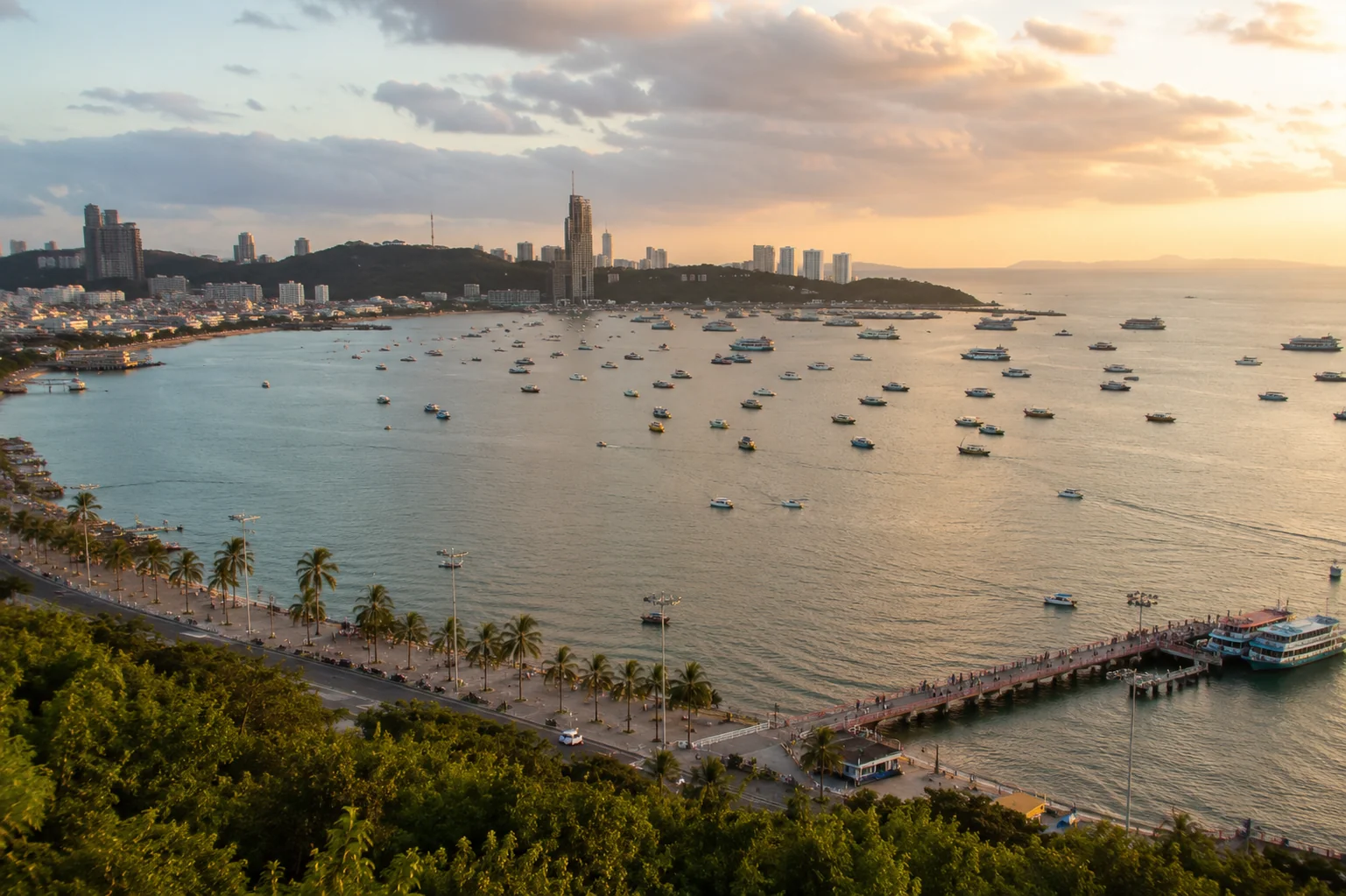
14.Pattaya
Two hours from Bangkok on the Gulf coast, and the closest beach resort to the capital. It has a reputation and it earns parts of it, but Jomtien at the south end is quieter and family-oriented.
The Sanctuary of Truth, an enormous all-teak carved structure on the shore, is the thing worth going for.
Sanctuary of Truth: hard hats are issued and required, because it is a permanent construction site by design. Still unfinished after 40 years and expected to remain so.
15.Koh Samui and the Gulf islands
The Gulf coast runs on a different weather pattern to the Andaman: driest from December to April but generally usable most of the year, with its heaviest rain in October and November.
Samui has the infrastructure and an airport, Koh Tao has the diving, and Koh Phangan has the full moon party and a great deal of quiet coastline away from it.
Opposite seasons: if you are travelling in October or November, the Gulf is the wrong coast and the Andaman is the right one. In May to September the reverse is often true.
Best time to visit Thailand
Thailand has three seasons nationally, but the coast you pick matters more than the month you pick.
| Months | What it is like | Verdict |
|---|---|---|
| November – February | Cool and dry. The best months nationally and peak season on the Andaman coast. Book early. | Best overall |
| March – May | Hot, up to 40°C. Northern burning season makes Chiang Mai's air genuinely unhealthy in March and April. | Avoid the north |
| June – October | Southwest monsoon. Andaman coast has swells and rain; the Gulf coast and Samui stay more usable. | Gulf coast only |
| October – November | Heaviest rain on the Gulf islands, while the Andaman side is drying out and reopening. | Andaman coast |
How to get to Thailand
Thailand is one of the easiest international trips from India, with direct flights from most metros.
By air. Bangkok's Suvarnabhumi and Don Mueang take direct flights from Delhi, Mumbai, Kolkata, Chennai, Bengaluru and Hyderabad. Phuket and Chiang Mai also have some direct services from India.
Getting around. Domestic flights are cheap and frequent: Bangkok to Phuket or Chiang Mai takes under 90 minutes. Overnight trains to Chiang Mai are comfortable and save a hotel night.
Visa. Entry requirements for Indian passport holders have changed repeatedly in recent years, including periods of visa exemption. Check the official e-visa portal for the position on your travel dates rather than relying on older advice.
Thailand travel questions, answered
Official sources
Permit rules, fees and seasonal closures change. These are the government pages we check against, and the ones to confirm your own dates with before you travel.
- Thai e-Visa, Ministry of Foreign Affairs, Kingdom of Thailand — current visa requirements and applications by nationality