Darjeeling is small. The best places to visit in Darjeeling mostly sit within a few kilometres of the Chowrasta ridge, which means you can see the town properly in three days without ever spending more than forty minutes in a car.
The two things people plan badly are the Tiger Hill sunrise and the toy train. Tiger Hill needs a 4am start and a booked vehicle. The Darjeeling Himalayan Railway sells its joyride seats days ahead in season and runs a reduced service when the monsoon damages the line. Both are covered below.
What are the best places to visit in Darjeeling?
The best places to visit in Darjeeling are Tiger Hill for the sunrise over Kanchenjunga, the Darjeeling Himalayan Railway toy train, Batasia Loop, Chowrasta and the Mall, the Happy Valley tea estate, and Ghum Monastery. Most of the town can be covered comfortably in three days.
- Tiger Hill
- Darjeeling Himalayan Railway (the toy train)
- Batasia Loop and the war memorial
- Chowrasta and the Mall
- Happy Valley Tea Estate
- Ghum Monastery (Yiga Choeling)
- Padmaja Naidu Himalayan Zoological Park
- Himalayan Mountaineering Institute
- Peace Pagoda (Nipponzan Myohoji)
- Observatory Hill and Mahakal Temple
- Rock Garden and Ganga Maya Park
- Japanese Peace Temple tea rooms and Keventer's
- Mirik
- Kurseong
- Singalila National Park and Sandakphu
1.Tiger Hill
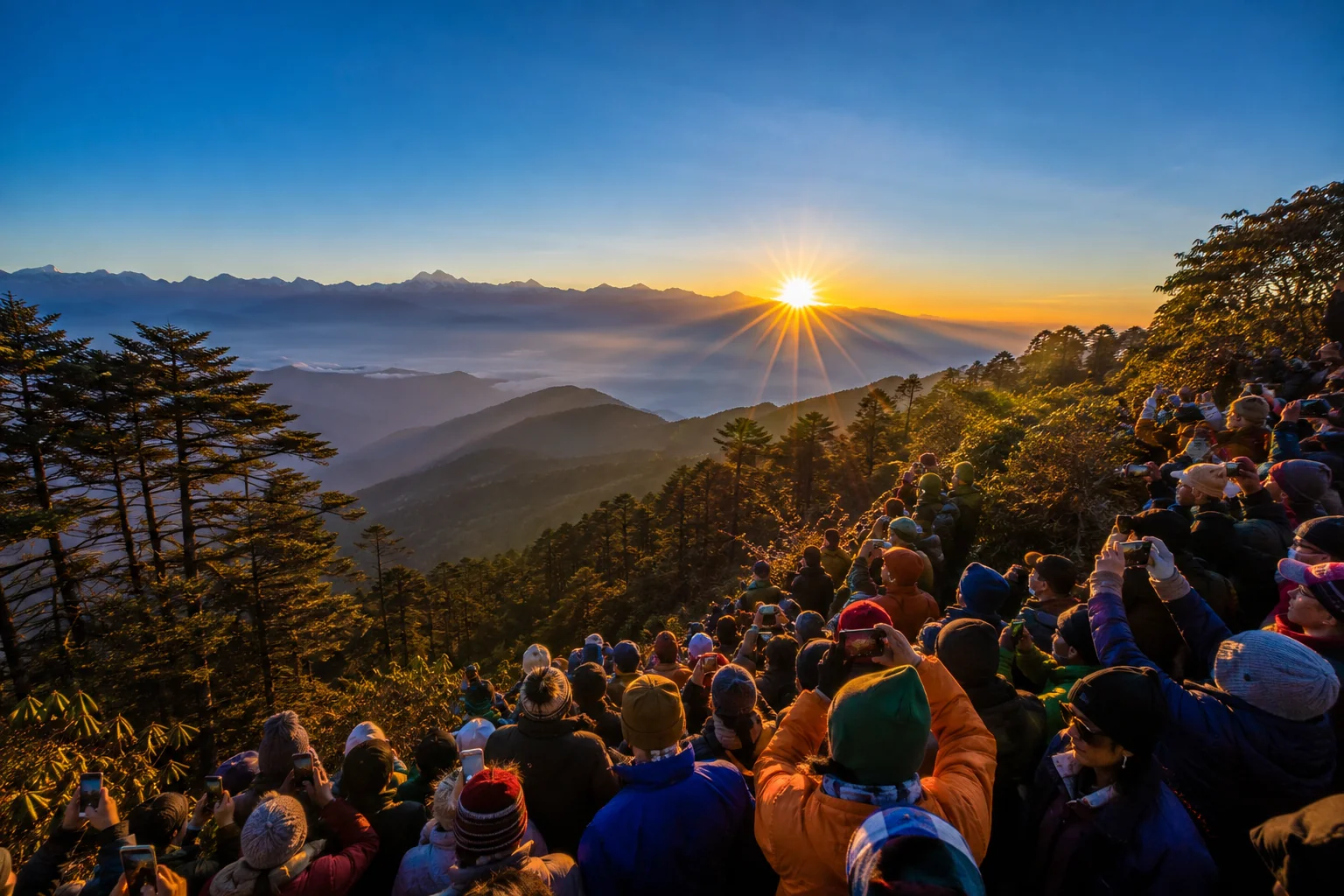
At 2,590 metres, 11 km south of town, and the reason half the visitors to Darjeeling are awake at four in the morning. On a clear day the sun comes up over Kanchenjunga first, turning it gold before the light reaches the valley, and on an exceptional day you can see Everest 170 km to the west.
It is also, in season, several hundred vehicles parked on a hillside and a viewing platform three deep. Neither of those facts cancels the other out.
Tiger Hill sunrise timing: leave Darjeeling by 4am, earlier from late October. Entry is ticketed with tiered viewing lounges, and vehicles must be registered. Book the day before. Cloud in June to September usually means no view at all.
2.Darjeeling Himalayan Railway (the toy train)
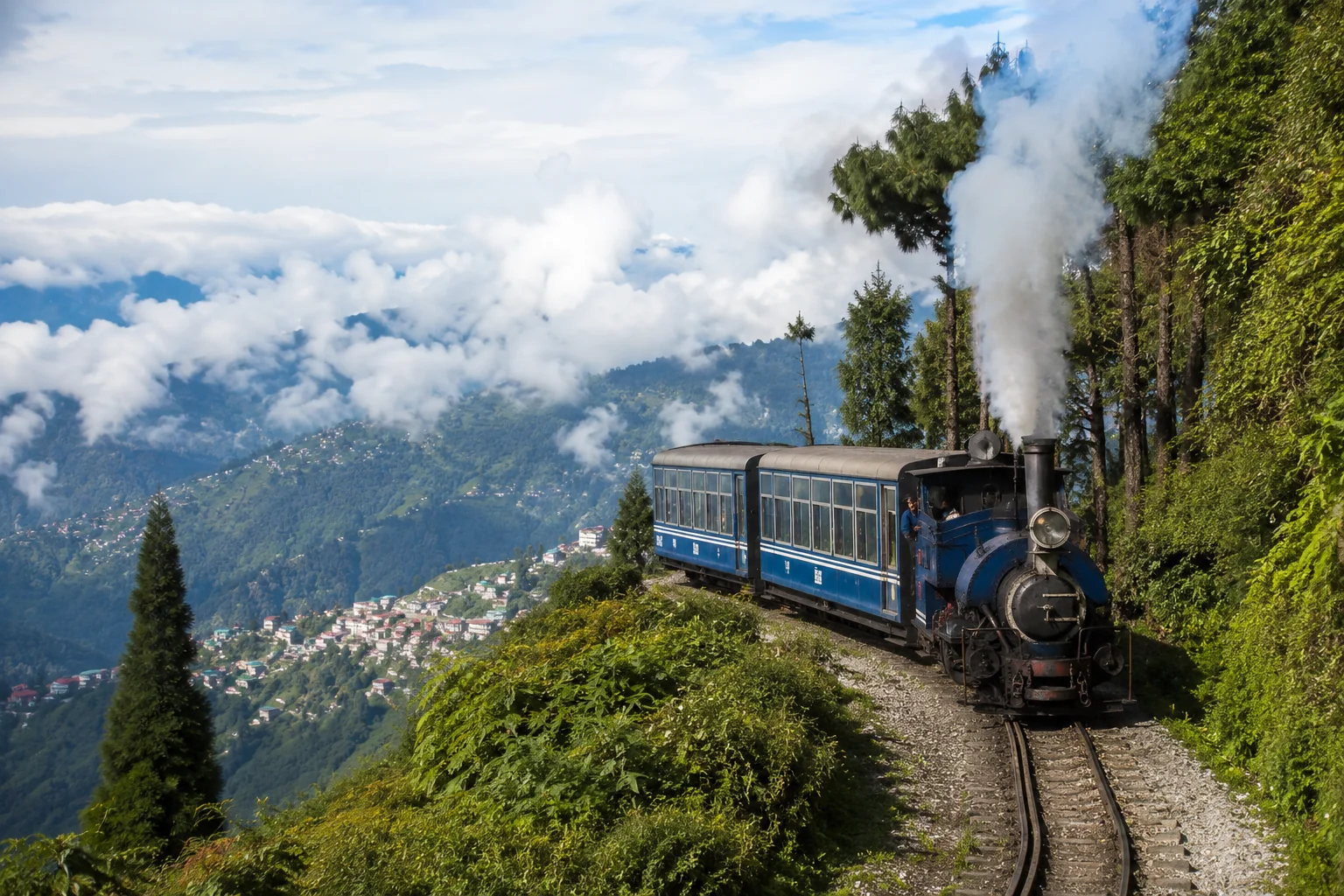
A two-foot gauge line built in 1881, still running on its original alignment, and a UNESCO World Heritage Site since 1999. The steam joyride between Darjeeling and Ghum takes about two hours including the halt at Batasia.
The full run down to New Jalpaiguri exists but takes seven hours and is diesel-hauled. Almost everybody wants the short steam service.
Toy train Darjeeling ticket booking: joyride seats open 30 days ahead through IRCTC and sell out in season. Steam services are limited and cost more than diesel. Landslides regularly suspend the NJP section between June and September.
3.Batasia Loop and the war memorial
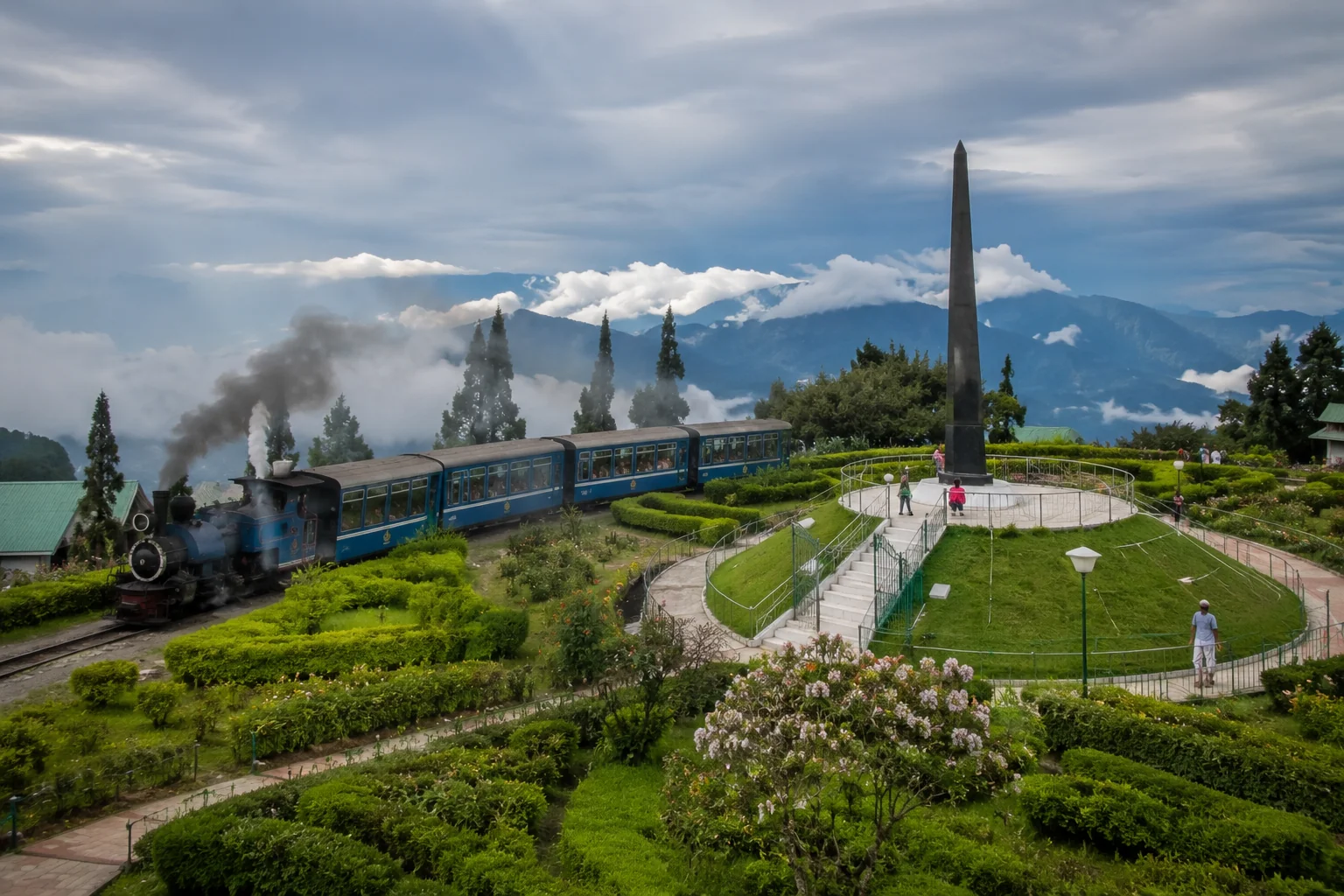
The track spirals through a full circle here to lose height, and the toy train takes it slowly enough that everyone gets out. In the middle stands the memorial to Gorkha soldiers killed since 1947.
The garden around it looks straight up at Kanchenjunga on a clear morning, which is why the joyride stops for ten minutes.
Where: 5 km from Darjeeling on the Ghum road. Small entry fee for the garden. Reachable by road if you are not taking the train.
4.Chowrasta and the Mall
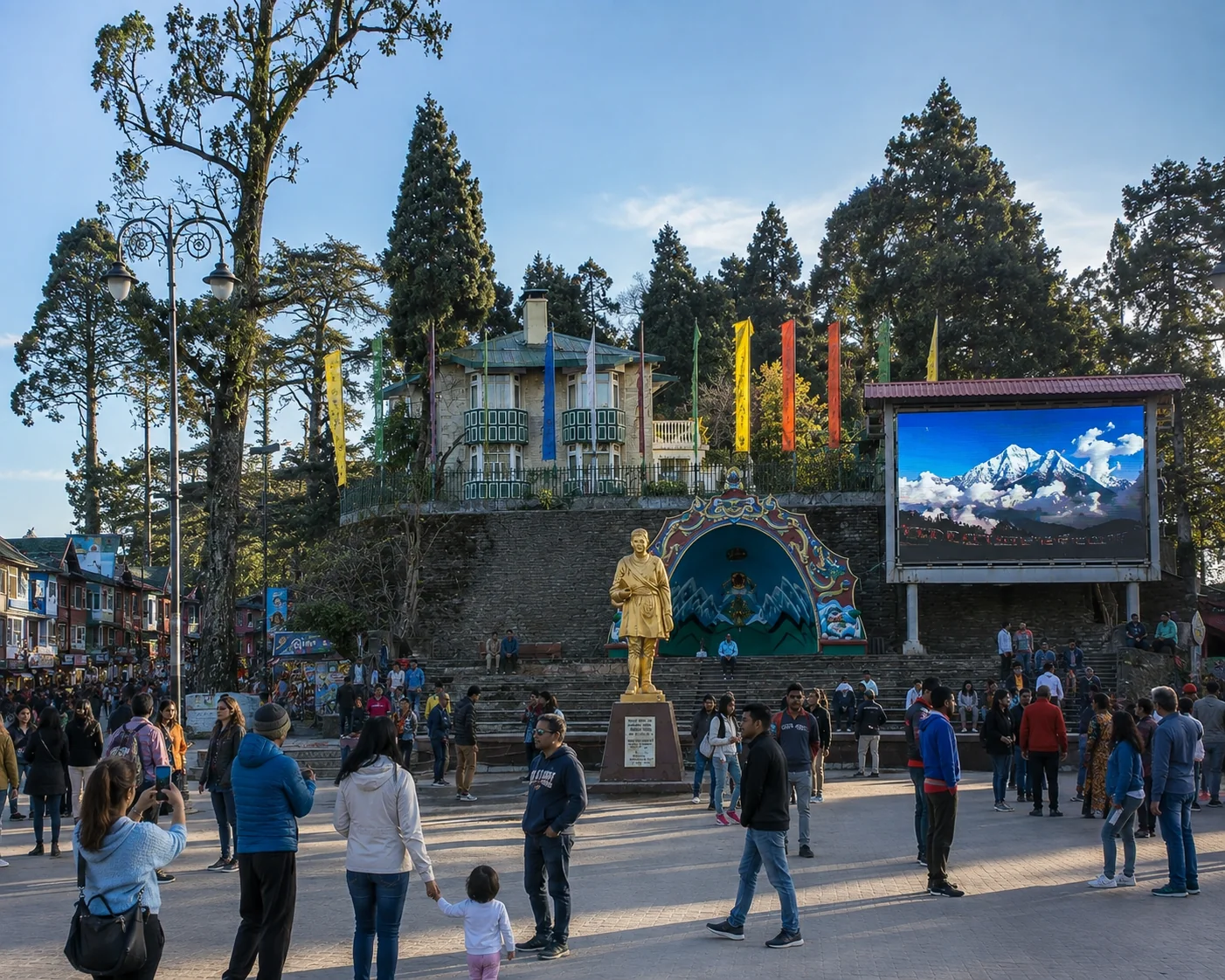
The flat open square at the top of the ridge, ringed by benches and bookshops, with the Mall Road running off it around the hillside. No vehicles.
This is where Darjeeling sits down. Come at four in the afternoon, get tea, and watch the cloud come up the valley.
Nearby: Oxford Book Store and Glenary's are both a short walk. The Mall Road circuit around Observatory Hill takes about 30 minutes on foot and is level the whole way.
5.Happy Valley Tea Estate
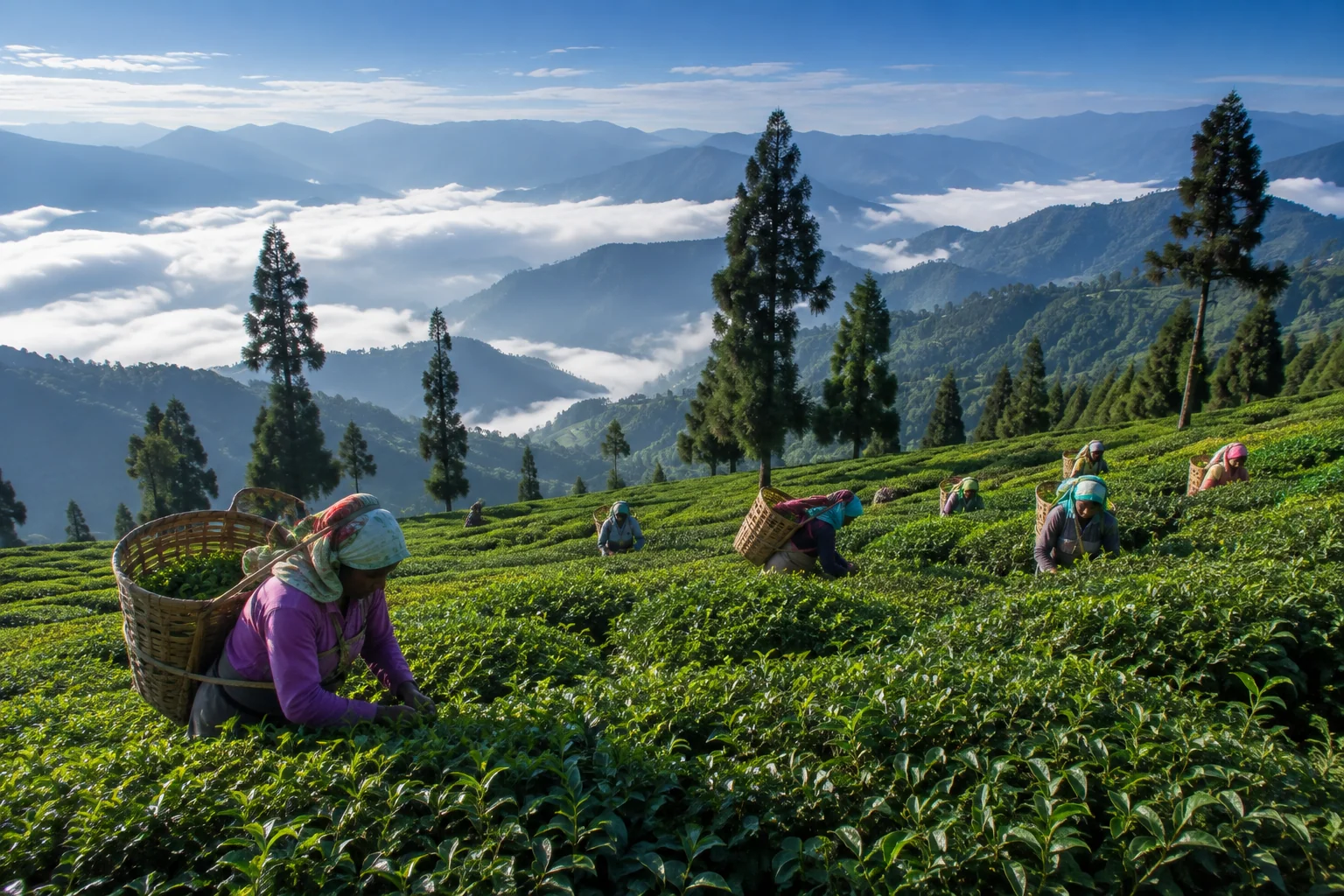
Planted in 1854 and the closest working garden to town, about 3 km below Chowrasta. The factory takes visitors through withering, rolling and drying when plucking is on.
Second flush, plucked from late May to June, is the one Darjeeling is famous for. The first flush in spring is lighter and more expensive.
Visiting a tea garden: the factory only runs during plucking season, roughly March to November, and is closed Mondays and often Sundays. Outside season you can walk the garden but there is nothing being made.
6.Ghum Monastery (Yiga Choeling)
Built in 1850 at 2,400 metres, the oldest Tibetan Buddhist monastery in the area, holding a five-metre statue of the Maitreya Buddha.
It sits beside Ghum station, the highest railway station in India, so most people take both in the same stop.
Combine: Ghum Monastery, Ghum station and Batasia Loop are within 2 km of each other and are usually done in one morning with Tiger Hill.
7.Padmaja Naidu Himalayan Zoological Park
A specialist high-altitude breeding centre rather than a general zoo, with snow leopards, red pandas and Tibetan wolves. It runs the country's snow leopard conservation programme.
The enclosures are built into the hillside, so it is a walk with gradients rather than a stroll.
Practical: closed Thursdays. One ticket covers both the zoo and the Himalayan Mountaineering Institute on the same site. Allow two hours for both.
8.Himalayan Mountaineering Institute
Founded in 1954 after Tenzing Norgay summited Everest, and directed by him for decades. The museum holds equipment from the early Everest expeditions, and Tenzing's memorial is on the grounds.
For anyone interested in how those climbs were actually done with the gear of the time, this is the best collection in India.
Entry: shared ticket with the zoo, closed Thursdays. The museum is small and takes about 45 minutes.
9.Peace Pagoda (Nipponzan Myohoji)
Built by a Japanese Buddhist order and completed in 1992, standing on Jalapahar hill with four avatars of the Buddha around the drum.
The drumming ceremony at dawn and again in the late afternoon is open to anyone who turns up.
Timing: prayer drumming around 4.30am and 4.30pm. The walk up from the Mall takes 25 minutes and is steep.
10.Observatory Hill and Mahakal Temple
The original site of the Dorje Ling monastery that gave the town its name, now shared by a Hindu temple and Buddhist shrines with prayer flags over everything.
Monkeys here are numerous and unafraid. Do not carry food or anything loose.
Access: a five-minute climb from Chowrasta. Free. The macaques will take spectacles and phones, and this is not a joke about them.
11.Rock Garden and Ganga Maya Park
Terraced gardens around a waterfall 10 km below town on the Hill Cart Road, cut into the slope with seating at each level.
The drive down is quick. The drive back up is 40 minutes in low gear, which is worth knowing before you go late in the day.
Timing: go in the morning. The return climb is slow and the road is single-lane in places.
12.Japanese Peace Temple tea rooms and Keventer's
Keventer's rooftop above the Mall has been serving breakfast since 1911, and the terrace looks straight down the valley.
It is unashamedly a tourist institution. The sausages are still good and the view is free with the coffee.
Go early: the rooftop fills by 9am in season. Cash is still preferred at several of the older Mall establishments.
13.Mirik
A lake town at 1,500 metres, 50 km from Darjeeling on the road towards Siliguri, built around Sumendu Lake with a footbridge across it and pine on the far bank.
It works well as a stop on the way in or out rather than a day trip from Darjeeling.
Route note: Mirik sits on the Siliguri–Darjeeling road via Dudhia, so adding it costs about an hour on transfer day rather than a whole day from town.
14.Kurseong
Thirty kilometres down the line at 1,450 metres, where the toy train runs along the main street close enough to touch the shopfronts. Warmer than Darjeeling and far quieter.
Cochrane Place and the older colonial houses here are the reason people stop.
Best bit: the stretch where the railway shares the road through Kurseong bazaar. Trains pass a few times a day; ask locally for the timing rather than guessing.
15.Singalila National Park and Sandakphu
The ridge west of Darjeeling, rising to 3,636 metres at Sandakphu, the highest point in West Bengal and the only place where Everest, Lhotse, Makalu and Kanchenjunga are visible together.
It is a trek of two to four days from Manebhanjan, or a jolting ride in a 1950s Land Rover on the same track.
Permits and season: entry permits are issued at Manebhanjan and the park closes from mid-June to mid-September for monsoon. Best months are October to December and March to May. Nights at Sandakphu drop below freezing.
Best time to visit Darjeeling
Darjeeling has a short view season and a long cloudy one. What you are really booking around is whether Kanchenjunga will be out.
| Months | What it is like | Verdict |
|---|---|---|
| March – May | Warm days, rhododendrons on the Singalila ridge, first and second flush tea. Views good but hazier than autumn. | Good |
| June – September | Monsoon. Heavy rain, landslides on the Hill Cart Road, the toy train's lower section often suspended, and no mountain views. | Avoid |
| October – early December | The clearest skies of the year. Kanchenjunga visible most mornings, Tiger Hill at its best. Peak season and peak prices. | Best |
| Late December – February | Cold, quiet and often very clear. Occasional snow on the ridge. Some hotels close. | Good, if you pack for it |
How to get to Darjeeling
Darjeeling has no airport and no station of its own beyond the hill railway, so everyone comes up through the plains at Siliguri.
By air. Bagdogra is the nearest airport, 70 km and roughly 3 hours by road. It has direct flights from Delhi, Kolkata, Mumbai, Bengaluru and Guwahati.
By rail. New Jalpaiguri (NJP) is the main railhead. From there it is 3 hours by shared or private vehicle up the Hill Cart Road, or seven hours on the toy train if you have the time and want the ride rather than the transfer.
From Jaigaon. Our office at the Bhutan border gate is about 4 hours from Darjeeling, which is why Bhutan and Darjeeling combine so easily in one trip.
Darjeeling travel questions, answered
Official sources
Permit rules, fees and seasonal closures change. These are the government pages we check against, and the ones to confirm your own dates with before you travel.
- Darjeeling Himalayan Railway, Indian Railways — toy train schedules, steam service availability and line status
- West Bengal Tourism — Tiger Hill entry rules, Singalila permits and accommodation listings