The best places to visit in Bhutan sit closer together than most people expect. Paro, Thimphu and Punakha form a compact western circuit you can cover properly in six or seven nights, and almost every road you drive between them climbs a pass with a view. This guide runs through fifteen of them in the order you would actually travel, west to east from the border.
One thing decides how smoothly the trip goes, and it is not the weather. Indian nationals do not need a visa for Bhutan, but you do need an entry permit issued at Phuentsholing, plus the Sustainable Development Fee. The permit counter is a few minutes from our office at the Jaigaon border gate, which is why we process this for our guests in person rather than leaving them to queue.
What are the best places to visit in Bhutan?
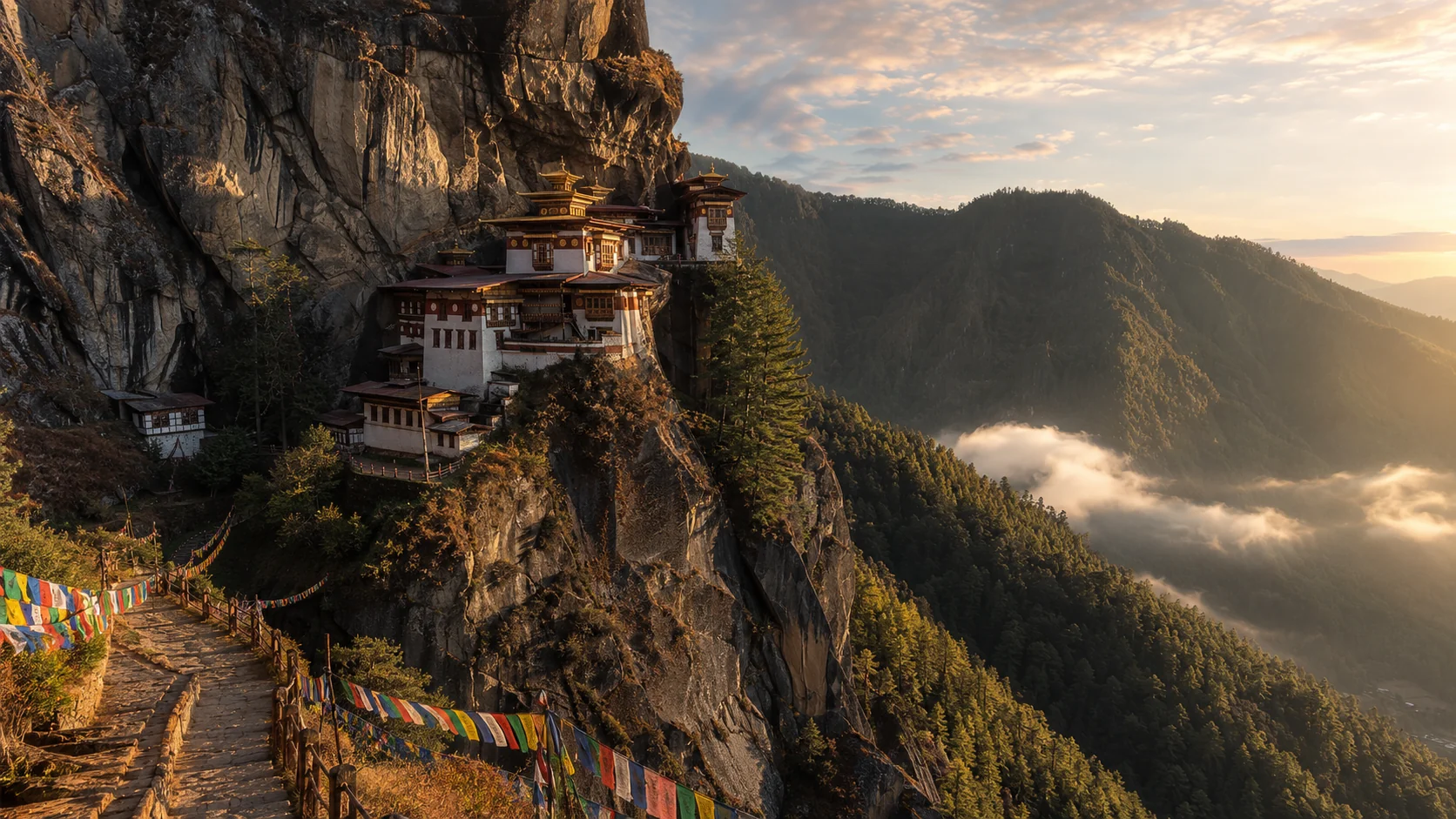
The best places to visit in Bhutan are Tiger's Nest monastery in Paro, Punakha Dzong at the river confluence, Dochula Pass with its 108 chortens, the Buddha Dordenma above Thimphu, and Phobjikha Valley, where black-necked cranes winter. Most travellers cover Paro, Thimphu and Punakha in six nights.
- Tiger's Nest (Paro Taktsang)
- Kyichu Lhakhang, Paro
- Rinpung Dzong and the cantilever bridge
- National Museum of Bhutan (Ta Dzong)
- Buddha Dordenma, Thimphu
- Tashichho Dzong, Thimphu
- National Memorial Chorten
- Motithang Takin Preserve
- Dochula Pass and the 108 chortens
- Punakha Dzong
- Punakha Suspension Bridge
- Chimi Lhakhang
- Phobjikha Valley and Gangtey Goenpa
- Haa Valley
- Phuentsholing and the border gate
1.Tiger's Nest (Paro Taktsang)
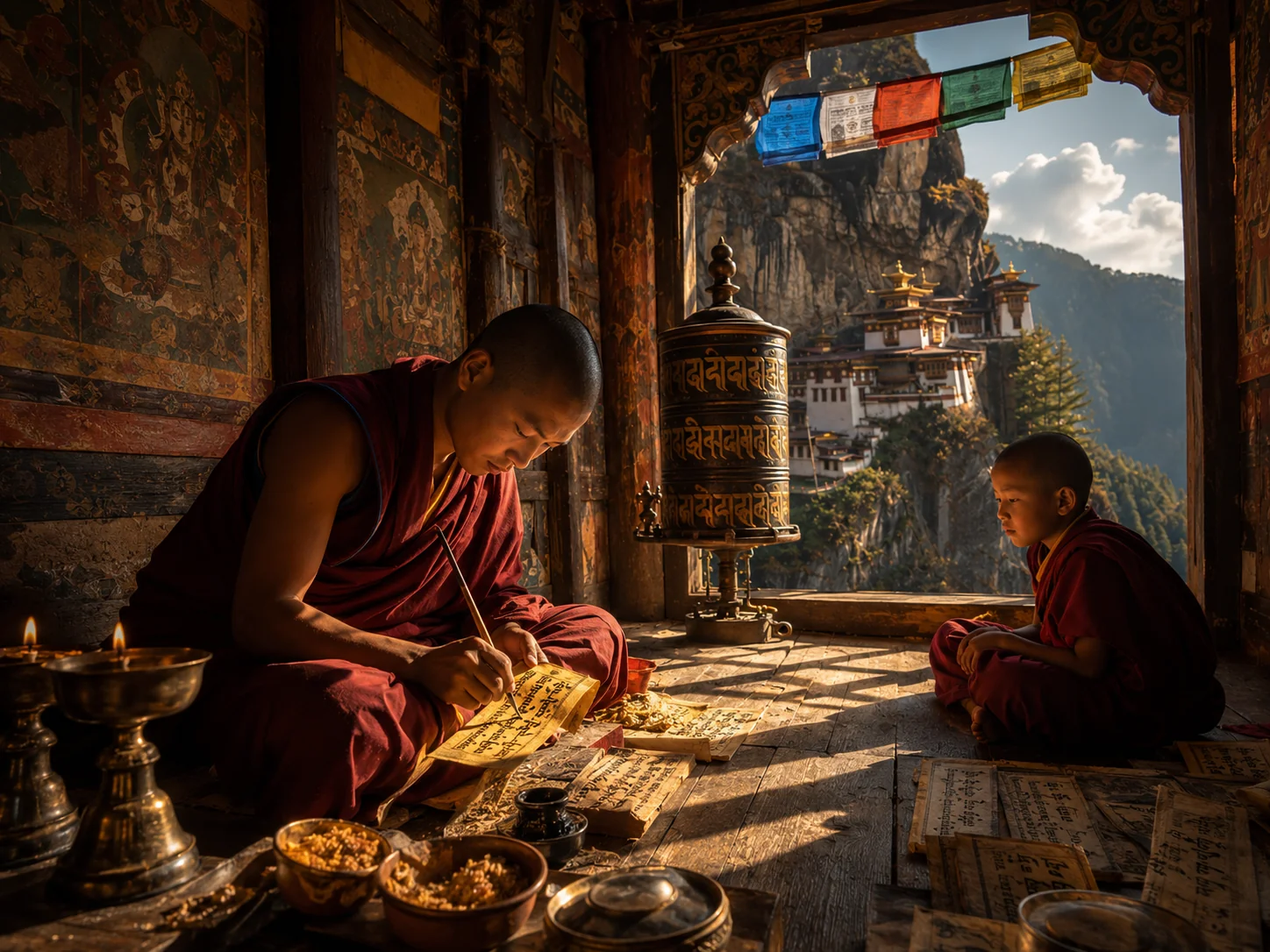
The monastery clings to a granite cliff 900 metres above the Paro valley floor, and it is the one image everybody carries into Bhutan. Guru Rinpoche is said to have flown here on a tigress in the 8th century; the buildings you see date mostly from 1692 and a 1998 restoration after a fire.
It is a walk rather than a climb: a steady switchback through blue pine with a cafeteria at the halfway point where most people stop for tea and reconsider their footwear. The final stretch drops down a staircase into the gorge and back up, which is the part that surprises people.
Tiger's Nest trek difficulty: 4–5 hours return, roughly 3.5 km each way on a good path. Ponies go as far as the cafeteria only. Start by 8am, when the light is better and the afternoon crowd is heavier. Cameras and phones must be left in lockers at the entrance.
2.Kyichu Lhakhang, Paro
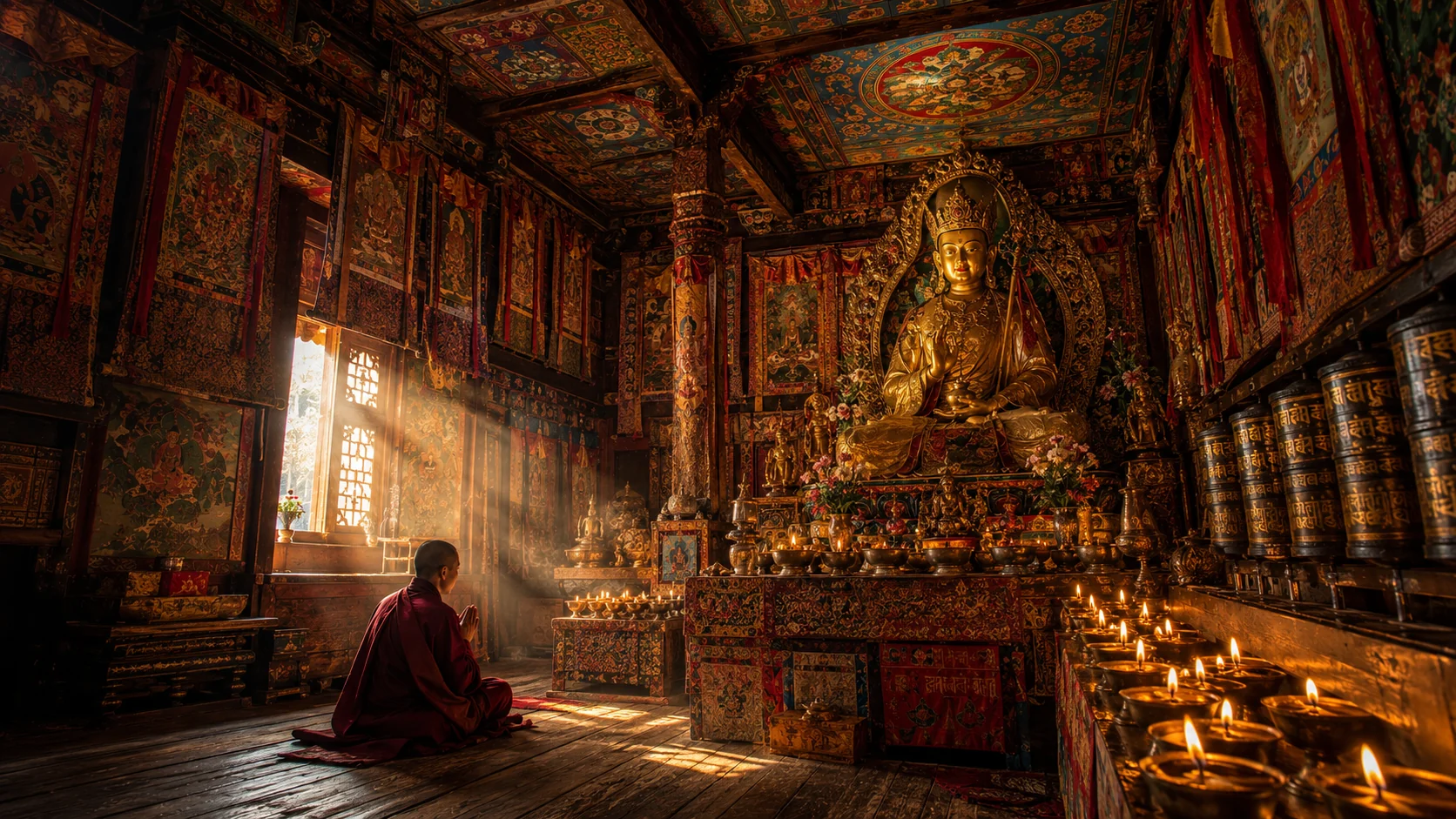
One of the oldest temples in the country, built in the 7th century by the Tibetan king Songtsen Gampo as one of 108 raised in a single night to pin down an ogress lying across the Himalayas. The orange trees in the courtyard are said to fruit year-round.
It takes twenty minutes to see and is worth every one of them. Go before Tiger's Nest rather than after; it sets the context for everything else you will look at.
Entry: included in your permit; no separate ticket. Photography is not permitted inside the shrine rooms. Shoes off, hats off, shoulders and knees covered.
3.Rinpung Dzong and the cantilever bridge
The fortress-monastery above Paro town is still a working administrative centre and monastic school, so you are walking through a building that does a job rather than a museum piece. The whitewashed walls slope inward, the courtyards are enormous, and the woodwork in the upper galleries is the best introduction to Bhutanese joinery you will get.
Approach on foot across Nyamai Zam, the traditional cantilever bridge below it. The photograph everyone wants is from the far bank, looking back.
Timing: open 9am–5pm, closes for lunch around 1pm on weekdays. If your dates fall in late March or early April, the Paro Tsechu is held in this courtyard and the dzong is closed to general visits during the festival hours.
4.National Museum of Bhutan (Ta Dzong)
The old watchtower above Rinpung Dzong, circular and seven storeys deep into the hillside, now holds the national collection: thangkas, festival masks, textiles, arms, and a natural history floor.
It is the fastest way to understand what you are looking at for the rest of the trip, particularly the mask gallery if you are travelling in festival season.
Practical: closed Mondays. Roughly an hour. The walk up from the dzong is steep but short; vehicles can drop you at the upper gate.
5.Buddha Dordenma, Thimphu
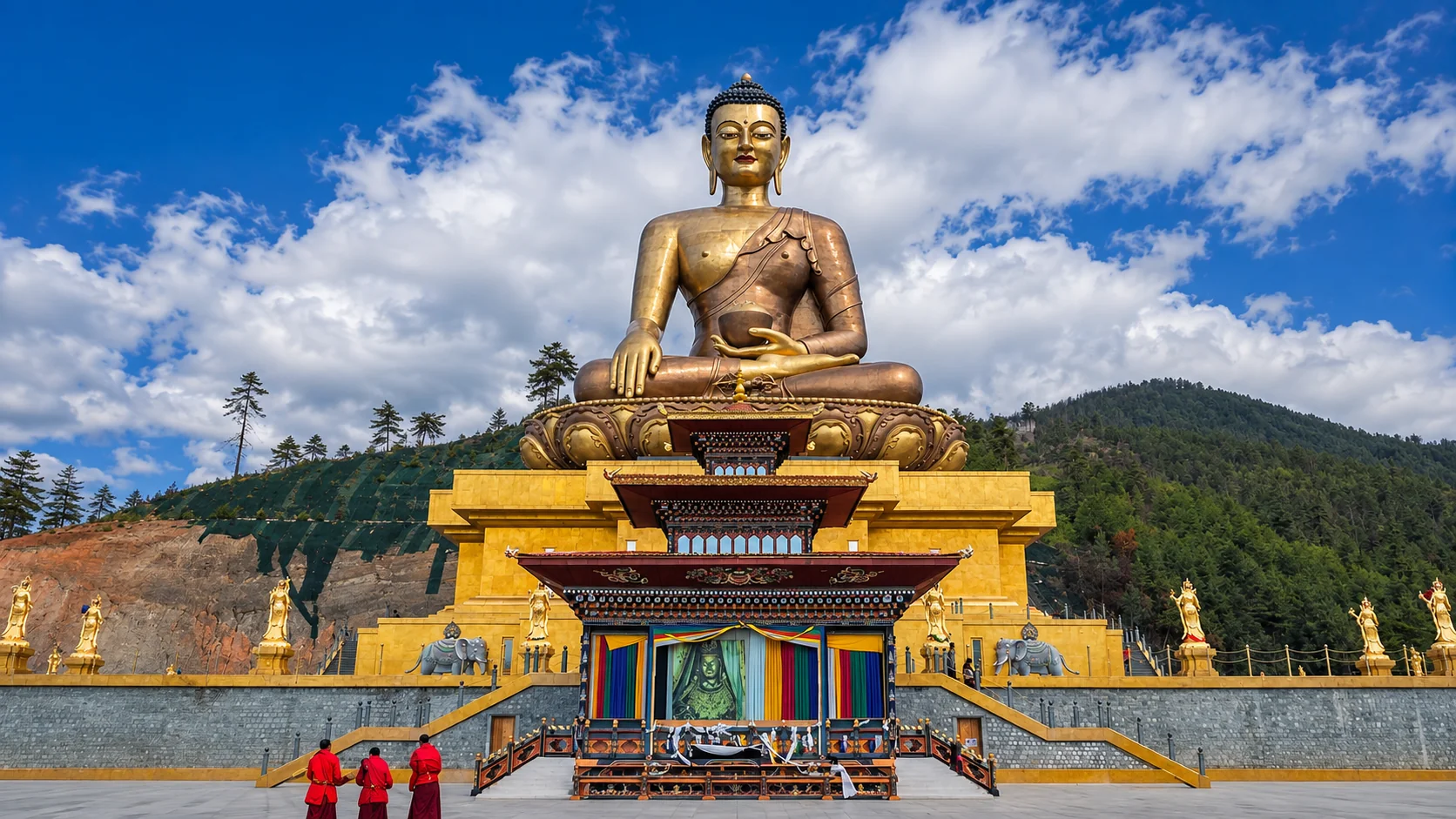
A 51-metre gilded Shakyamuni seated above the southern entrance to the Thimphu valley, with 125,000 smaller Buddha statues housed inside the throne. It was completed in 2015 and is visible from most of the capital.
The terrace is the best single viewpoint over Thimphu, and it is unusually good at sunset when the valley lights come on below you.
Best time of day: late afternoon for the light and the view; early morning if you want the terrace to yourself. Free entry. The road up is steep but paved throughout.
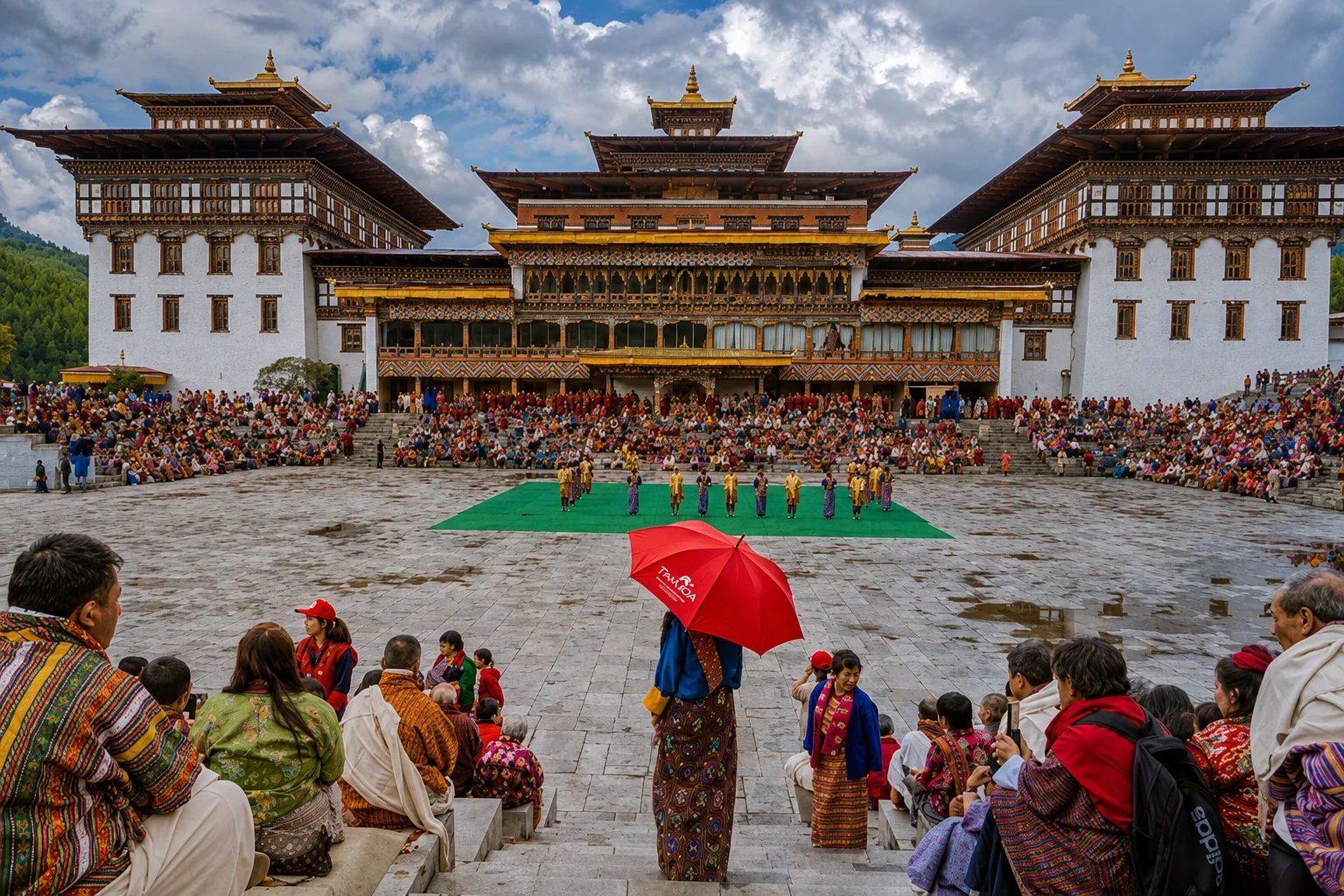
6.Tashichho Dzong, Thimphu
The seat of government and the summer residence of the Je Khenpo, Bhutan's chief abbot. It houses the throne room alongside the monk body, which tells you something about how the country is organised.
Because it is a working seat of government, tourists visit outside office hours, which conveniently means late afternoon, when the exterior floodlights come on and the whole thing glows above the Wang Chhu river.
Visiting hours: weekdays from 5pm (after office hours), weekends and public holidays from 9am. Formal dress expected. The flag-lowering ceremony is worth timing your arrival around.
7.National Memorial Chorten
Built in 1974 in memory of the third king, this is where Thimphu goes to walk. Elderly residents circumambulate it from dawn, spinning the prayer wheels, and the atmosphere is the most ordinary and most genuine thing in the capital.
Fifteen minutes here in the early morning will tell you more about daily Bhutanese life than an afternoon anywhere else.
Go early: between 6.30am and 8am the chorten is busy with local worshippers, not tour groups. Walk clockwise. Free entry.
8.Motithang Takin Preserve
The takin is Bhutan's national animal and looks like the result of a committee decision, with a goat's head on a bison's body. Legend credits its creation to the 15th-century saint Drukpa Kunley, who assembled one from the bones of the animals he had eaten for lunch.
The preserve is a fenced patch of forest above Thimphu rather than a zoo, so sightings depend on where the herd has wandered. Half an hour, and children find it the highlight of the capital.
Timing: feeding is mid-morning and late afternoon, which is when the animals come close to the fence. Closed Mondays. Small entry fee.
9.Dochula Pass and the 108 chortens
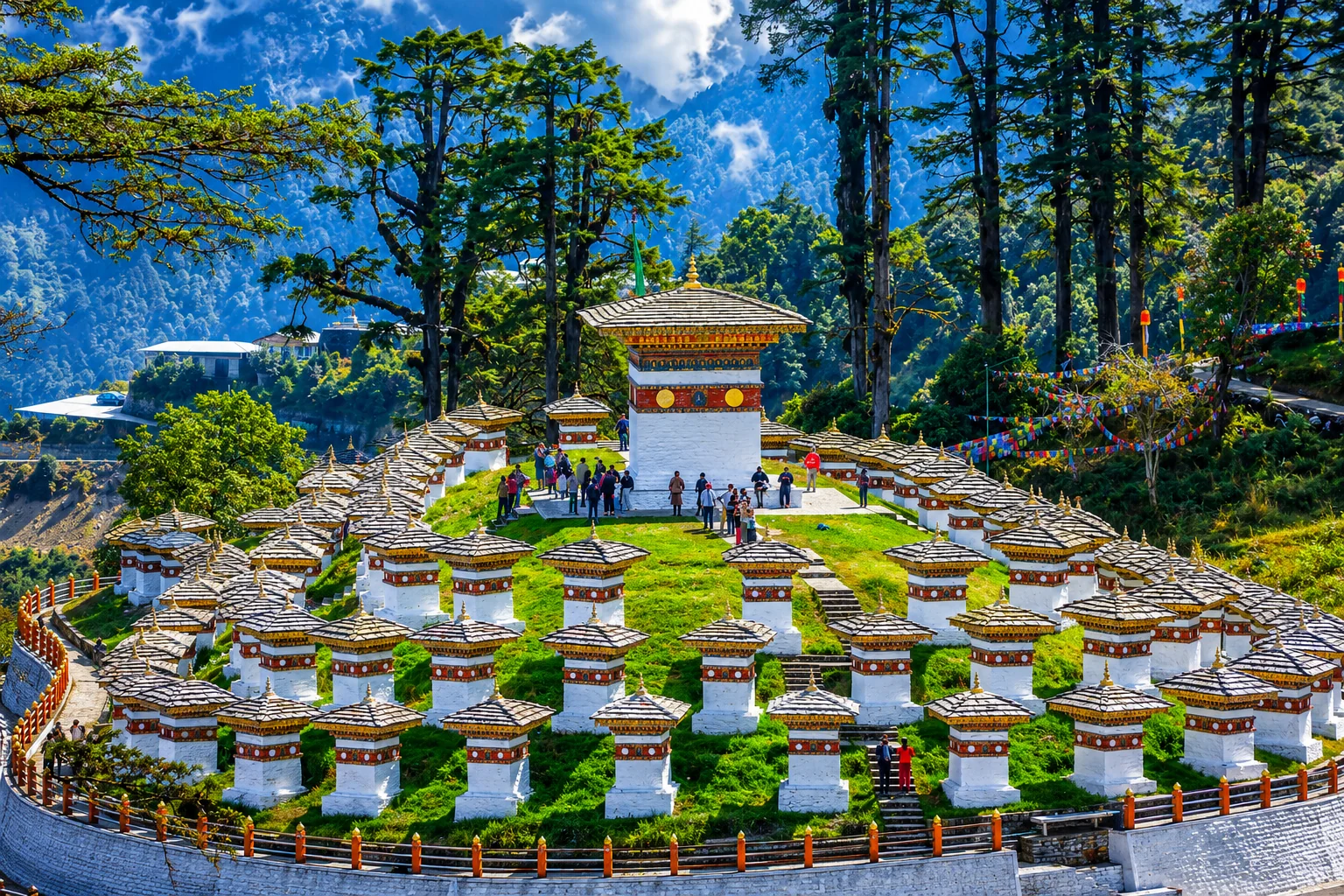
At 3,100 metres on the Thimphu–Punakha road, Dochula carries 108 memorial chortens built in 2004 and, on a clear morning, a 180-degree wall of the eastern Himalayas including Gangkhar Puensum, the highest unclimbed mountain in the world.
The pass is the reason to leave Thimphu early. By eleven the cloud usually comes up the valley and the range disappears for the day.
Dochula Pass best time to visit: October to February for the clearest mountain views, and always before 9am. There is a café with heating at the pass, which is welcome because it is 10–12°C colder than Thimphu.
10.Punakha Dzong
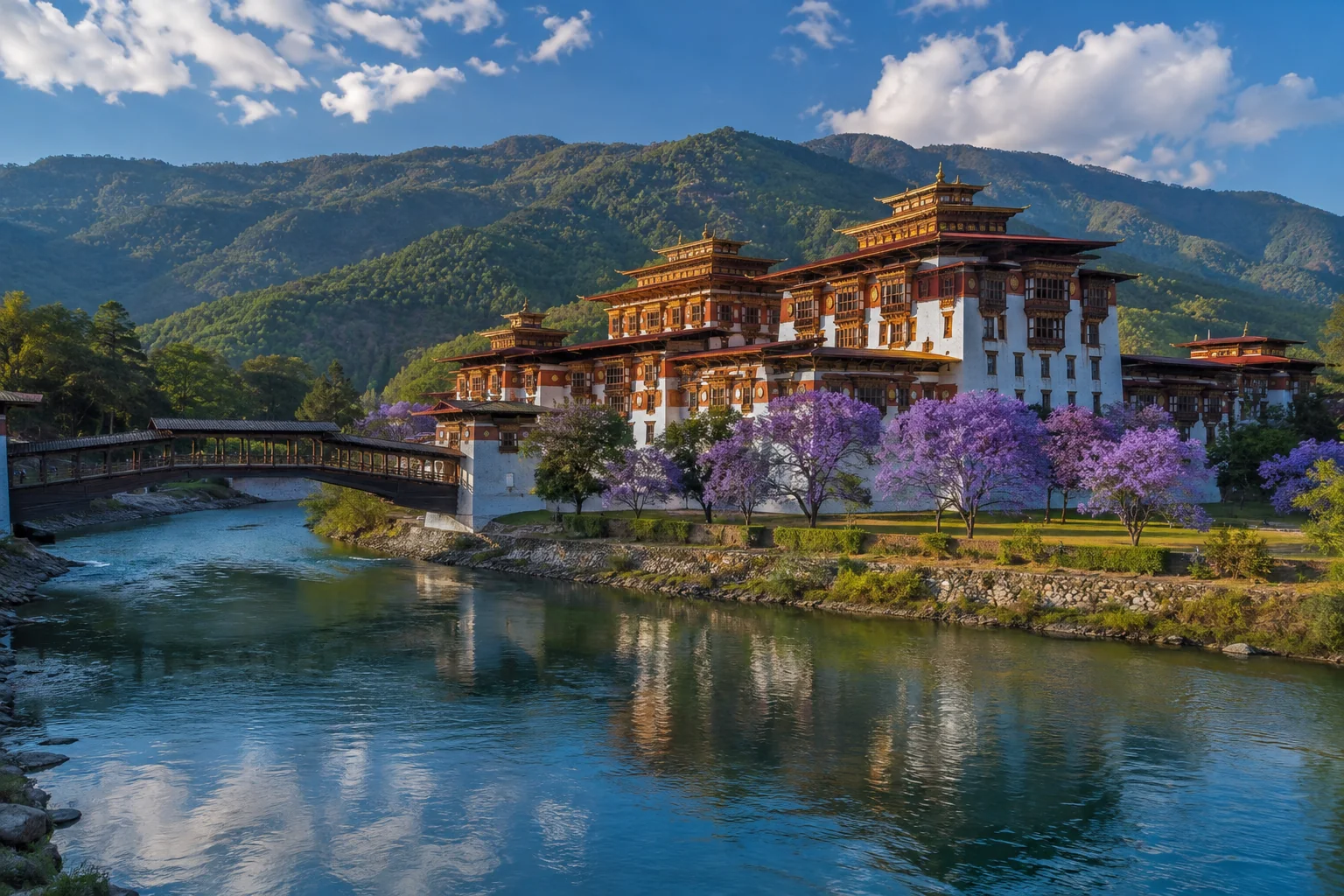
The most beautiful building in Bhutan, and few people argue about it. Built in 1637 at the confluence of the Pho Chhu and Mo Chhu, the father and mother rivers. It served as the capital until 1955 and still hosts royal weddings and coronations.
Go in late March or April, when the jacarandas along the approach are in flower and the whole thing sits in a haze of purple above the water.
Altitude advantage: Punakha sits at just 1,200m, noticeably warmer than Thimphu, so pack a layer less. Open 9am–5pm; the dzong closes to visitors during the Punakha Drubchen and Tsechu in February–March.
11.Punakha Suspension Bridge
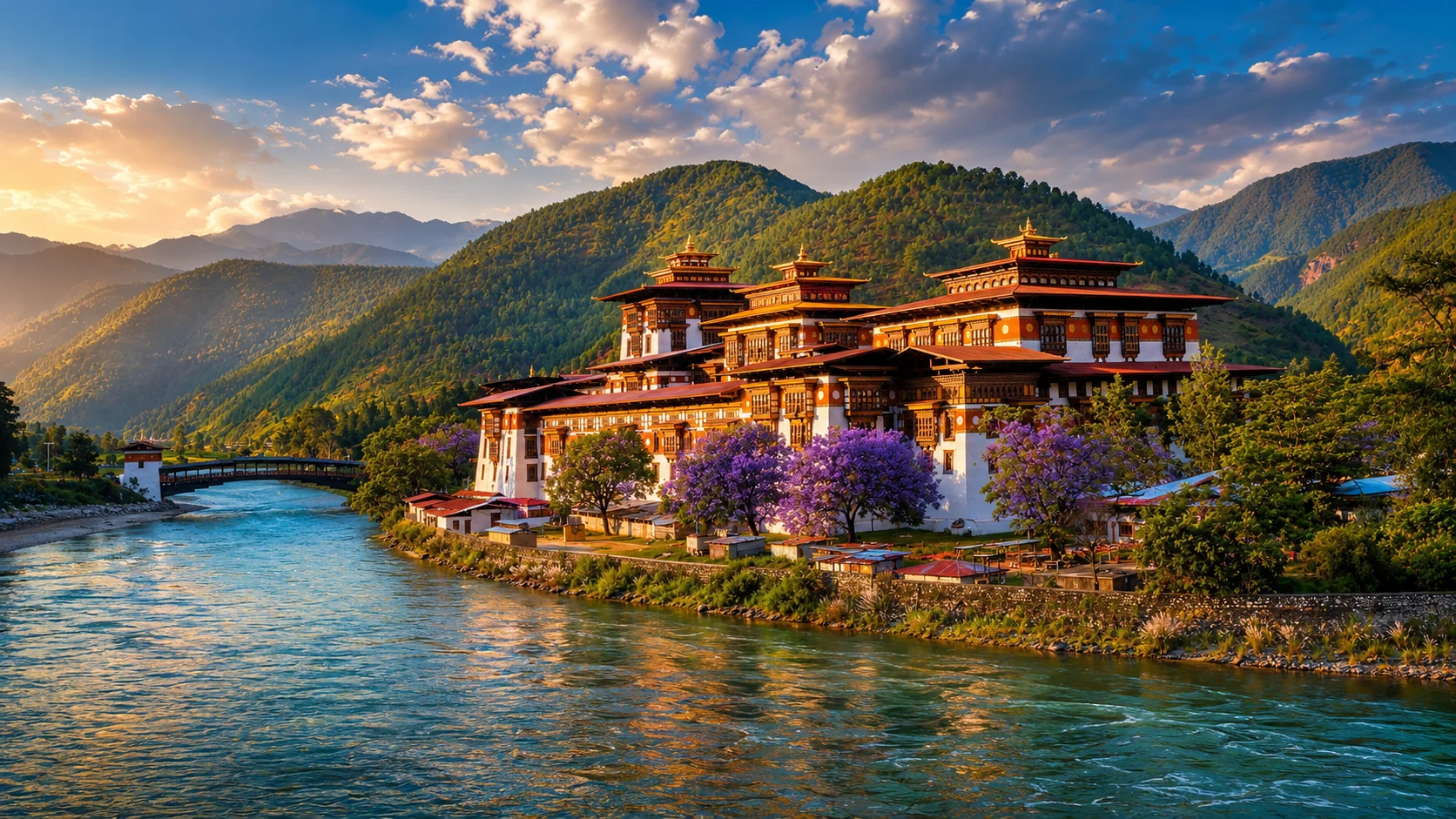
At around 160 metres it is one of the longest suspension bridges in Bhutan, strung with prayer flags across the Po Chhu a short walk downstream from the dzong.
It moves underfoot, which is the point. Cross it to the far village and back. Fifteen minutes, and the view up the valley to the dzong from midway is the shot most people miss.
Access: free, open all day, roughly a 10-minute walk from the dzong car park. The bridge is exposed, so hold onto hats.
12.Chimi Lhakhang
The temple of Drukpa Kunley, the 15th-century 'Divine Madman', reached by a twenty-minute walk through terraced rice fields from the road at Sopsokha. It is a fertility temple, and couples travel from across Asia to be blessed here.
The village on the walk up is decorated with phallus murals, a genuine and unembarrassed folk tradition of protection against malicious gossip, not a joke for tourists.
The walk: 20 minutes each way through farmland, flat and easy, muddy after rain. Best in the morning before the road warms up.
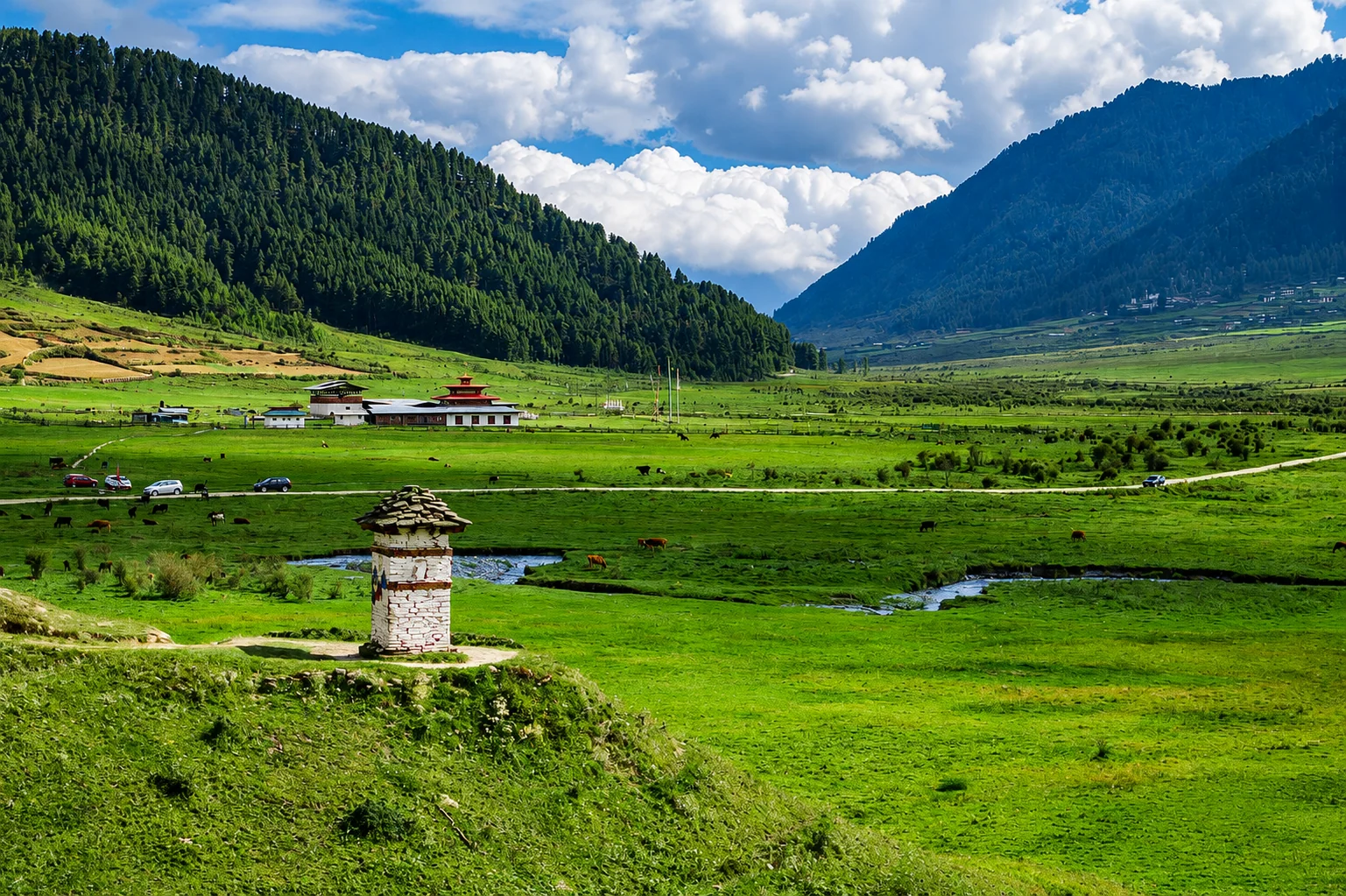
13.Phobjikha Valley and Gangtey Goenpa
A wide glacial bowl at 3,000 metres, treeless and open in a country that is otherwise all forest and gorge, and the winter home of the black-necked cranes that arrive from Tibet at the end of October.
Gangtey Goenpa sits on a ridge at one end. The Gangtey Nature Trail walks you down through the monastery, across the valley floor and back in about ninety minutes, and it is the best short walk in Bhutan.
Black-necked cranes: present late October to mid-February, with the Crane Festival at Gangtey on 11 November. The valley is a 4–5 hour drive from Punakha and deserves an overnight, not a day trip.
14.Haa Valley
Opened to visitors only in 2002 and still the quietest valley in western Bhutan. The drive from Paro crosses Chele La at 3,988 metres, the highest motorable pass in the country, and on a clear day you see Jomolhari from the top.
Haa itself is farmland, two small temples and very little infrastructure, which is exactly why it is worth the day.
Chele La: 3,988m, about 2 hours from Paro. Snow can close it briefly in January–February. The rhododendrons on the pass flower in April–May.
15.Phuentsholing and the border gate
Most guides skip it, but Phuentsholing is where a Bhutan trip actually begins for anyone travelling overland from India. The Bhutan Gate divides it from Jaigaon on the Indian side. One street, two countries, and a noticeable change in pace the moment you step through.
It is also where entry permits are issued. Our office is on the Indian side of that gate, which is the whole reason we can hand a processed permit to guests rather than send them to find the counter themselves.
Permit counter: the Immigration Office at Phuentsholing operates weekdays, roughly 9am–5pm, closed on Bhutanese public holidays. Carry a valid passport or Voter ID, plus passport photographs. Build the permit day into your itinerary rather than assuming it is instant.
Best time to visit Bhutan
Bhutan has two clear windows. If someone offers you a monsoon rate, this is what you are trading away.
| Months | What it is like | Verdict |
|---|---|---|
| March – May | Spring. Rhododendrons on Chele La, jacarandas at Punakha, clear mornings. Paro Tsechu falls here. | Best overall |
| June – August | Monsoon. Green, cheap and quiet, but mountain views are largely gone and hill roads can slip. | Avoid for views |
| September – November | Autumn. The clearest skies of the year, Thimphu Tsechu, and the cranes arrive at Phobjikha from late October. | Best for mountains |
| December – February | Cold and very clear. Dochula is at its sharpest. Higher passes may close briefly with snow. | Best for photography |
How to get to Bhutan
Two ways in, and they cost very different amounts.
Overland via Jaigaon–Phuentsholing. The route most Indian travellers take. Fly or take the train to Bagdogra or New Jalpaiguri, or Hasimara station which is closest, then road to Jaigaon. Permits are issued at Phuentsholing and the drive up to Thimphu or Paro takes 5–6 hours through the hills. This is the side our office is on.
By air to Paro. Drukair and Bhutan Airlines fly from Delhi, Kolkata, Bagdogra, Guwahati, Bangkok, Kathmandu and Singapore. It saves two days and costs considerably more. The Paro landing is famously steep and worth a window seat on the left flying in.
Bhutan travel questions, answered
Official sources
Permit rules, fees and seasonal closures change. These are the government pages we check against, and the ones to confirm your own dates with before you travel.
- Department of Immigration, Royal Government of Bhutan — entry permits for Indian nationals and current permit rules
- Department of Tourism, Bhutan — the Sustainable Development Fee, licensed operators and festival dates