
Vietnam is 1,650 km long and has three climates running at once. When Hanoi is cold and drizzling in January, Ho Chi Minh City is dry and 32°C. There is no single month that is good everywhere, which is why the best places to visit in Vietnam below are grouped north, centre and south.
Most first trips take the north and centre: Hanoi, Ha Long Bay, Hoi An and Da Nang. That is a sensible six or seven nights. Adding the south means another internal flight and at least three more nights.
What are the best places to visit in Vietnam?
The best places to visit in Vietnam are Hanoi's Old Quarter, Ha Long Bay, Hoi An's lantern-lit old town, Da Nang and the Marble Mountains, Hue's imperial citadel, and Ho Chi Minh City with the Cu Chi tunnels. North and south have opposite weather seasons.
- Hanoi Old Quarter
- Hoan Kiem Lake and Ngoc Son Temple
- Ha Long Bay
- Ninh Binh and Tam Coc
- Sapa and the rice terraces
- Hue
- Hoi An old town
- My Son Sanctuary
- Da Nang and the Marble Mountains
- Ba Na Hills and the Golden Bridge
- Phong Nha-Ke Bang
- Ho Chi Minh City
- Cu Chi Tunnels
- The Mekong Delta
- Phu Quoc
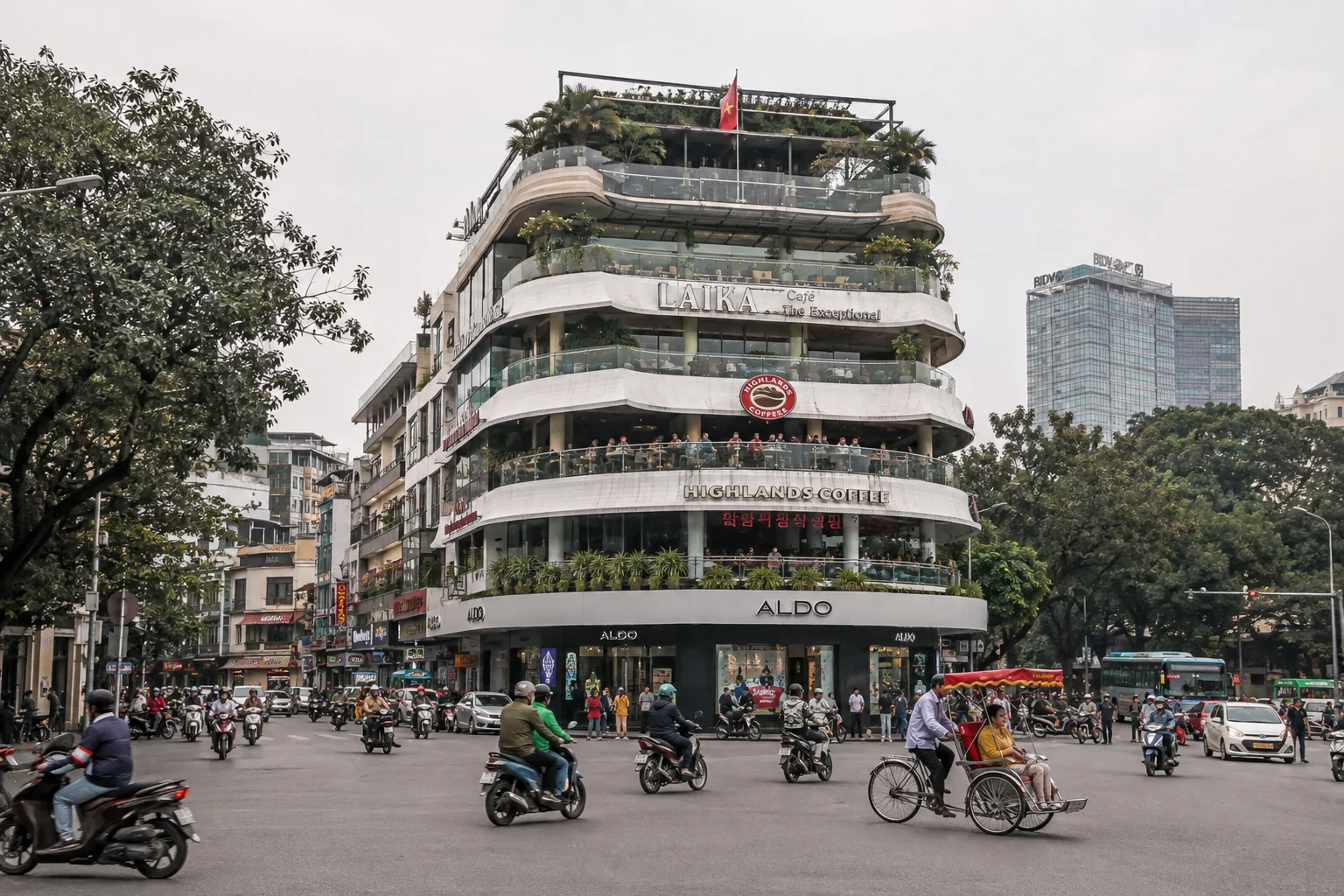
1.Hanoi Old Quarter
Thirty-six streets, each historically named for the trade practised on it, still partly organised that way. Motorbikes flow through gaps you would not walk through, and crossing the road is a skill you acquire in about a day.
The method is to walk slowly and predictably and let the traffic go around you. Stopping suddenly is the only real mistake.
Where to be at dusk: Ta Hien, the beer corner, where bia hoi, fresh draught brewed daily, sells for very little on plastic stools. The streets around Hoan Kiem close to vehicles on weekend evenings.
2.Hoan Kiem Lake and Ngoc Son Temple
The lake at the centre of Hanoi, with a red bridge to a small island temple, and the spot where the city exercises at five in the morning.
The legend has a golden turtle reclaiming a magic sword from the emperor here, which is why it is the Lake of the Returned Sword.
Go at 5.30am: tai chi, badminton and running clubs fill the entire circuit before the heat. It is the most enjoyable free hour in Hanoi.
3.Ha Long Bay
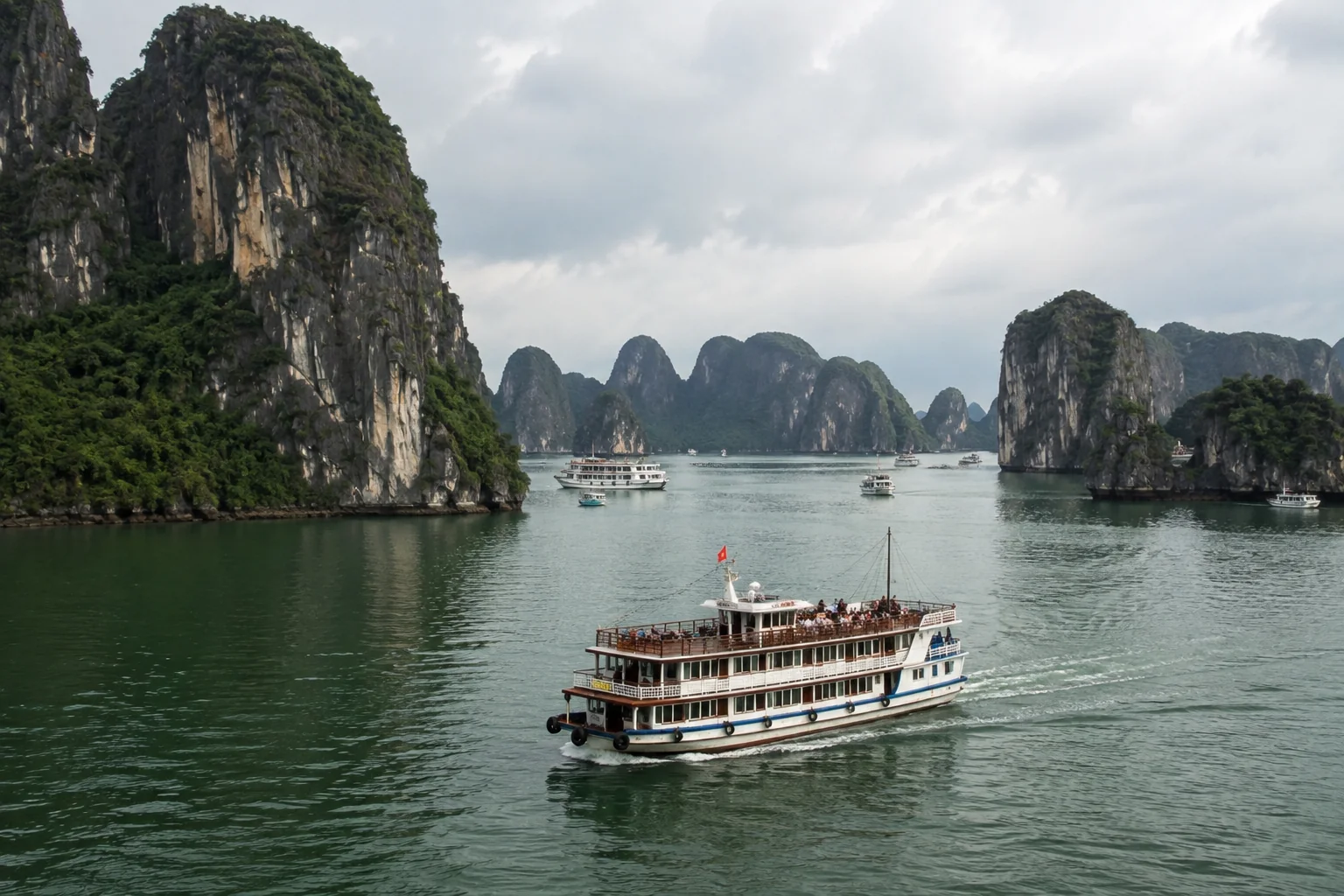
Around 1,600 limestone islands and karsts rising out of the Gulf of Tonkin, a UNESCO site, and best seen from a boat you sleep on rather than a day trip.
An overnight cruise gets you into the bay after the day boats have gone and out again before they return. That difference is the whole experience.
Ha Long Bay overnight cruise: two days and one night is the minimum worth doing; three days and two nights reaches the quieter Lan Ha and Bai Tu Long areas. Cruises are cancelled in storms, mostly July to September. Book a licensed operator; the quality range is enormous.
4.Ninh Binh and Tam Coc
Called the Ha Long Bay on land: the same karst formations rising out of rice paddy instead of sea, two hours south of Hanoi. Rowers take you through three caves on the Ngo Dong river, working the oars with their feet.
Mua Cave's 500 steps lead to a viewpoint over the whole valley, and it is the best photograph in northern Vietnam.
Best months: late May and early June, when the paddy is gold before harvest, or September and October for green. Trang An is the quieter alternative to Tam Coc and is a UNESCO site in its own right.
5.Sapa and the rice terraces
Mountain country at 1,500 metres near the Chinese border, with terraces cut into the slopes by the Hmong and Dao communities over generations.
The town itself has been overbuilt. The valleys around it, reached on foot with a local guide, have not.
When the terraces look best: May and June when they are flooded and mirroring the sky, or September when they are gold before harvest. Winter is cold, foggy and occasionally snows. Overnight train or 5 hours by road from Hanoi.
6.Hue
The imperial capital from 1802 to 1945, with a walled citadel and the Forbidden Purple City inside it, much of it damaged in 1968 and under long-term restoration.
The royal tombs are scattered along the Perfume River south of the city, and Tu Duc's is the one to see if you only see one.
Wettest city in Vietnam: Hue gets serious rain from September to December, with flooding common in October and November. Visit February to April for the driest weather.
7.Hoi An old town
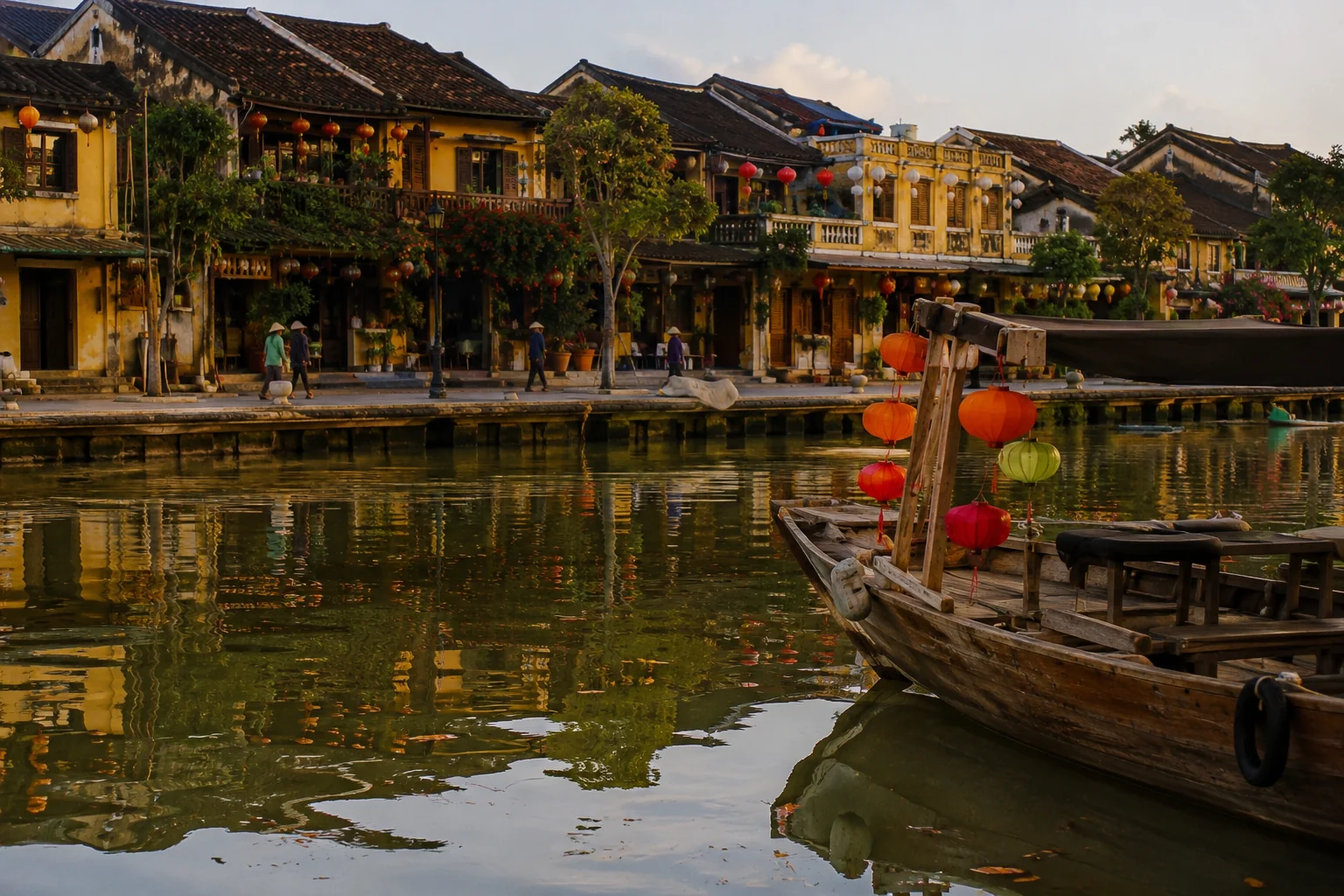
A trading port from the 15th to 19th centuries, preserved because the river silted up and commerce moved to Da Nang, leaving the town intact. Japanese, Chinese and Vietnamese architecture on the same street.
Silk lanterns light the whole old town after dark, and on the fourteenth day of each lunar month the electric lights go off entirely.
Lantern full moon festival: held on the 14th day of each lunar month, when the old town switches off its electric lighting and floats lanterns on the Thu Bon. Check the lunar date against your trip. Tailors here can make a suit in 24 hours, but 48 gives a better fit.
8.My Son Sanctuary
Hindu temple ruins built by the Cham kingdom between the 4th and 14th centuries, an hour inland from Hoi An, dedicated largely to Shiva.
American bombing in 1969 destroyed much of the main group. What survives is still the most significant Cham site in Vietnam, and the brickwork, laid without visible mortar, has never been fully explained.
Go at opening: gates open around 6am and the site is unshaded and very hot by ten. Indian visitors often find the Shaivite iconography unexpectedly familiar.
9.Da Nang and the Marble Mountains
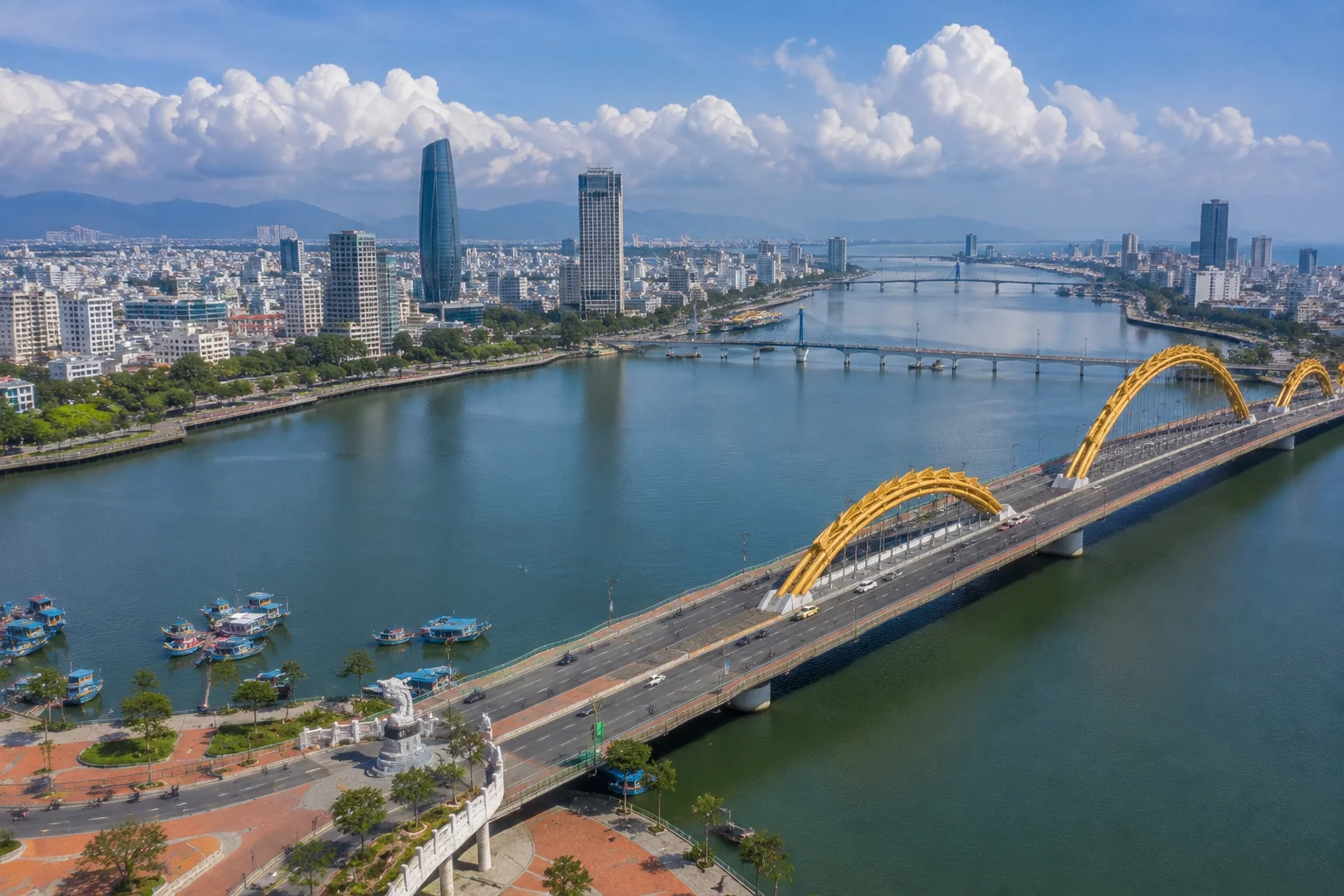
Vietnam's third city, with a long beach, the Dragon Bridge that breathes fire on weekend nights, and five limestone hills full of caves and pagodas just to the south.
Da Nang works better as a base than a destination, with Hoi An 30 minutes south and Hue two hours north.
Marble Mountains: Thuy Son is the one open to visitors, with a lift to the first level and steps beyond. The caves hold Buddhist and Hindu shrines. Dragon Bridge breathes fire Saturday and Sunday at 9pm.
10.Ba Na Hills and the Golden Bridge
A hill station above Da Nang reached by one of the longest cable cars in the world, with a walkway held up by two enormous stone hands.
There is also a French village replica and a funfair, which tells you what kind of place this is. The bridge is genuinely striking; the rest is a theme park.
Manage expectations: this is a commercial resort, not a heritage site, and it is crowded from mid-morning. Take the first cable car of the day if you want a photograph without two hundred people in it.
11.Phong Nha-Ke Bang
Karst country holding Son Doong, the largest cave passage on earth, big enough to contain a New York block. Access to Son Doong is limited to a few hundred permits a year at considerable expense.
Paradise Cave and Phong Nha Cave are open to ordinary visitors and are extraordinary in their own right.
Realistic options: Son Doong requires booking a year ahead through the single licensed operator. Paradise Cave and the Dark Cave need no permit. The park is 4–5 hours north of Hue.
12.Ho Chi Minh City
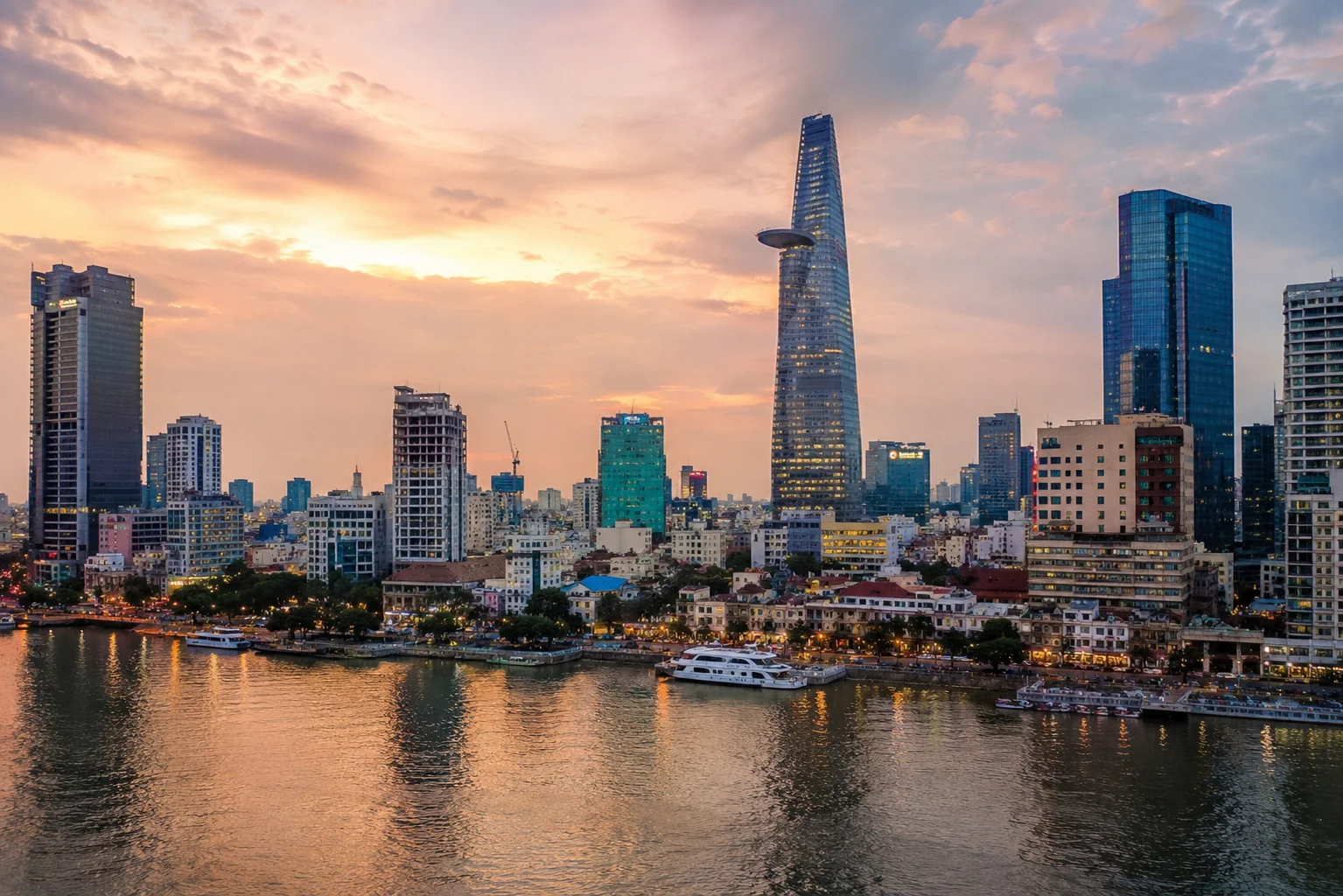
Still Saigon to most people who live there. Faster, hotter and more commercial than Hanoi, with the Reunification Palace preserved exactly as it was on 30 April 1975.
The War Remnants Museum is unflinching and one-sided, and worth the time regardless.
Where to start: Ben Thanh Market, the Central Post Office and Notre-Dame Basilica are within walking distance of each other in District 1. The museum takes two hours and is upsetting in places.
13.Cu Chi Tunnels
Two hundred and fifty kilometres of hand-dug tunnels northwest of Saigon, used by the Viet Cong through the war, with kitchens, hospitals and sleeping quarters on three levels.
A short widened section is open to visitors. Even widened, it is a genuinely tight crawl and not for anyone claustrophobic.
Two sites: Ben Duoc is quieter and more authentic; Ben Dinh is closer and busier. Half a day from the city. Skip it entirely if enclosed spaces are a problem for you.
14.The Mekong Delta
Rice paddy, orchards and a network of channels south of the city, where the floating markets at Cai Rang trade wholesale from boats at dawn.
Day trips from Saigon are rushed and reach only the edge. An overnight at Can Tho gets you to the market at the hour it is actually working.
Cai Rang floating market: trades from about 5am and is winding down by 8. A day trip from Ho Chi Minh City cannot reach it in time. Stay overnight at Can Tho.
15.Phu Quoc
An island off the Cambodian coast, 50 km from the mainland, with the best beaches in Vietnam and a separate visa arrangement from the rest of the country.
Development has been rapid on the west coast. The south and the An Thoi archipelago still hold up.
Season: November to March is dry and calm. April and May are very hot. June to October brings the southwest monsoon with heavy rain and rough water.
Best time to visit Vietnam
Vietnam runs three climates at once. The month that suits Hanoi may be the wrong one for Saigon, so pick the region first.
| Months | What it is like | Verdict |
|---|---|---|
| North (Hanoi, Ha Long, Sapa) | Best October to April. Cold and drizzly December to February. Hot and wet May to September. | Oct – Apr |
| Centre (Hue, Hoi An, Da Nang) | Best February to May. Serious rain and flooding September to December. Typhoon risk in autumn. | Feb – May |
| South (Saigon, Mekong, Phu Quoc) | Best December to April, dry and warm. Wet season May to November with afternoon downpours. | Dec – Apr |
| Whole country | February to April is the only window that works reasonably well north to south at the same time. | Feb – Apr |
How to get to Vietnam
Direct flights from India have expanded considerably, and internal flights are cheap enough to make the long country manageable.
By air. Hanoi and Ho Chi Minh City both take direct flights from Delhi, Mumbai, Kolkata, Bengaluru, Ahmedabad and Hyderabad. Da Nang has some direct services too, which saves a domestic leg if you are starting in the centre.
Getting around. Domestic flights between Hanoi, Da Nang and Ho Chi Minh City take under two hours and cost little. The Reunification Express train along the coast is scenic but slow, and the Hai Van Pass section between Hue and Da Nang is the part worth doing.
Visa. Indian nationals need an e-visa, applied for online through the official government portal before travel. Processing usually takes about three working days. Apply only through the official site.
Vietnam travel questions, answered
Official sources
Permit rules, fees and seasonal closures change. These are the government pages we check against, and the ones to confirm your own dates with before you travel.
- National Portal on Immigration, Government of Vietnam — the official e-visa application for Indian and other nationals