Sikkim rewards people who plan around paperwork. The best places to visit in Sikkim include several that sit inside protected zones near the Chinese border, and you cannot simply drive up on the day. Tsomgo, Nathula and Gurudongmar all need permits applied for in advance, with your original ID and photographs.
The state divides cleanly into four bases: Gangtok in the east, Lachung and Lachen in the north, and Pelling in the west. Fifteen places worth your time are listed below, grouped the way you would actually drive them.
What are the best places to visit in Sikkim?
The best places to visit in Sikkim are Tsomgo Lake, Nathula Pass on the old Silk Route, Gurudongmar Lake at 5,430 metres, Yumthang Valley, Gangtok's MG Marg, and Pelling for its Kanchenjunga views. North Sikkim requires a protected area permit arranged before you travel.
- Gangtok
- MG Marg
- Rumtek Monastery
- Enchey Monastery
- Tsomgo Lake (Changu Lake)
- Baba Harbhajan Singh Mandir
- Nathula Pass
- Lachung
- Yumthang Valley
- Zero Point (Yumesamdong)
- Lachen
- Gurudongmar Lake
- Pelling
- Pemayangtse Monastery
- Ravangla and the Buddha Park
1.Gangtok
The capital sits on a ridge at 1,650 metres, steep enough that the town is built in terraces and the taxis spend their lives in first gear. It is the base for east Sikkim and where every permit is processed.
Give it a full day at the start. The altitude here is gentle, which makes it the right place to sit before anything higher.
Base for: Tsomgo, Nathula, Rumtek and the north Sikkim road. Most hotels are on or below MG Marg. Vehicle changes are compulsory for north Sikkim, so expect to switch to a local operator's Sumo.
2.MG Marg
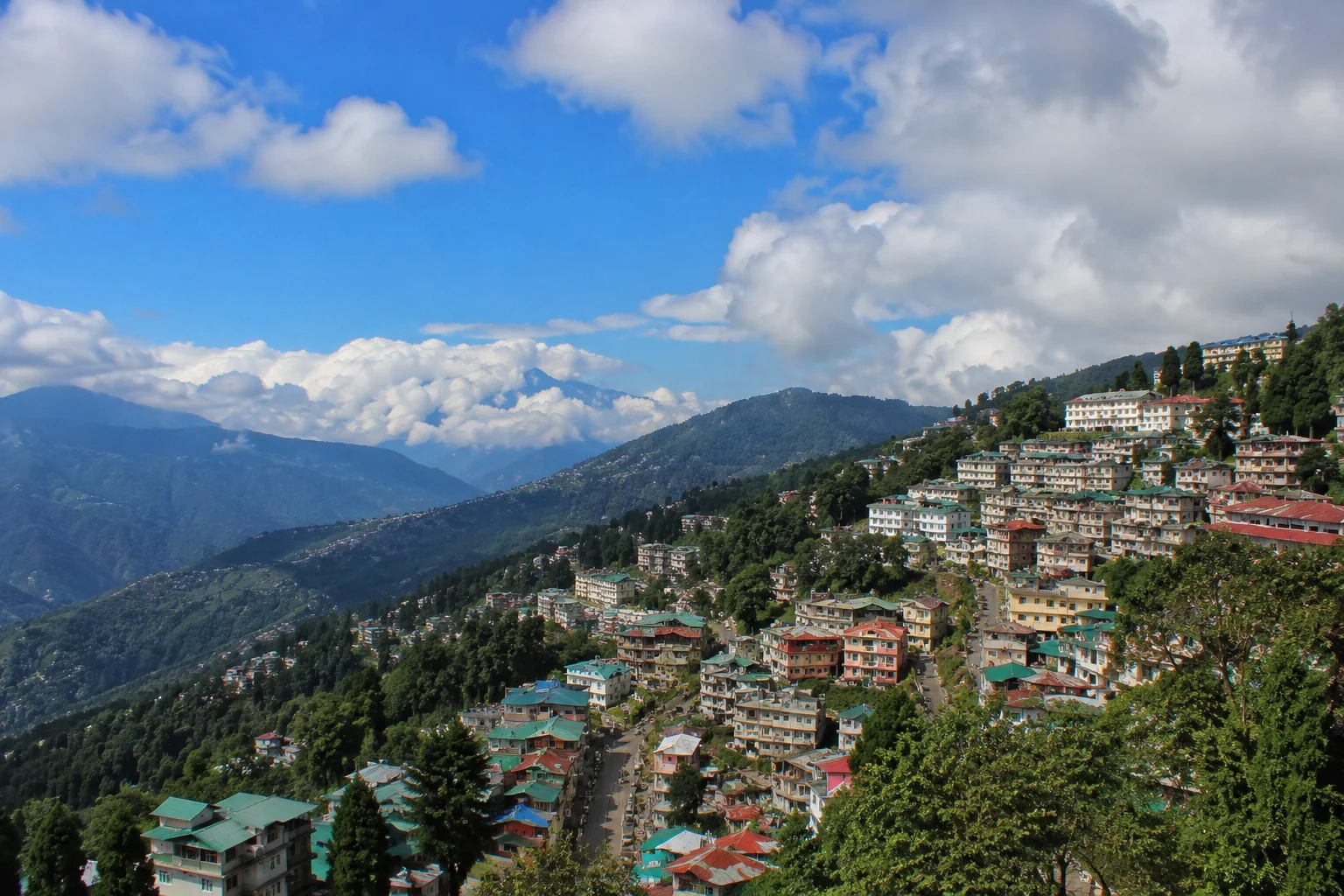
A pedestrianised boulevard through the middle of Gangtok with no cars, no litter and no spitting, all of it enforced. Benches down the centre, flowers in tubs, and the whole town walking up and down it after dark.
It is the most pleasant hour you will spend in any Indian hill town, and it costs nothing.
When: best from 5pm, when the lights come on and the crowd builds. Smoking is banned along the length of it. Good for last-minute layers before the north Sikkim run.
3.Rumtek Monastery
The largest monastery in Sikkim and the seat in exile of the Karmapa, 24 km from Gangtok by a road that winds around the far side of the valley. The Golden Stupa in the upper building holds the relics of the 16th Karmapa.
Security is real here rather than decorative, a consequence of the long dispute over the Karmapa succession.
Carry ID: passport or Voter ID is checked at the gate for all visitors, Indian nationals included. Roughly 1 hour each way from Gangtok. Closed to visitors during certain pujas.
4.Enchey Monastery
Two hundred years old, small, and sitting in a stand of pine above Gangtok with the town dropping away below it. Nyingma order, about 90 monks.
Twenty minutes from the centre and usually empty, which Rumtek is not.
Timing: morning prayers around 4am and again at 3pm. The Cham masked dances are held here in December or January depending on the lunar calendar.
5.Tsomgo Lake (Changu Lake)
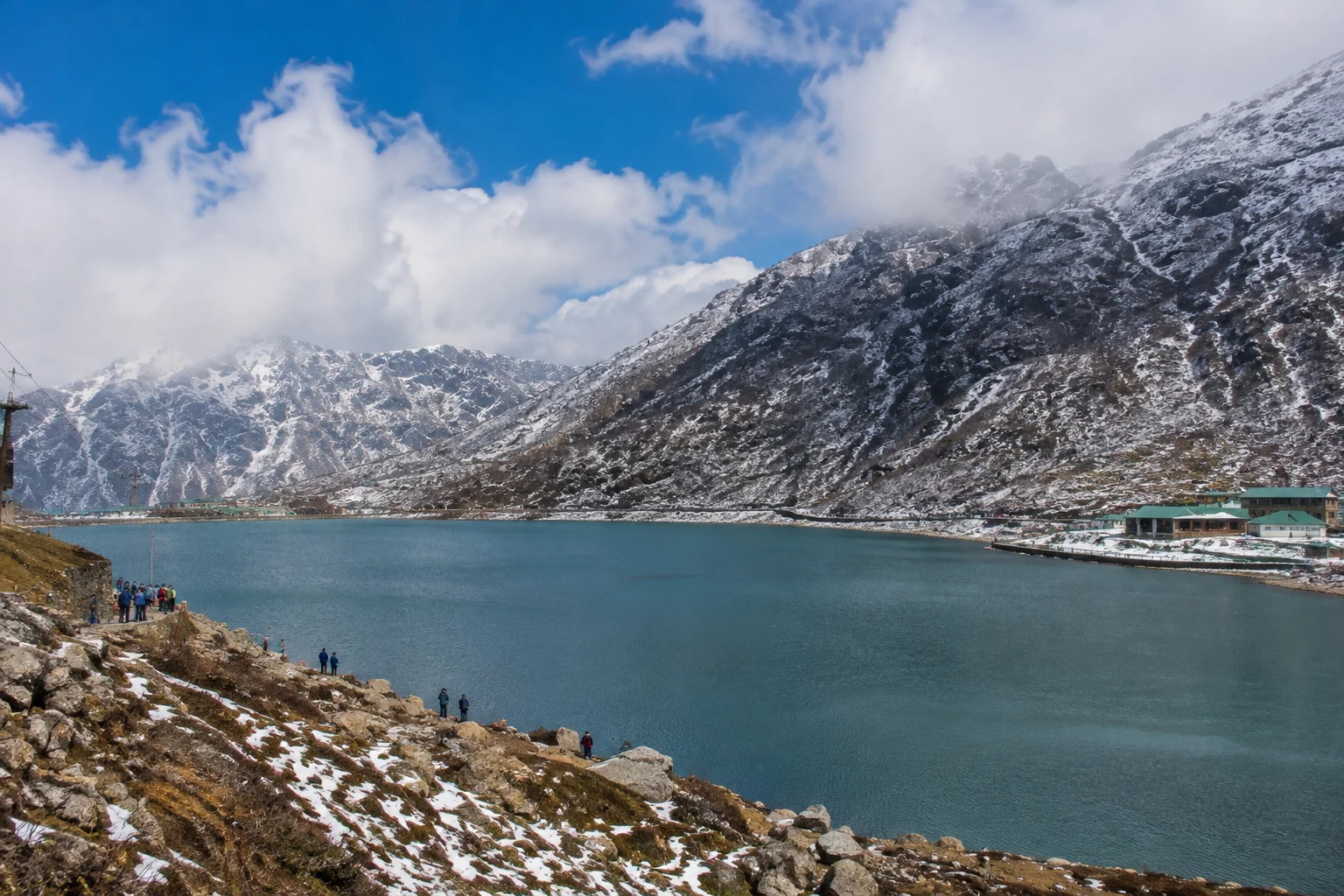
A glacial lake at 3,780 metres, 40 km from Gangtok on the old road towards Nathula. It freezes solid in winter and reflects the ridgeline in spring, and yaks in decorated saddlery wait at the edge for photographs.
It is the first altitude most visitors gain in Sikkim, and the gain is abrupt. Two hours up from 1,650 metres to 3,780.
Tsomgo Lake permit: a protected area permit is required for all visitors and must be applied for at least a day ahead through a registered operator, with two photographs and ID. Foreign nationals need additional clearance and cannot visit Nathula at all.
6.Baba Harbhajan Singh Mandir
A shrine to an Indian Army sepoy who died near here in 1968 and who soldiers on this stretch still regard as on duty. His uniform is pressed, his boots are polished, and a bunk is kept made.
Whatever you make of it, the sincerity of the place is unmistakable, and the tea served to visitors is free.
Location: on the Tsomgo–Nathula road at around 4,000m, covered by the same permit. Usually combined with Tsomgo and Nathula in one day.
7.Nathula Pass
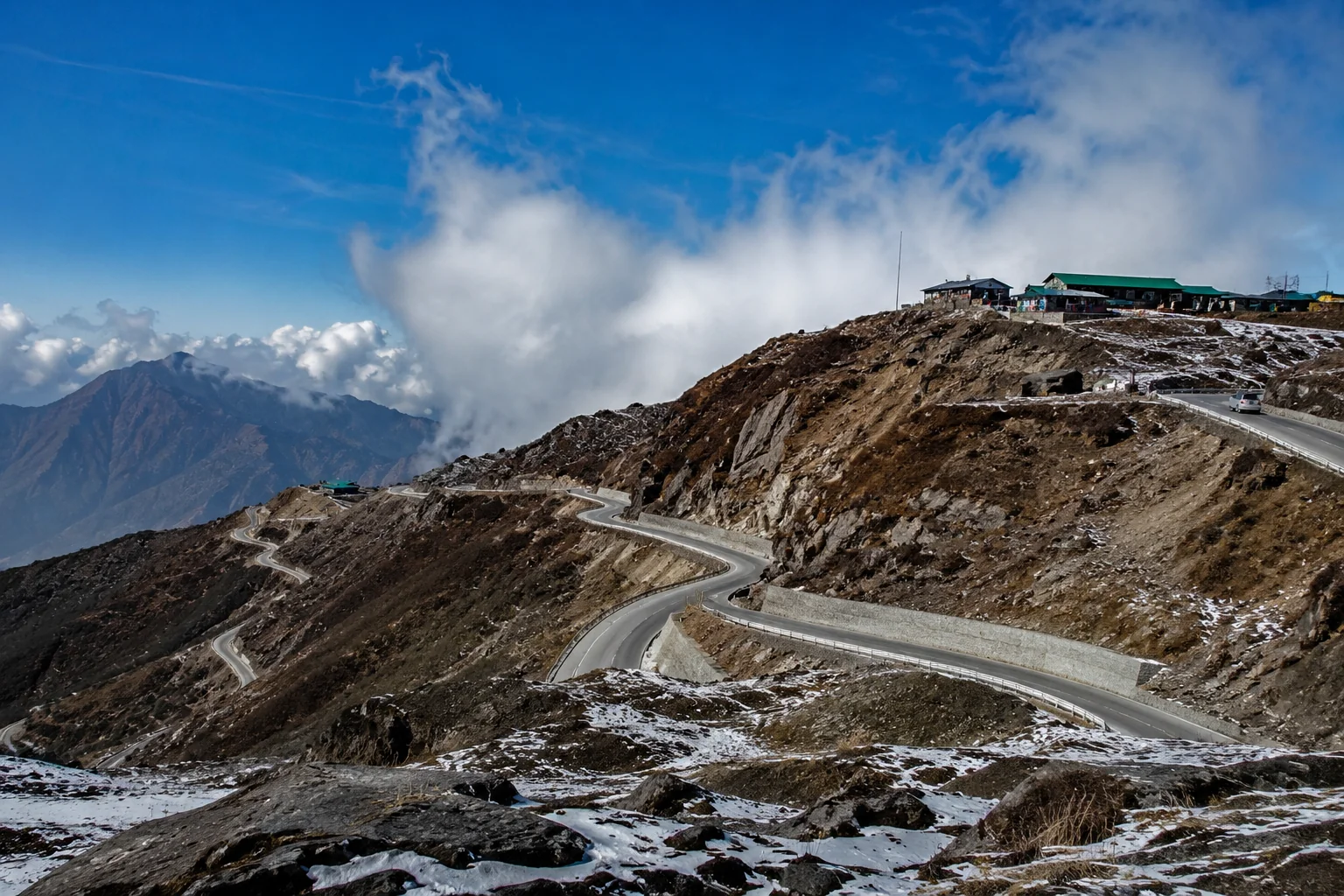
The border with Tibet at 4,310 metres, on a branch of the old Silk Route, and one of very few places where you can walk up to the fence and see Chinese soldiers on the other side of it.
Weather closes it often, and the last kilometre of road is frequently the reason a day trip turns back.
Nathula Pass permit for Indians: Indian nationals only, permit applied for a day in advance, and the pass is closed to tourists on Mondays and Tuesdays. Foreign nationals are not permitted. Snow can close it without notice from December to March.
8.Lachung
A village at 2,700 metres in north Sikkim where the Lachung Chu meets the Yumthang road, and the overnight stop for anyone going up to Yumthang. Apple orchards, a small gompa, and not much else.
The drive up from Gangtok takes six or seven hours on a road that is rebuilt every monsoon.
Expect basic: hotels here run on generators with limited hours of power and hot water by bucket. Mobile signal is patchy and often absent. This is the trade for being 25 km from Yumthang.
9.Yumthang Valley
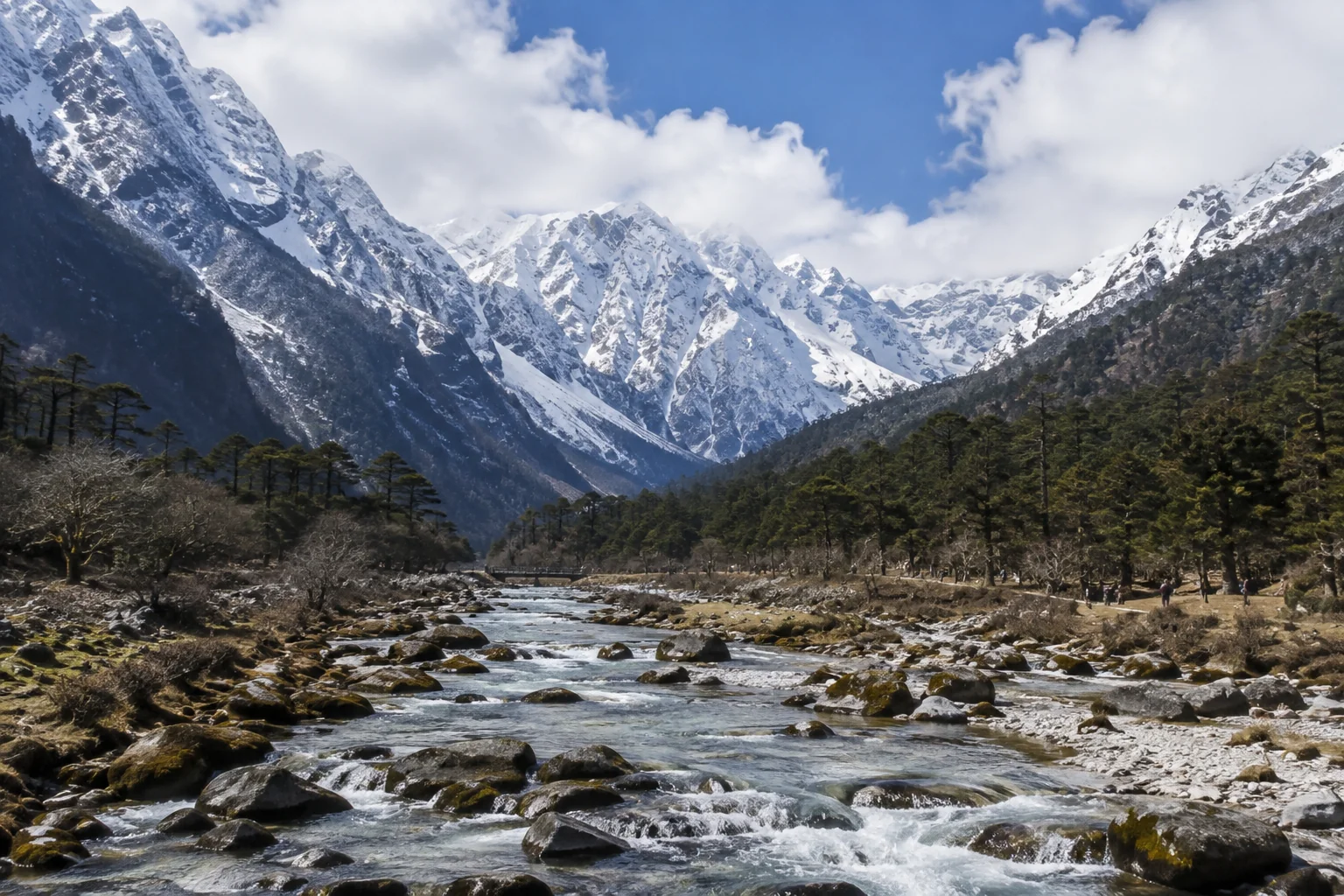
The Valley of Flowers, at 3,564 metres, where the tree line ends and the valley floor opens into meadow with the Teesta running through it. Rhododendrons carpet it from late April into early June.
There are hot springs across a footbridge, and in winter the whole valley holds snow.
Best time: late April to mid-June for rhododendrons; December to March for snow. The valley is inside the protected zone, so the same north Sikkim permit applies and foreign nationals need a separate PAP.
10.Zero Point (Yumesamdong)
Twenty-three kilometres beyond Yumthang at 4,700 metres, where the civilian road simply stops. Three rivers meet, there is snow on the ground for most of the year, and the air is noticeably thin.
Half an hour is enough. People who race up here from Gangtok in a single day are the ones who get headaches.
Altitude warning: 4,700m with no acclimatisation stop above Lachung. Not advisable for anyone with cardiac or respiratory conditions, or for infants. Oxygen is carried by most operators; ask whether yours does.
11.Lachen
The other north Sikkim village, at 2,750 metres, and the base for Gurudongmar rather than Yumthang. Smaller and quieter than Lachung.
The Lachenpa community here still runs its own village council, the Dzumsa, which decides grazing rights and settles disputes.
Departure: vehicles leave for Gurudongmar between 4am and 5am, because the wind picks up at the lake by mid-morning and the army gate has a return deadline.
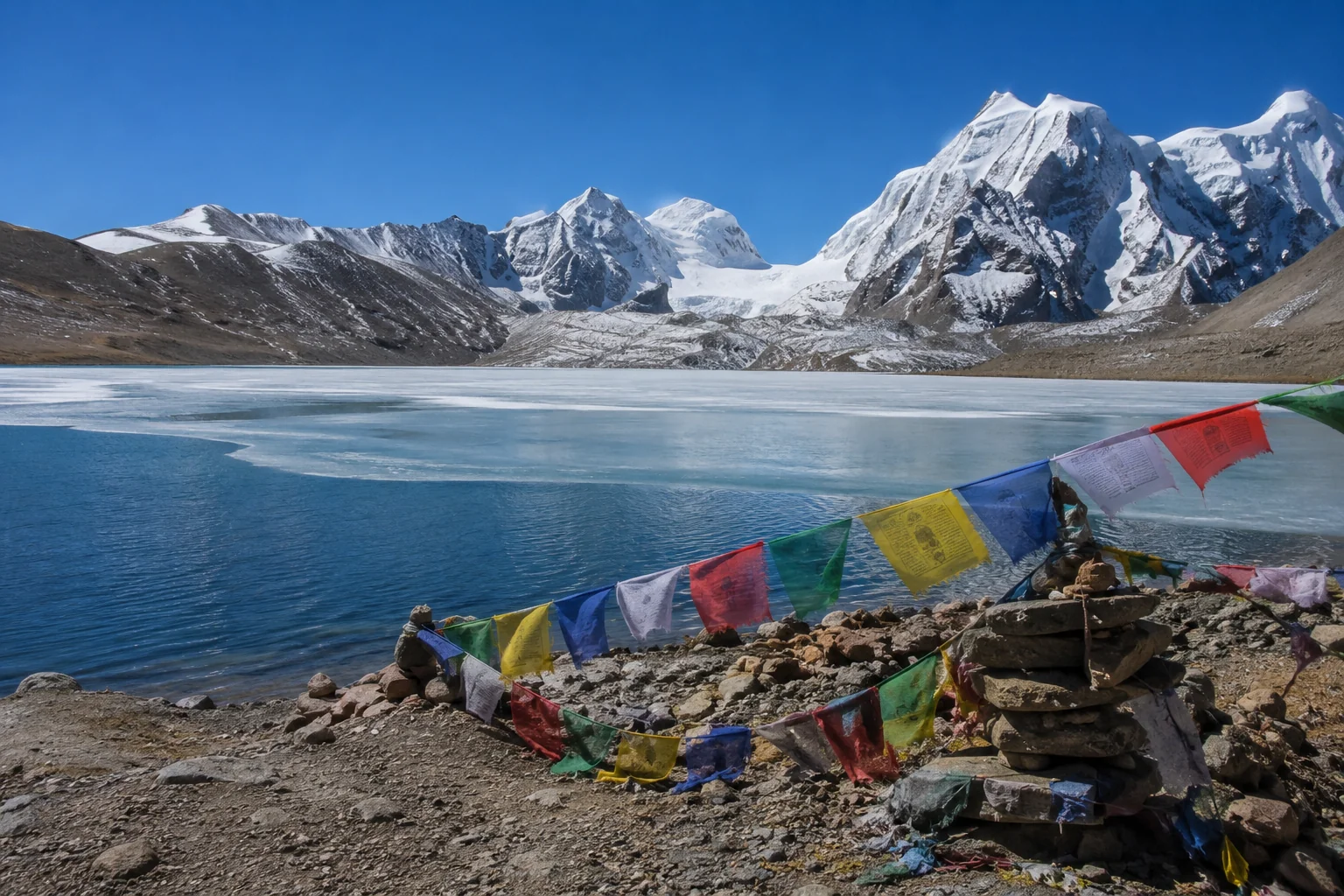
12.Gurudongmar Lake
At 5,430 metres, one of the highest lakes in the world, held in a bowl of bare rock and scree a short distance from the Tibetan border. It is sacred to Buddhists, Sikhs and Hindus, and a portion of it is said never to freeze.
The colour on a clear morning does not photograph properly. You go, you stand there for twenty minutes because that is all your body wants, and you come back down.
Gurudongmar Lake altitude: 5,430m, reached from Lachen at 2,750m in a single morning drive. Indian nationals only; foreign nationals are not permitted. Spend two nights at altitude before attempting it, and skip it entirely if you have heart or lung conditions.
13.Pelling
West Sikkim's viewpoint town, at 2,150 metres, and the closest you get to Kanchenjunga without walking. On a clear morning the third-highest mountain on earth fills the window of most hotels in town.
The glass skywalk at Chenrezig is a recent addition and does exactly what it promises.
For the view: book a north-facing room and be awake by 5.30am. Kanchenjunga is usually clear at dawn and gone by nine. October to December gives the best odds.
14.Pemayangtse Monastery
Founded in 1705, second oldest in Sikkim, and reserved historically for monks of pure Tibetan descent. The top floor holds Zangdok Palri, a seven-tiered wooden model of Guru Rinpoche's heavenly palace, carved by one monk over five years.
That single object is worth the detour from Pelling.
Nearby: the ruins of Rabdentse, Sikkim's second capital, are a 15-minute walk through forest from the same road. Small entry fee at the monastery; no photography upstairs.
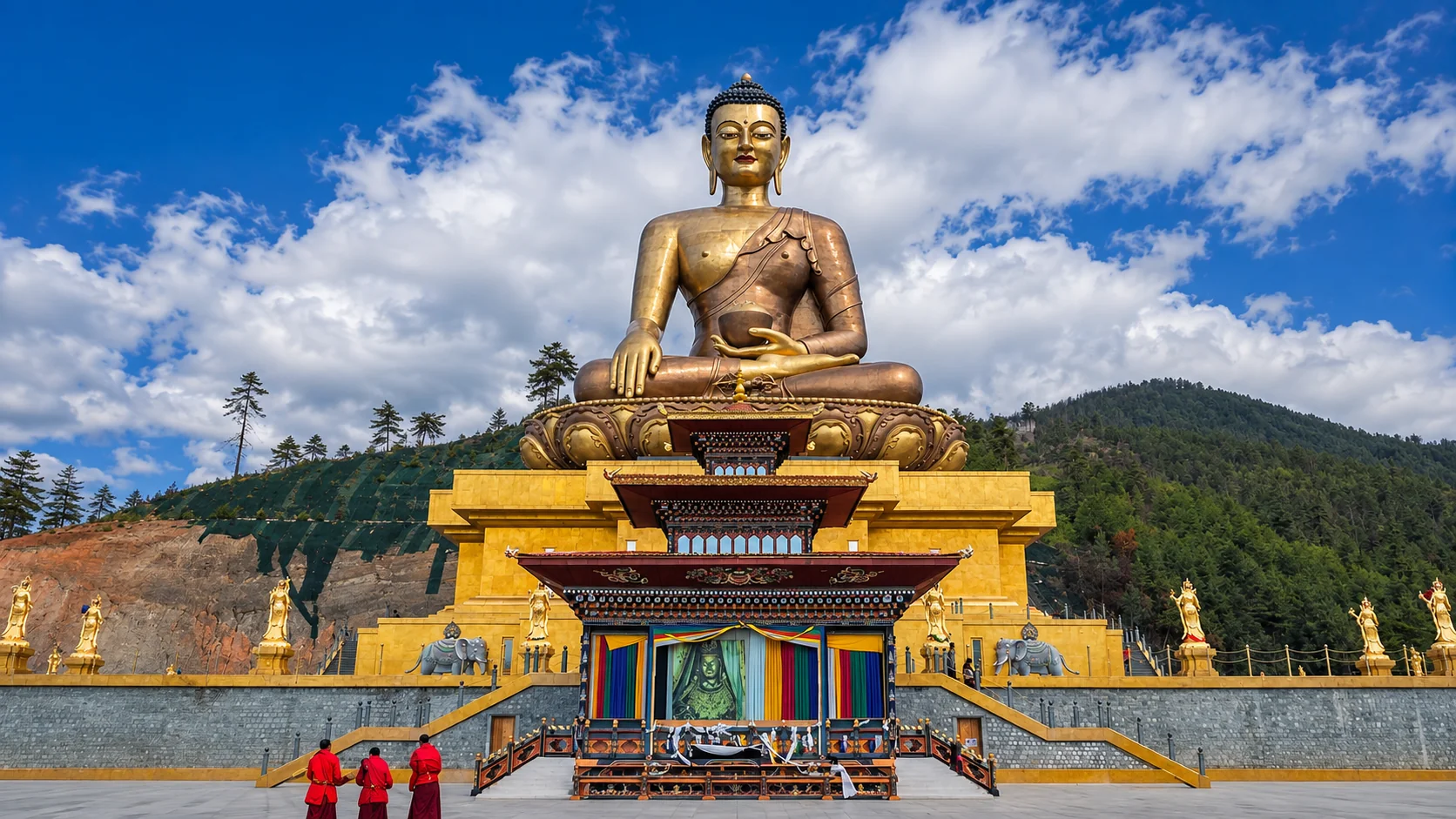
15.Ravangla and the Buddha Park
South Sikkim, at 2,100 metres, with a 41-metre Shakyamuni statue looking out over the Himalayan range from Tathagata Tsal. It was consecrated by the Dalai Lama in 2013.
Ravangla makes a sensible halfway halt between Gangtok and Pelling rather than driving the whole way in one push.
Break the drive: Gangtok to Pelling direct is 5–6 hours of continuous hill road. Stopping at Ravangla splits it and adds the park, Ralang Monastery and the Temi tea garden.
Best time to visit Sikkim
Sikkim's seasons are decided by two things: whether the high passes are open, and whether the monsoon has taken out the north Sikkim road.
| Months | What it is like | Verdict |
|---|---|---|
| March – May | Rhododendrons in Yumthang from late April. Clear enough for Kanchenjunga most mornings. Roads open. | Best overall |
| June – September | Monsoon. Landslides regularly close the north Sikkim road for days at a time. Views largely gone. | Avoid |
| October – December | The clearest skies of the year and the most reliable mountain views. Cold at altitude but stable. | Best for views |
| January – February | Deep snow at Tsomgo and Yumthang. Nathula and Gurudongmar close without warning. | Snow, with risk |
How to get to Sikkim
Sikkim has one small airport and no railway, so almost everyone arrives through north Bengal.
By air. Pakyong Airport, 30 km from Gangtok, has limited and weather-dependent flights. Bagdogra near Siliguri is the reliable option, roughly 4.5 hours by road to Gangtok.
By rail. New Jalpaiguri (NJP) is the nearest major railhead, about 4 hours from Gangtok. Shared and private vehicles run from both NJP and Siliguri all morning.
Permits. Everything north of Gangtok and everything towards Nathula needs a protected area permit, applied for through a registered operator with ID copies and photographs. We file these before our guests arrive rather than losing a day to it.
Sikkim travel questions, answered
Official sources
Permit rules, fees and seasonal closures change. These are the government pages we check against, and the ones to confirm your own dates with before you travel.
- Sikkim Tourism, Government of Sikkim — protected area permits, and current status of Nathula and north Sikkim
- Government of Sikkim — road closures, district notices and public holidays