Eight states, and no itinerary covers more than three of them well. The best places to visit in North East India are spread across distances that look small on a map and take a full day on the ground, because the roads follow rivers and ridges rather than straight lines.
Most trips start at Guwahati and pick one of two directions: Meghalaya for the waterfalls, caves and living root bridges, or Assam and Arunachal for Kaziranga and the long climb to Tawang. Arunachal needs an Inner Line Permit for Indian nationals, which is the single piece of paperwork that catches people out.
What are the best places to visit in North East India?
The best places to visit in North East India are Kaziranga National Park for one-horned rhinos, Cherrapunji and its living root bridges, Dawki on the Umngot river, Shillong, Mawlynnong village, and Tawang in Arunachal Pradesh. Arunachal requires an Inner Line Permit for Indian nationals.
- Kaziranga National Park, Assam
- Shillong, Meghalaya
- Cherrapunji (Sohra)
- The double-decker living root bridge, Nongriat
- Dawki and the Umngot river
- Mawlynnong
- Mawsmai and Arwah caves
- Umiam Lake (Barapani)
- Mawphlang sacred grove
- Guwahati and Kamakhya Temple
- Majuli
- Tawang, Arunachal Pradesh
- Sela Pass and Jaswant Garh
- Ziro Valley, Arunachal Pradesh
- Loktak Lake, Manipur
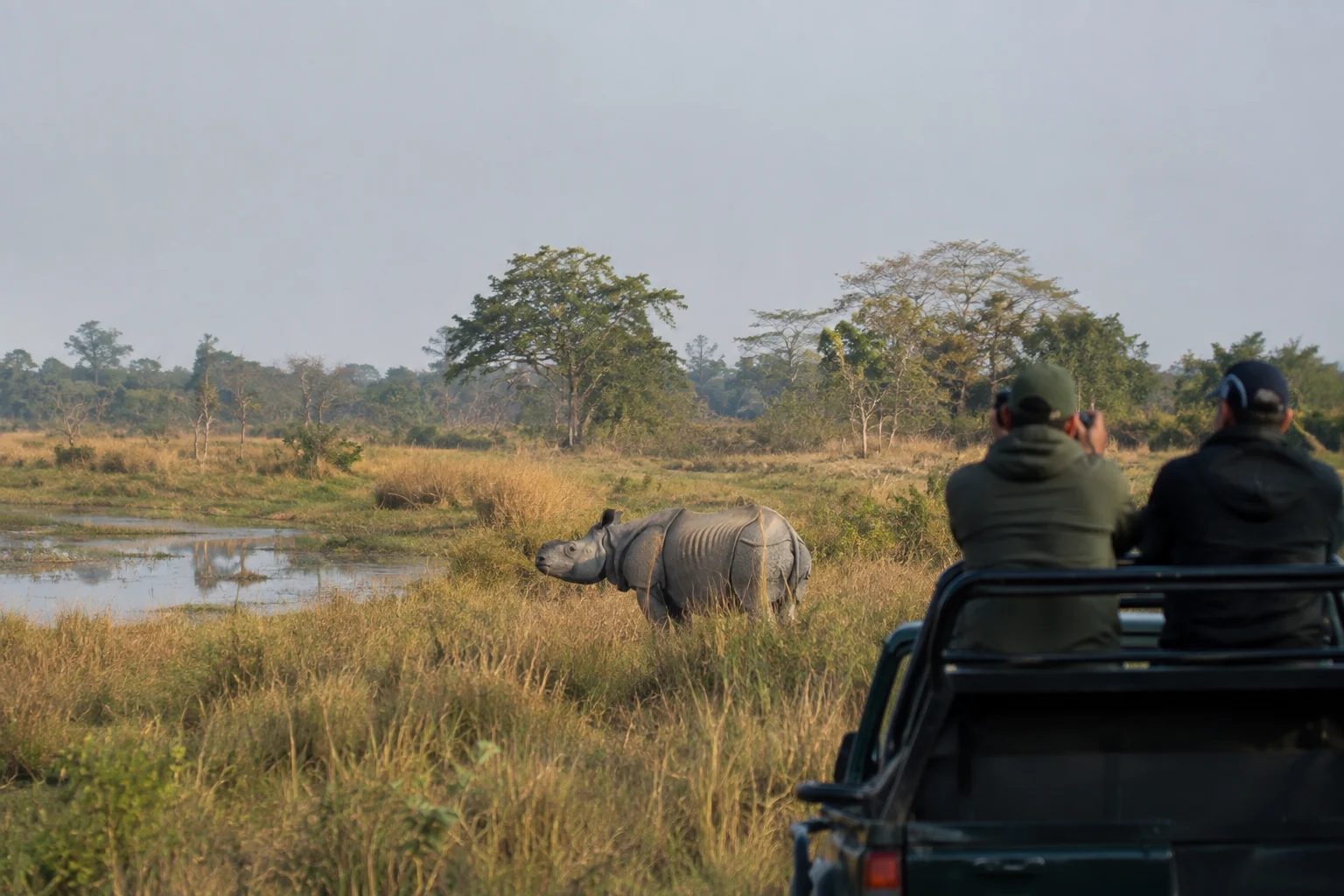
1.Kaziranga National Park, Assam
Grassland and wetland on the south bank of the Brahmaputra, holding roughly two-thirds of the world's one-horned rhinos along with wild buffalo, swamp deer and one of the densest tiger populations anywhere.
Jeep safaris cover four ranges. The elephant safari in the Central range gets you closer to rhino than a vehicle can, and books out weeks ahead.
Kaziranga monsoon closure: the park closes to visitors from roughly mid-May to mid-October, when the Brahmaputra floods it. The season runs November to April, with February and March the best months. Safari permits are issued range by range.
2.Shillong, Meghalaya
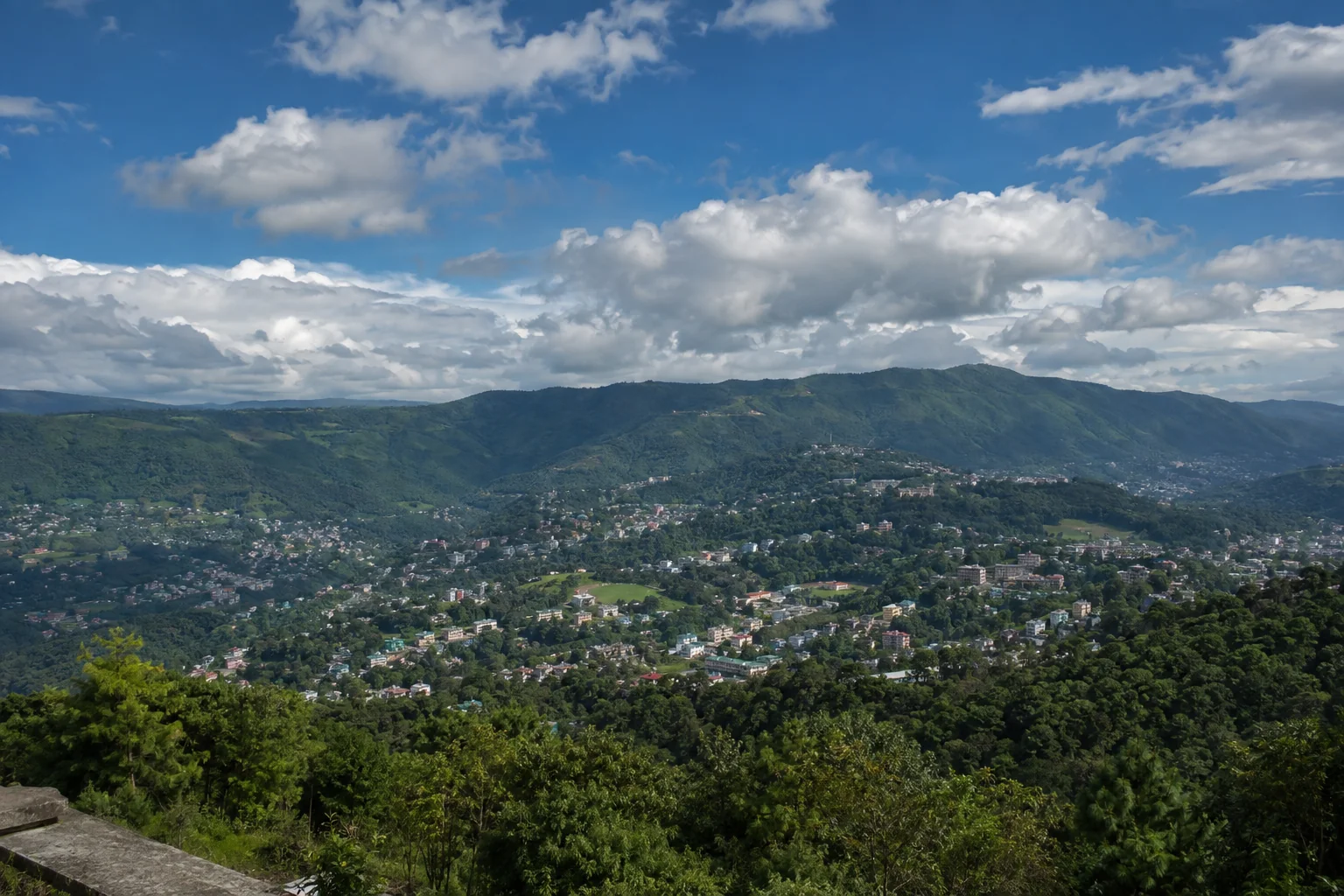
The Khasi hill capital at 1,500 metres, built around a golf course and a lake, and the base for everything in Meghalaya. It has a live music culture that no other Indian hill town comes close to.
Traffic in and out of the city is genuinely bad. Budget three hours from Guwahati even though it is only 100 km.
Base for: Cherrapunji, Dawki, Mawlynnong and the Mawsmai caves, all of which are day trips or overnights from here. Police Bazaar is the centre for hotels and food.
3.Cherrapunji (Sohra)
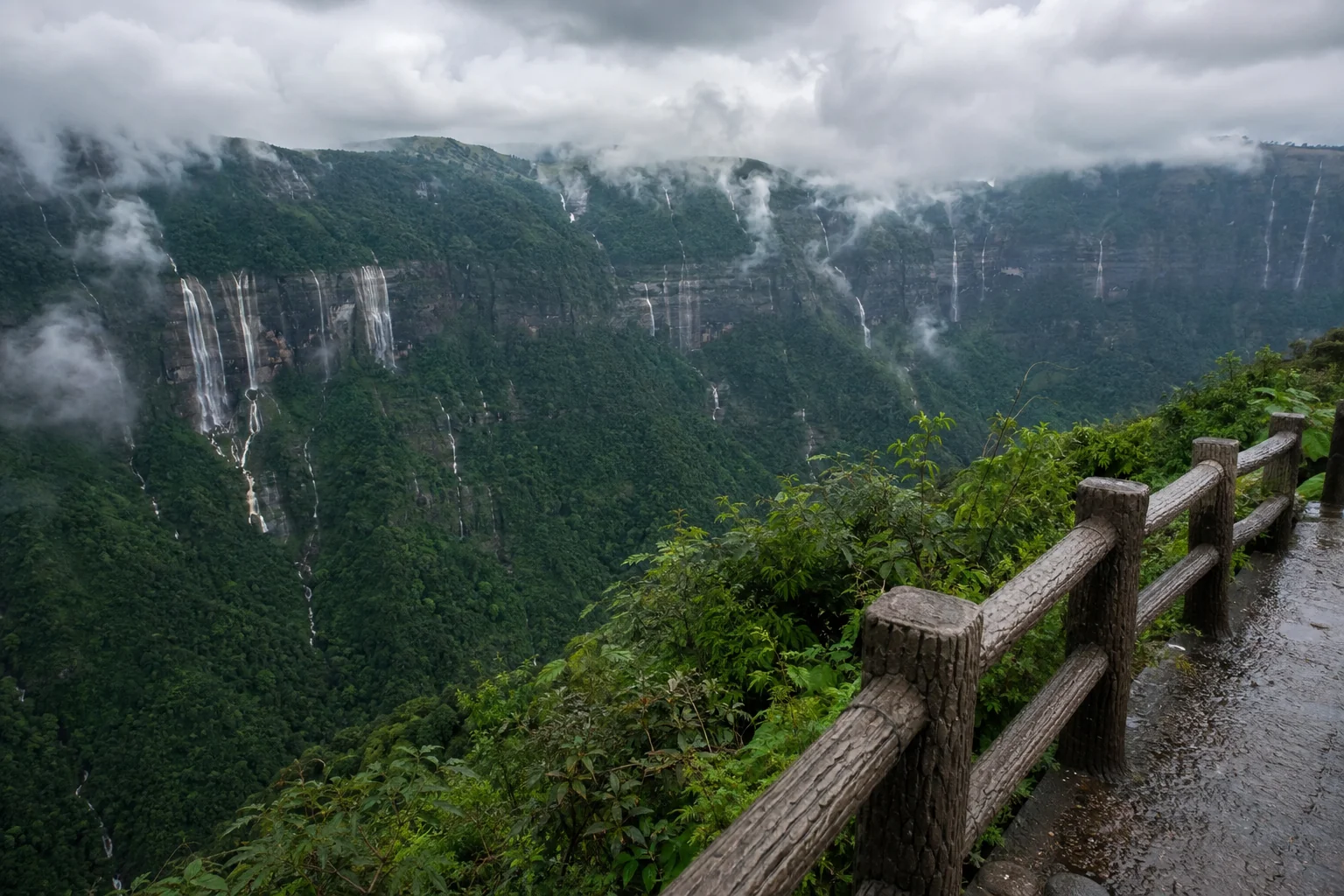
One of the wettest inhabited places on earth, on a plateau that drops away in cliffs towards the Bangladesh plain. Nohkalikai, the tallest plunge waterfall in India, falls 340 metres off that edge.
In the dry months the falls shrink and the views open. In monsoon the falls are spectacular and you often cannot see them through the cloud.
The trade-off: October to April gives clear views and modest waterfalls. June to September gives enormous waterfalls and near-permanent cloud. Sohra receives most of its rain between June and August.
4.The double-decker living root bridge, Nongriat
Khasi communities train the aerial roots of rubber fig trees across streams over decades until they form a bridge that keeps growing stronger. The double-decker at Nongriat is the famous one.
Getting there means about 3,500 steps down and the same back up. There is no other way in.
The descent: roughly 3,500 concrete steps each way from Tyrna, 2–3 hours down and 3–4 hours back up. Not suitable for anyone with knee problems. Start by 7am and carry water. Staying overnight at Nongriat makes it far more manageable.
5.Dawki and the Umngot river
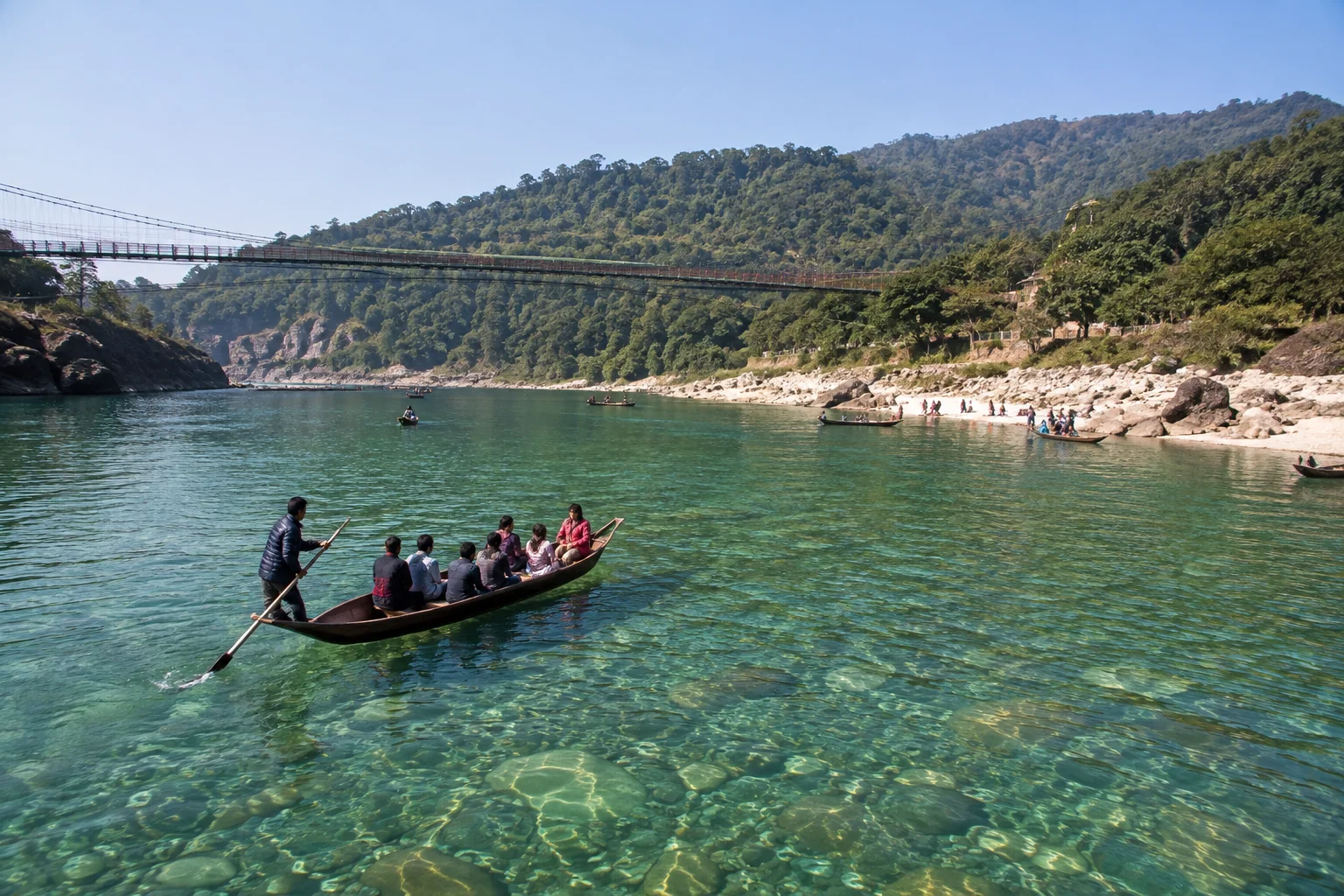
The river here runs so clear in the dry season that boats appear to float in mid-air over the stones. The Bangladesh border is a few hundred metres downstream and marked by a single bridge.
In monsoon the same water is brown and fast, and the photographs everyone has seen are impossible.
Dawki boat ride timing: the water only runs clear from roughly November to March, clearest in December and January. Go early; boats and crowds build sharply after 10am. Weekends are much busier than weekdays.
6.Mawlynnong
Billed as the cleanest village in Asia, and the claim holds up: bamboo bins on every path, no litter anywhere, and a community that enforces it themselves.
There is a smaller single-decker root bridge nearby at Riwai and a bamboo skywalk with a view into Bangladesh.
Combine: Mawlynnong sits on the same road as Dawki, about 90 km from Shillong, so both are done in one long day. Plastic is discouraged; carry your own bottle.
7.Mawsmai and Arwah caves
Limestone caves near Cherrapunji. Mawsmai is lit and short, with a couple of tight squeezes. Arwah is longer, less visited and holds visible fossils in the rock.
Both flood in heavy rain and close without notice.
Practical: low ceilings and standing water in places. Wear shoes with grip and expect to get wet. Arwah requires a short forest walk to the entrance.
8.Umiam Lake (Barapani)
A reservoir 15 km north of Shillong, ringed by pine, and the first thing most people see coming up from Guwahati.
Kayaks and boats run from the eastern shore. It works better as a stop than a destination.
Where: on the Guwahati–Shillong highway, so it costs nothing extra on the transfer day. Best light is late afternoon.
9.Mawphlang sacred grove
A patch of old forest protected by Khasi custom for centuries, where nothing at all may be removed, not even a fallen leaf. The result is a dense, moss-covered woodland unlike the plantations around it.
Local guides from the village explain the monoliths and the rules, and the walk takes about an hour.
Rule: nothing may be taken out of the grove. Guides are arranged at the entrance and the fee supports the village. 25 km from Shillong.
10.Guwahati and Kamakhya Temple
The gateway city on the Brahmaputra, and the site of Kamakhya, one of the most important Shakti temples in India, on Nilachal hill above the river.
The Ambubachi Mela in June draws enormous crowds and effectively shuts the temple to casual visitors for several days.
Queues: the general darshan line at Kamakhya can run to several hours. A paid faster entry exists. A Brahmaputra sunset cruise is the better use of a spare evening in the city.
11.Majuli
The largest river island in the world, in the middle of the Brahmaputra, reachable only by ferry from Nimati Ghat near Jorhat. It holds a cluster of satras, Vaishnavite monasteries founded in the 16th century.
The island is shrinking to erosion each year, which the satras themselves will tell you about at length.
Ferries: a handful of crossings daily from Nimati Ghat, and they stop by mid-afternoon. Check the last ferry before you plan the return. Services are suspended in high water.
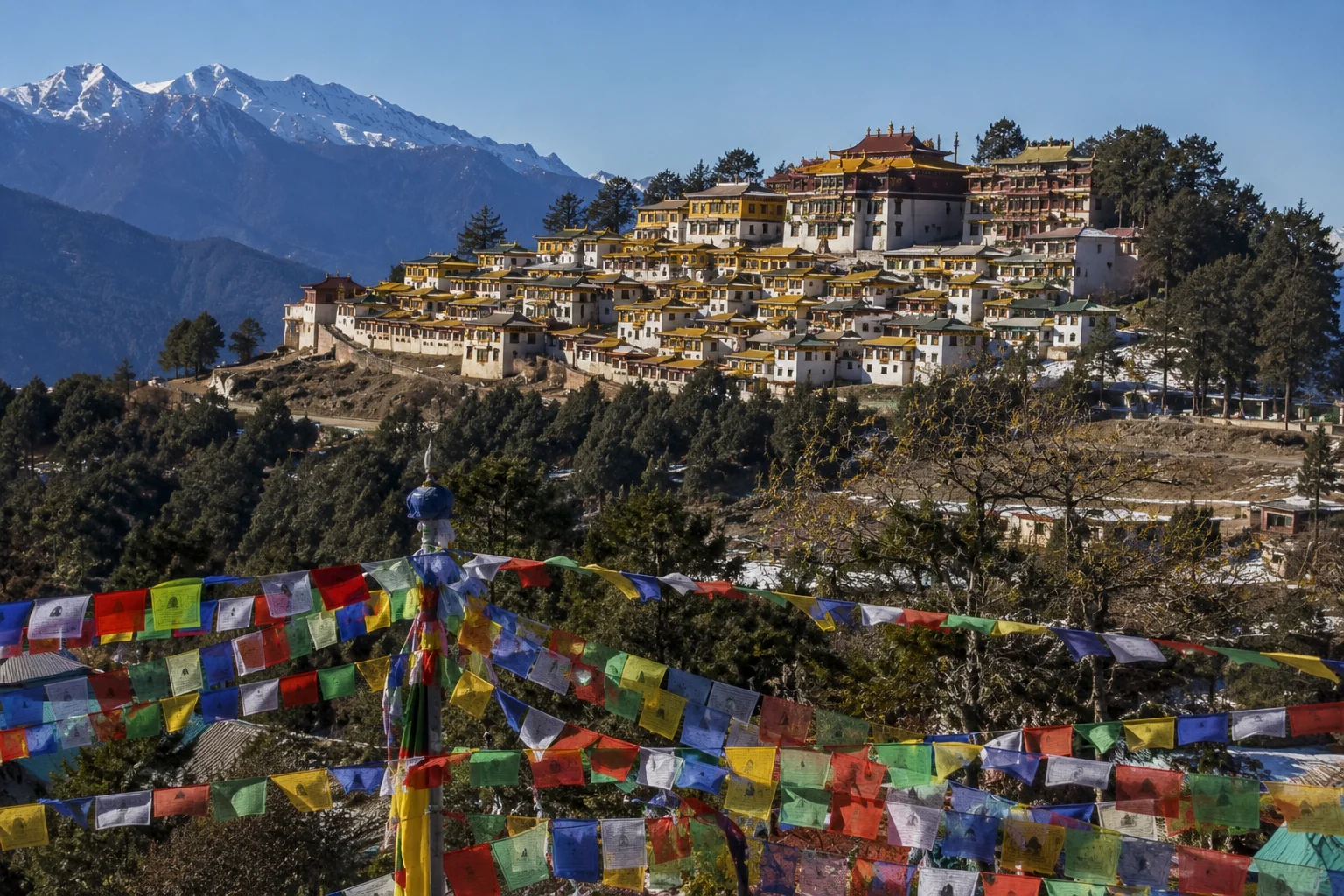
12.Tawang, Arunachal Pradesh
At 3,048 metres near the Tibetan border, holding the largest monastery in India and the second largest in the world, founded in 1680. The birthplace of the sixth Dalai Lama.
The road in crosses Sela Pass at 4,170 metres. It is two full days of driving from Guwahati and worth every hour of it.
Arunachal Inner Line Permit: Indian nationals need an ILP, applied for online or at the state's offices. Foreign nationals need a Protected Area Permit and must travel in a group of at least two. Sela Pass can close with snow between December and March.
13.Sela Pass and Jaswant Garh
The pass at 4,170 metres on the Bomdila–Tawang road, with a small lake beside it that freezes in winter. Jaswant Garh below it memorialises a rifleman who held a position here alone for three days in 1962.
A new tunnel now bypasses the worst of the pass in bad weather, but the old road is still the one with the view.
Weather: snow can close the pass from December to March. The army-run canteen at Jaswant Garh serves free tea to travellers, which after four hours of hairpins is not nothing.
14.Ziro Valley, Arunachal Pradesh
A flat, terraced rice valley at 1,500 metres, home to the Apatani people, and a UNESCO tentative-list site for its wet rice cultivation without draught animals or machinery.
The Ziro Festival of Music in September is the reason many people first hear of it.
Getting there: the nearest railhead is Naharlagun, then 4–5 hours by road. ILP required. September and October are the best months, with the festival at the end of September.
15.Loktak Lake, Manipur
The largest freshwater lake in the north east, covered in phumdis, floating mats of vegetation thick enough to build huts on. Keibul Lamjao on the southern edge is the only floating national park in the world.
The last wild population of the sangai, Manipur's brow-antlered deer, lives on those mats.
Check first: Manipur's security situation changes, and travel advisories should be checked close to your dates. Imphal is the base; the lake is about 50 km south.
Best time to visit North East India
The north east has the heaviest rain in India, and the season is really a question of what the water is doing.
| Months | What it is like | Verdict |
|---|---|---|
| November – February | Dry, clear, and the only time the Umngot at Dawki runs transparent. Kaziranga open. Cold at Tawang. | Best overall |
| March – April | Still dry, warmer, and the best months for wildlife at Kaziranga before the park closes. | Best for Kaziranga |
| May – September | Monsoon. Kaziranga closes, landslides cut the Arunachal roads, and Meghalaya receives extraordinary rain. | Avoid, mostly |
| October | Rain easing, everything green, Kaziranga reopening mid-month. A good shoulder month. | Good |
How to get to North East India
Guwahati is the hub. Almost every north east itinerary starts and ends there.
By air. Guwahati has direct flights from Delhi, Kolkata, Mumbai, Bengaluru and Bagdogra. For Arunachal, smaller airports at Tezpur, Lilabari and Pasighat cut long drives. Shillong has limited services.
By rail. Guwahati is the main railhead. Jorhat and Furkating serve Majuli and upper Assam; Naharlagun serves Itanagar and Ziro.
Permits. Arunachal Pradesh requires an Inner Line Permit for Indian nationals and a Protected Area Permit for foreign nationals. Nagaland and Mizoram also require ILPs. Assam and Meghalaya do not.
North East India travel questions, answered
Official sources
Permit rules, fees and seasonal closures change. These are the government pages we check against, and the ones to confirm your own dates with before you travel.
- Inner Line Permit portal, Government of Arunachal Pradesh — the official ILP application for Indian nationals
- Assam Tourism — Kaziranga season dates, safari bookings and Majuli ferry information
- Department of Environment and Forests, Assam — national park opening and closure notifications