Nepal is the easiest Himalayan country for an Indian passport holder to enter. No visa, no permit at the border, and a Voter ID card is accepted in place of a passport. That removes the paperwork problem that shapes every Bhutan and Sikkim itinerary.
What replaces it is a distance problem. The best places to visit in Nepal are spread across three very different zones: the Kathmandu valley, the lakes and mountain views around Pokhara, and the lowland grasslands of the Terai. Six or seven nights covers two of the three comfortably. Trying for all three plus a trek is where trips come apart.
What are the best places to visit in Nepal?
The best places to visit in Nepal are Kathmandu's Durbar Square, Pashupatinath and Boudhanath, Pokhara and Phewa Lake beneath the Annapurnas, Nagarkot for Himalayan sunrises, Chitwan National Park, and Lumbini, the birthplace of the Buddha. Indian nationals need no visa to enter.
- Kathmandu Durbar Square
- Pashupatinath Temple
- Boudhanath Stupa
- Swayambhunath (the Monkey Temple)
- Patan Durbar Square
- Bhaktapur
- Nagarkot
- Pokhara and Phewa Lake
- Sarangkot
- The Annapurna region
- Chitwan National Park
- Lumbini
- Everest Base Camp and the Khumbu
- Bandipur
- Janakpur
1.Kathmandu Durbar Square
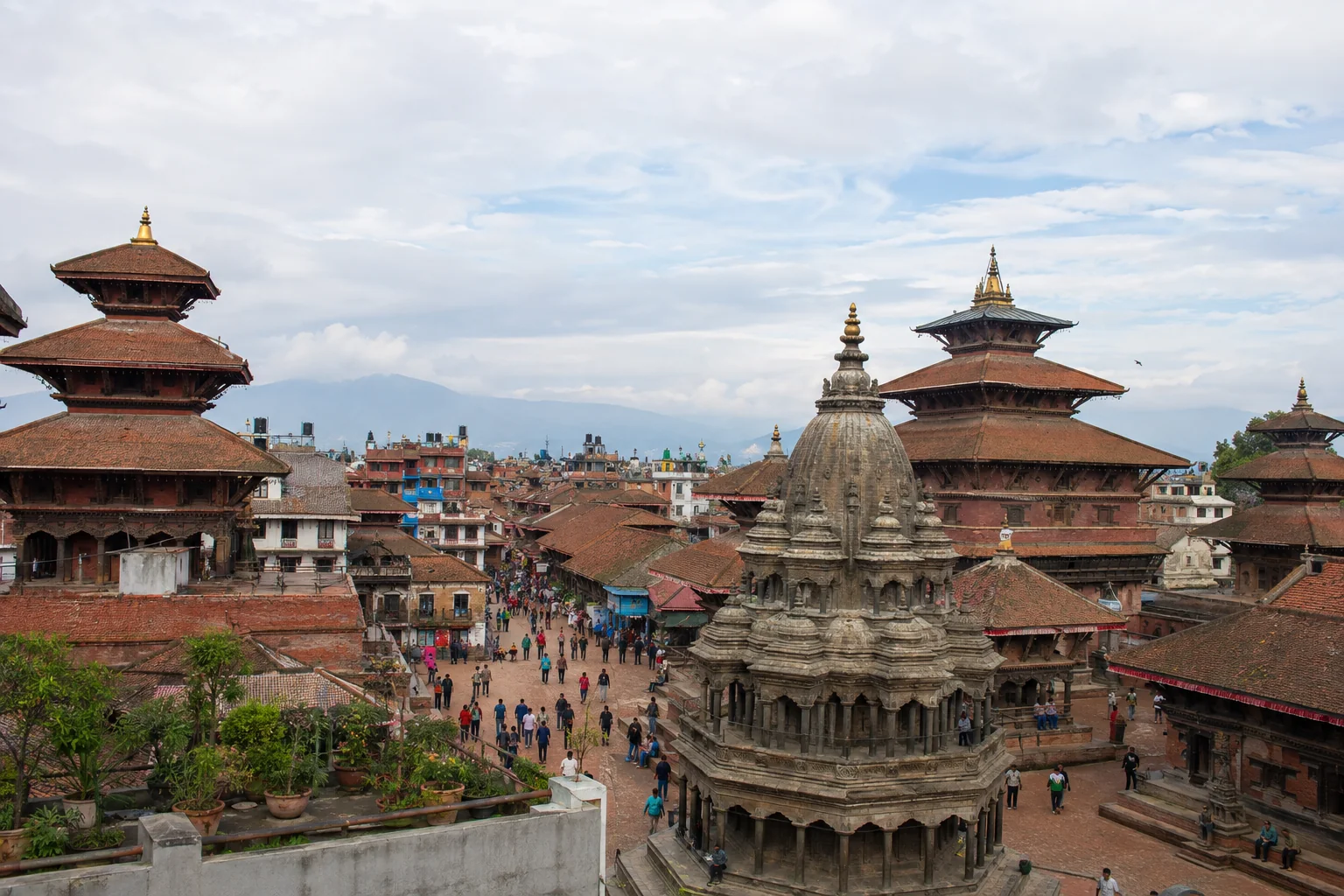
The old royal complex at the heart of the city, a UNESCO World Heritage Site, and still partly under reconstruction after the 2015 earthquake. Some temples were rebuilt, some are scaffolded, and a few are simply gone.
The Kumari Ghar in the corner of the square houses the living goddess, a young girl selected from the Shakya community, who appears briefly at an upper window.
Entry: a ticket covers the square for the length of your stay if you get it endorsed with your visa dates at the site office. Foreign nationals and SAARC nationals pay different rates.
2.Pashupatinath Temple
The most important Hindu temple in Nepal, on the banks of the Bagmati, where open-air cremations run on the ghats through the day. Only Hindus may enter the main courtyard; everyone can watch from the terraces across the river.
It is confronting and it is not a spectacle laid on for visitors. Behave accordingly.
Etiquette: photography of cremations is not acceptable at close range. The evening aarti on the ghats around 6pm is the right time to come. Leather belts and bags should be removed at the inner gates.
3.Boudhanath Stupa
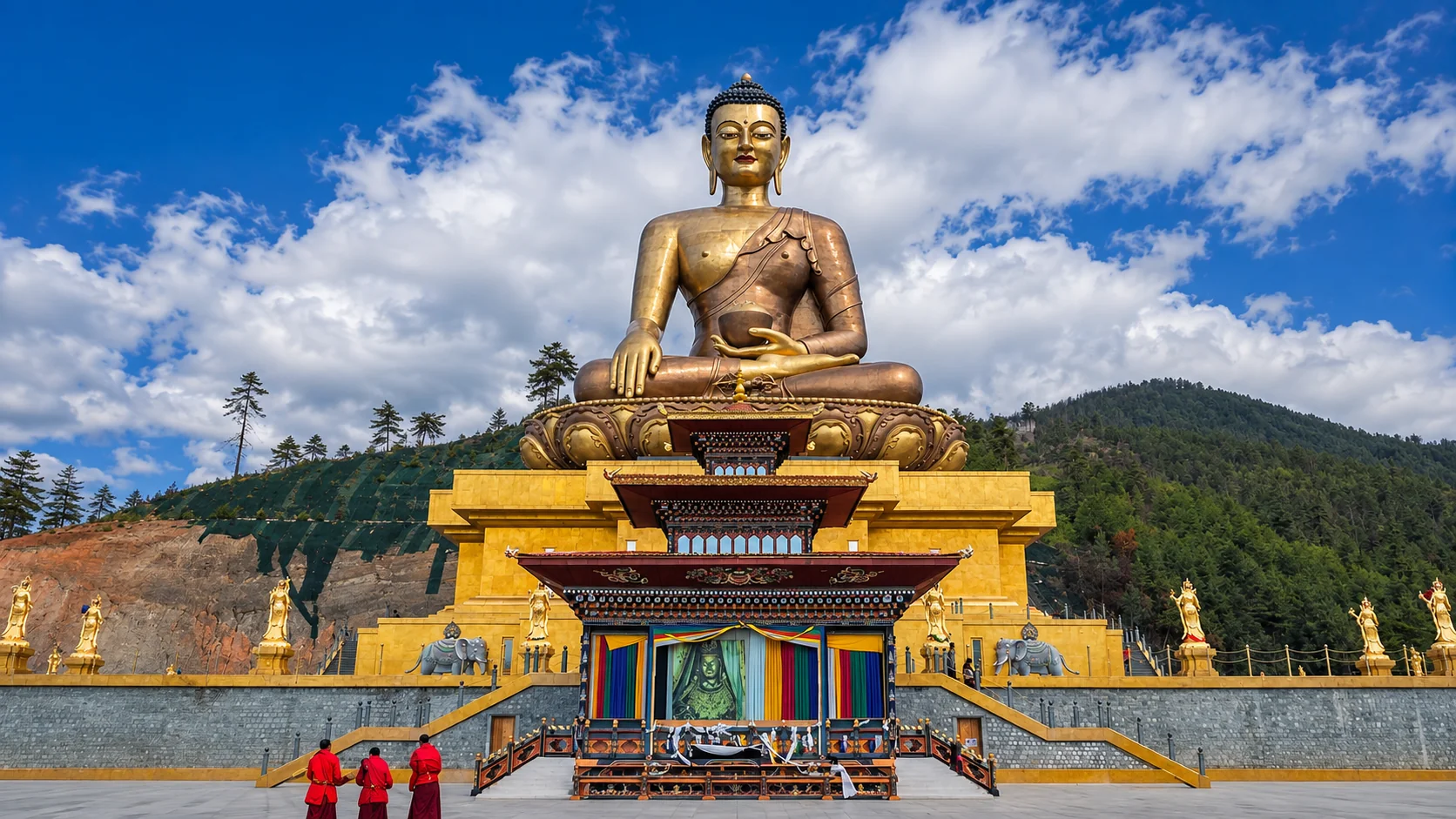
One of the largest stupas in the world, rebuilt after 2015, and the centre of Tibetan Buddhist life in Nepal. The circuit around it fills at dusk with people walking clockwise and turning the wheels.
The rooftop cafés on the ring have the view. Get one an hour before sunset.
Best hour: from 5pm, when the butter lamps are lit and the kora fills. Small entry fee for the plaza. Walk clockwise, always.
4.Swayambhunath (the Monkey Temple)
On a hill west of the city, up 365 steps, with the Buddha eyes on all four sides of the stupa looking over the valley. It predates Boudhanath by centuries.
The macaques are aggressive about food and quick with anything held loosely.
Two ways up: the eastern stairway is 365 steps and steep; a road on the west side brings vehicles close to the top. Take the road up and the steps down.
5.Patan Durbar Square
Across the Bagmati in Lalitpur, and the best preserved of the three Durbar Squares. The Krishna Mandir in stone, the Golden Temple a few lanes away, and the Patan Museum, which is genuinely the best museum in the country.
Quieter than Kathmandu's square and worth more of your time than most itineraries give it.
Allow: half a day including the museum. Patan is 5 km from Thamel, about 30 minutes in traffic.
6.Bhaktapur
A medieval town rather than a monument, 13 km east of Kathmandu, with brick lanes, potters' squares and the five-storeyed Nyatapola temple. Vehicles are kept out of the core.
Stay a night if you can. Bhaktapur after the day visitors leave is a different place entirely.
Entry: a town-wide ticket, valid multiple days if endorsed. Try the juju dhau, the local sweet yoghurt, sold in clay pots.
7.Nagarkot
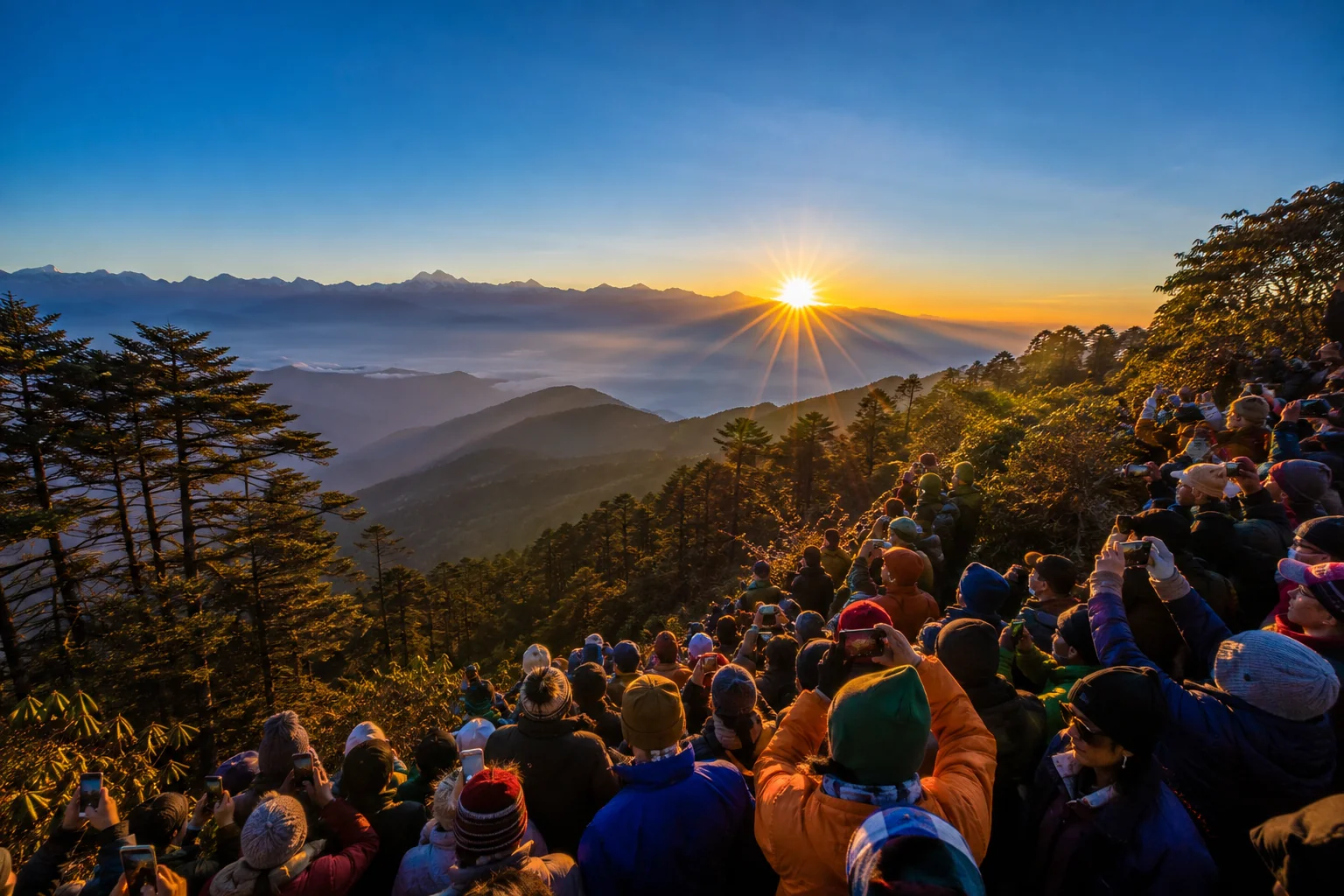
A ridge at 2,175 metres, 32 km from Kathmandu, and the closest reliable Himalayan sunrise to the capital. On a clear morning the panorama runs from Annapurna round to Everest.
The view is entirely weather-dependent, and there is very little else here, which is the point.
Best months: October to December and March to April for clear dawns. Book a north-facing room. Cloud from June to September usually means nothing visible at all.
8.Pokhara and Phewa Lake
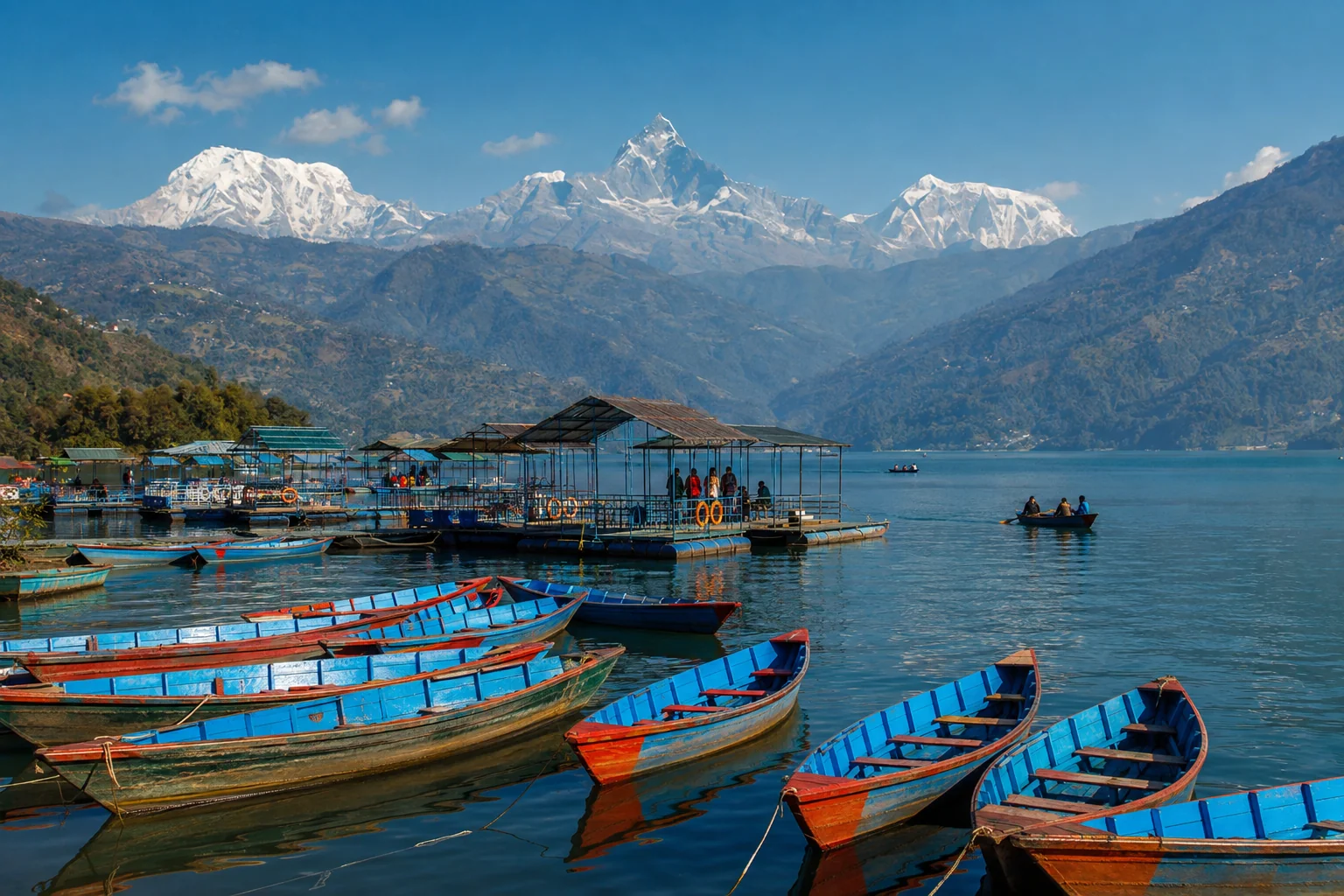
Nepal's second city, at 820 metres, sitting on a lake with the Annapurna massif rising 7,000 metres behind it. Machhapuchhre, the fishtail peak, is the one everybody photographs and the one that has never been climbed.
Rowing boats go out to the Tal Barahi temple on its island. The lakeside strip is where every trek in the Annapurna region begins or ends.
Getting there: 25 minutes by air from Kathmandu, or 6–8 hours by road on the Prithvi Highway. The flight is worth it; the road is long and the traffic unpredictable.
9.Sarangkot
The ridge above Pokhara at 1,600 metres, reached in 40 minutes by road, and the best sunrise viewpoint in the country that does not involve walking for days.
It is also the launch site for paragliding over the lake, which is the single most popular thing anyone does in Pokhara.
Paragliding: tandem flights run roughly 9am to 3pm depending on thermals, September to June. Flights are cancelled in monsoon and in high wind. Weight limits apply.
10.The Annapurna region
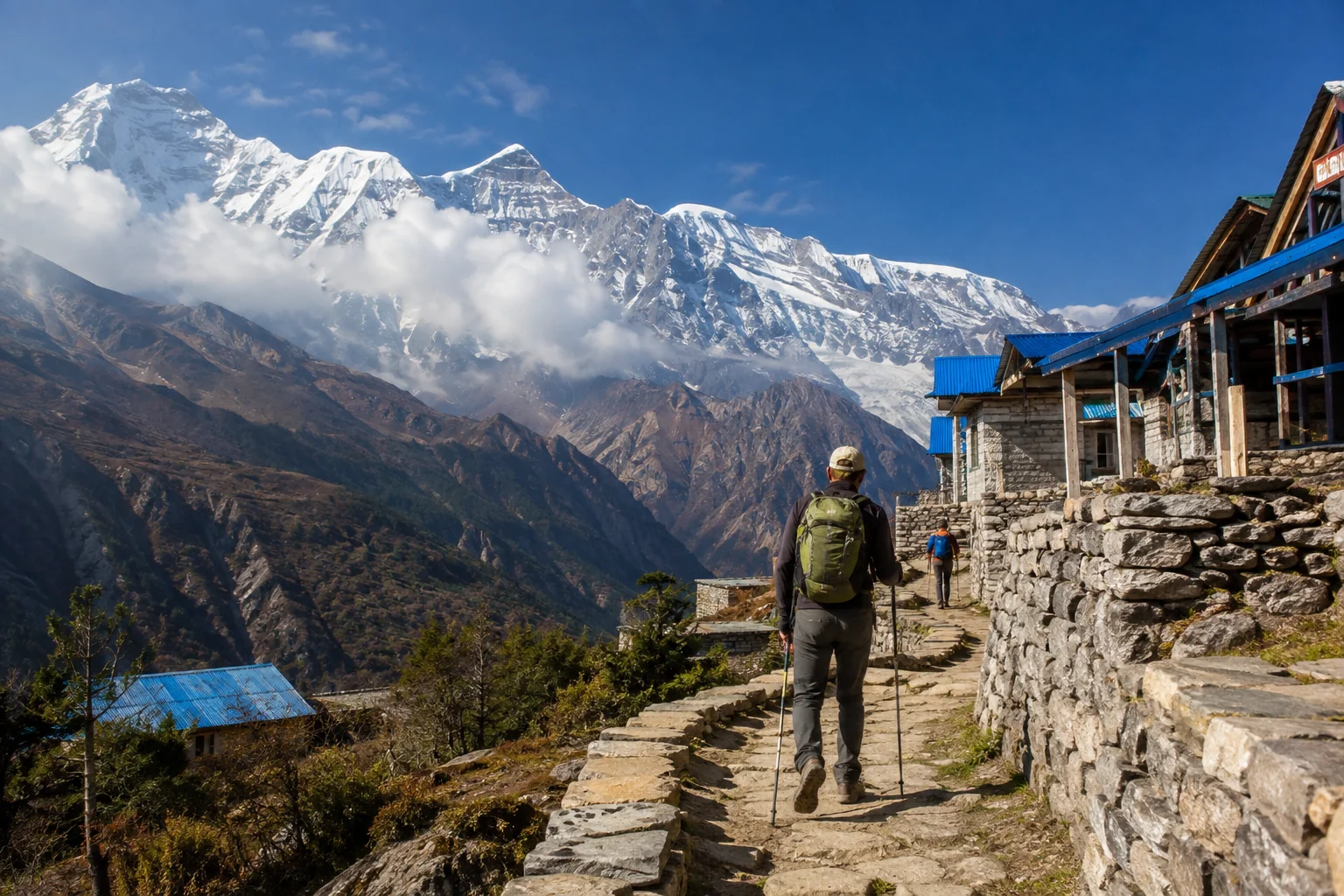
Trekking country: the Annapurna Base Camp route at around 10 days, Poon Hill at 4 to 5, and the full circuit at 12 to 18 depending on how you cross Thorong La.
The teahouse system means you do not need to carry camping gear on any of the main routes, which is why so many first-time trekkers start here.
Permits: both a TIMS card and an ACAP entry permit are required, obtained in Kathmandu or Pokhara before you start walking. Trekking with a licensed guide is now required on most routes for foreign nationals.
11.Chitwan National Park
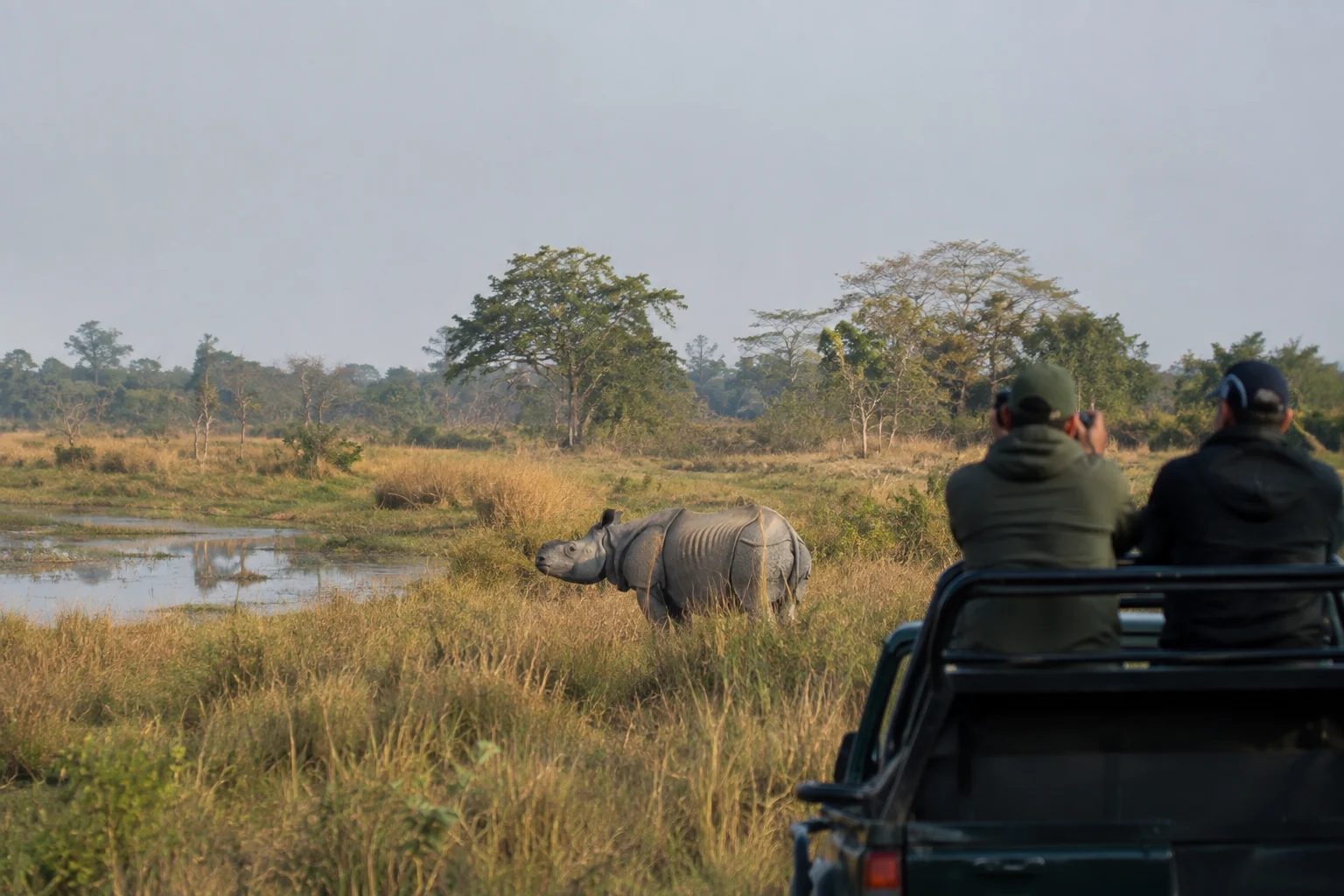
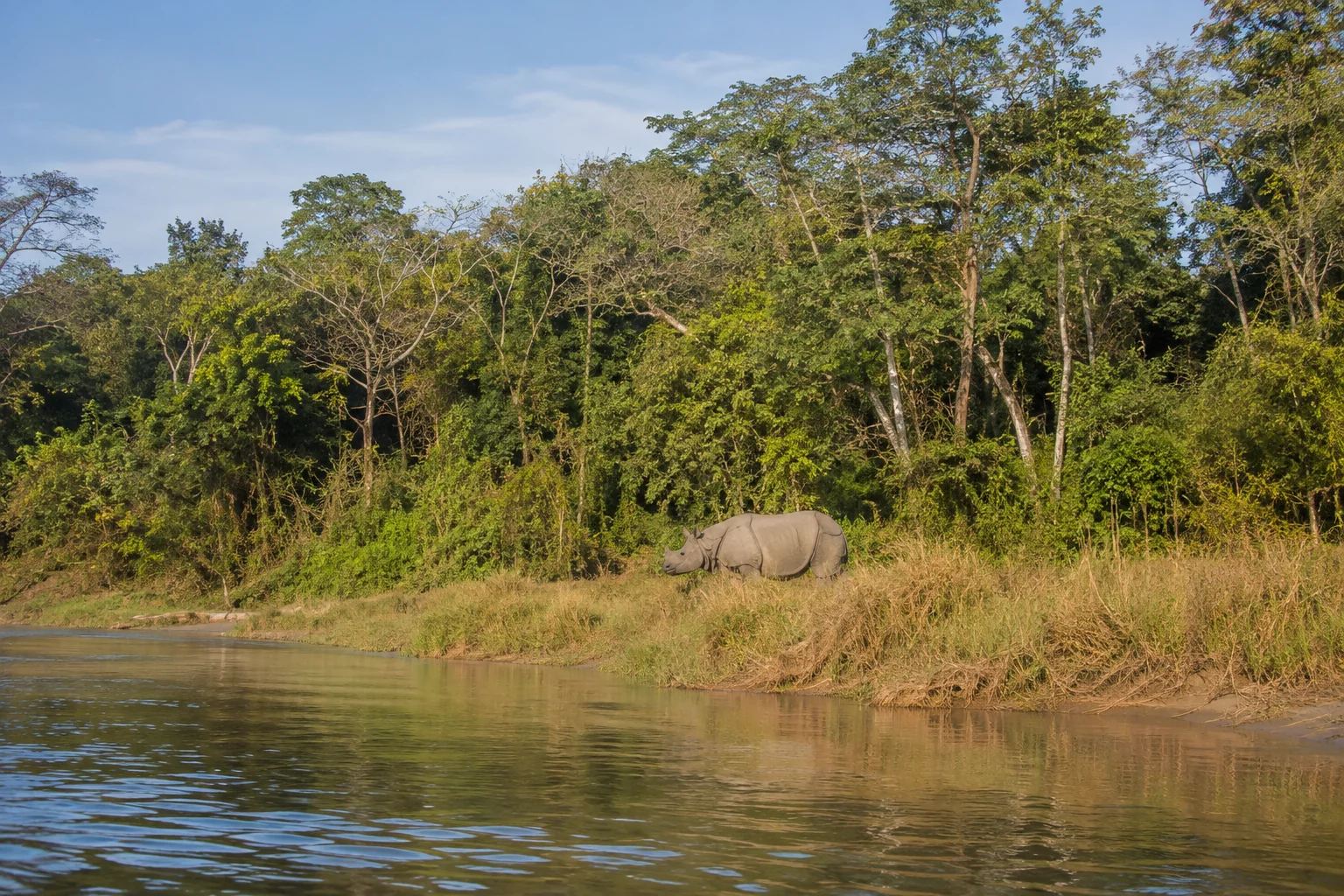
Lowland grassland and sal forest in the Terai, at 150 metres, holding one-horned rhino, gaur, sloth bear and a small tiger population. It was Nepal's first national park and is a UNESCO site.
Jeep safaris and canoe trips down the Rapti are the standard way in. Elephant-back safaris have largely been phased out, and should be declined where still offered.
Season: October to March for wildlife and comfortable temperatures. The grass is cut in January, which sharply improves sightings. The park largely closes to safaris during the monsoon.
12.Lumbini
The birthplace of the Buddha, marked by the Maya Devi temple over the exact spot and the Ashokan pillar that identifies it, inscribed in 249 BCE.
The monastic zone around it holds temples built by Buddhist countries from Thailand to Germany, spread over three kilometres of park.
Getting there: Lumbini is in the far south near the Indian border at Sunauli, roughly 8 hours by road from Pokhara. It suits travellers entering or leaving Nepal overland far better than a detour from Kathmandu.
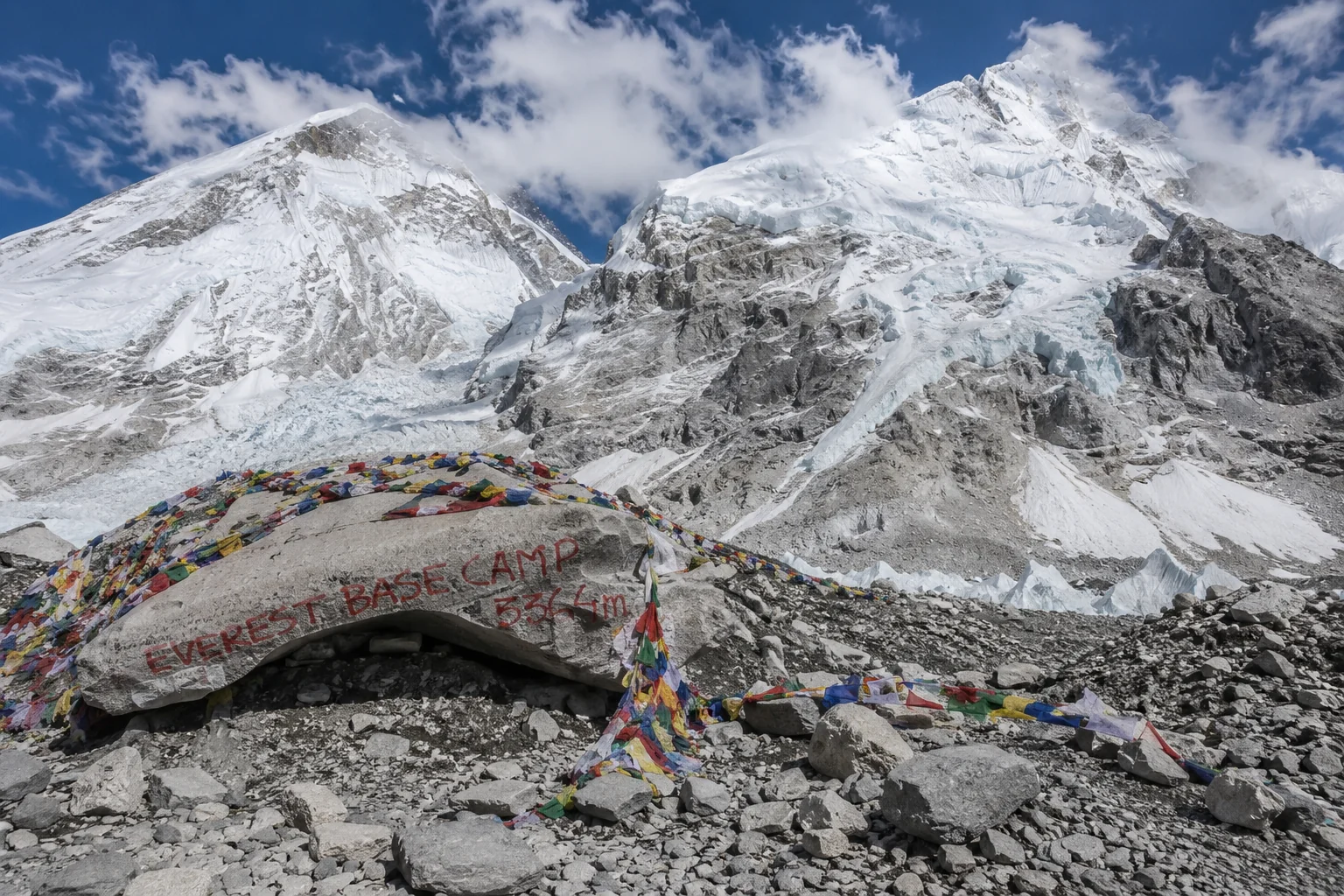
13.Everest Base Camp and the Khumbu
The trek from Lukla to base camp takes 12 to 14 days including acclimatisation, topping out at Kala Patthar at 5,545 metres for the view of Everest itself.
Lukla's airstrip is short, sloped, and closed by weather often enough that you should build two spare days into any trip that uses it.
Altitude: the route crosses 5,000m and acute mountain sickness is a genuine risk. Sagarmatha National Park entry and a Khumbu Pasang Lhamu municipality permit are both required. Travel insurance covering helicopter evacuation is essential.
14.Bandipur
A Newari hill town on a ridge at 1,030 metres, halfway between Kathmandu and Pokhara, with a car-free main street of restored 18th-century houses.
It exists on most itineraries as a lunch stop. It deserves a night.
Why stop: it breaks the long Prithvi Highway drive roughly in half and has a clear Himalayan view from the ridge above the town at dawn.
15.Janakpur
In the eastern Terai, the birthplace of Sita and the site of the Janaki Mandir, a marble temple built in 1910 in a Rajput-Mughal style that looks like nothing else in Nepal.
It receives large numbers of Indian pilgrims and very few Western tourists.
Access: closest to the Indian border crossings in Bihar, and now served by a rail link from Jaynagar. Vivah Panchami in November or December is the major festival and the town fills completely.
Best time to visit Nepal
Nepal's altitude range is enormous, from 60 metres in the Terai to 8,848 at the top. The season below is for the places most people actually go.
| Months | What it is like | Verdict |
|---|---|---|
| March – May | Warm, rhododendrons on the trekking routes, good visibility early in the day. Haze builds by late spring. | Best for trekking |
| June – August | Monsoon. Leeches on the trails, flights to Lukla and Pokhara frequently cancelled, no mountain views. | Avoid |
| September – November | The clearest air of the year, stable weather, and the main trekking season. Dashain and Tihar fall here. | Best overall |
| December – February | Cold at altitude with high passes snowbound, but Kathmandu, Pokhara and Chitwan are pleasant and empty. | Best for Chitwan |
How to get to Nepal
For Indian travellers Nepal is unusually simple: no visa, and several ways in that do not involve flying.
By air. Tribhuvan International in Kathmandu has direct flights from Delhi, Kolkata, Mumbai, Bengaluru and Varanasi. Pokhara and Bhairahawa also have international terminals.
Overland. The main crossings from India are Sunauli near Gorakhpur, Raxaul near Birgunj, Kakarbhitta in the east near Siliguri, and Banbasa in Uttarakhand. Kakarbhitta is the one that matters for anyone already in north Bengal.
Documents. Indian nationals need no visa. Carry a valid passport, a Voter ID card, or for air travel one of the specific photo IDs Nepal accepts. Aadhaar and driving licences are not accepted for entry.
Nepal travel questions, answered
Official sources
Permit rules, fees and seasonal closures change. These are the government pages we check against, and the ones to confirm your own dates with before you travel.
- Department of Immigration, Government of Nepal — entry requirements, accepted documents and visa rules by nationality
- Nepal Tourism Board — TIMS cards, trekking permits, licensed guide requirements and festival dates