Bali is small, about 145 km across, and it still takes three hours to drive from Ubud to the west coast because the roads were not built for the traffic now on them. That single fact should shape your itinerary. The best places to visit in Bali cluster into three zones, and moving base once is far better than day-tripping from one hotel.
The usual split is Ubud inland for rice terraces and temples, then the south coast at Seminyak or Uluwatu for beaches, with a day out to Nusa Penida. Indian nationals get a visa on arrival, and since 2024 there is also a tourist levy payable before you land.
What are the best places to visit in Bali?
The best places to visit in Bali are Ubud's rice terraces and Monkey Forest, Uluwatu Temple on the cliffs, Tanah Lot at sunset, the beaches at Seminyak and Nusa Dua, Nusa Penida's Kelingking viewpoint, and Mount Batur for the sunrise trek.
- Ubud
- Tegallalang Rice Terraces
- Sacred Monkey Forest Sanctuary
- Tirta Empul
- Mount Batur sunrise trek
- Tanah Lot
- Uluwatu Temple and the Kecak dance
- Seminyak
- Canggu
- Nusa Penida
- Nusa Dua
- Sidemen Valley
- Lempuyang Temple
- Jatiluwih rice terraces
- Amed and Tulamben
1.Ubud
The cultural centre inland, surrounded by rice terraces and river gorges, and the base for most of central Bali. Traffic on the single main road through town is genuinely bad from mid-morning.
Stay slightly outside the centre, in Penestanan or towards Tegallalang, and you get the same access without the congestion.
Base here for: the rice terraces, Tirta Empul, Mount Batur, Tegenungan waterfall and the Campuhan ridge walk. Three nights is the usual allocation and it is about right.
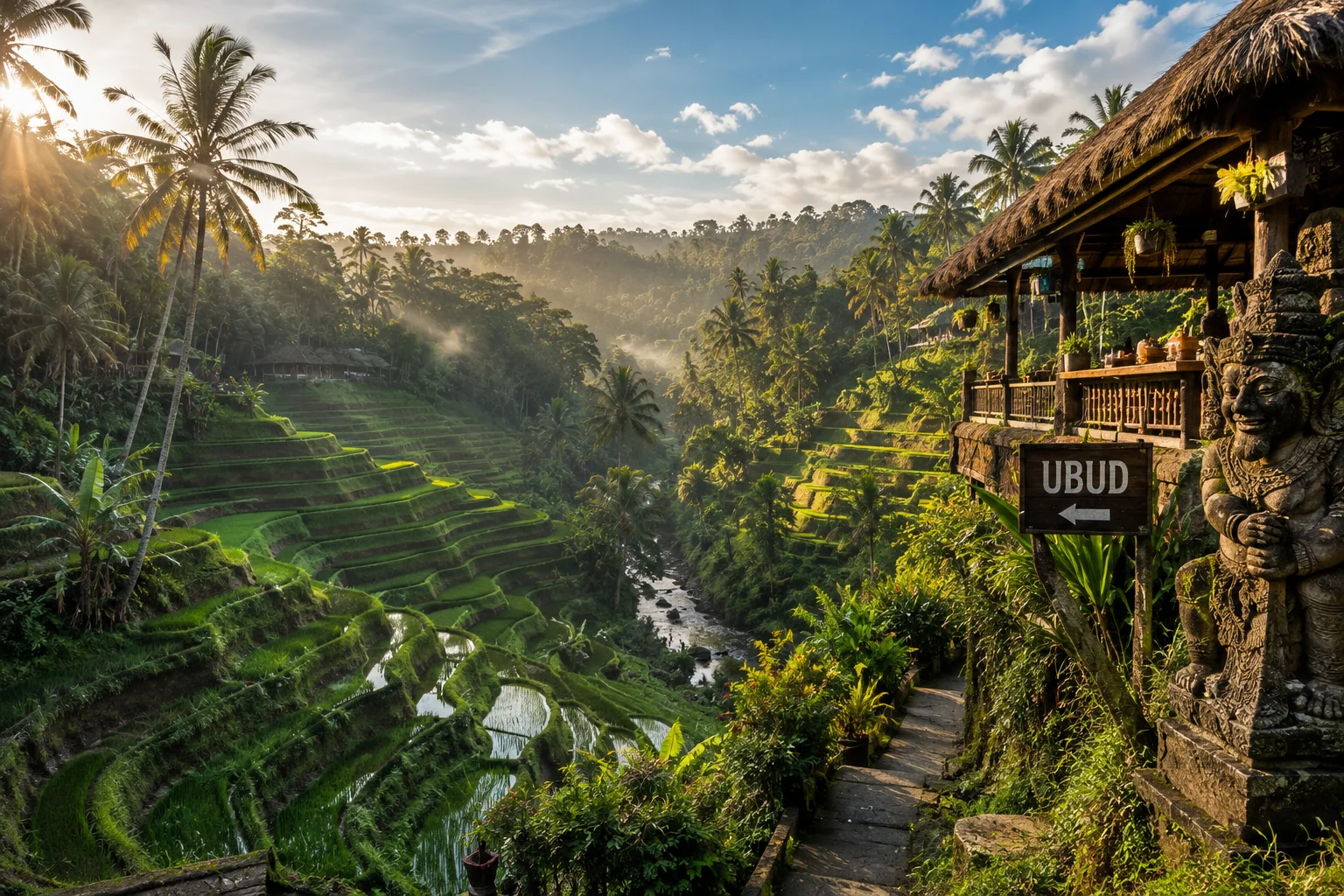
2.Tegallalang Rice Terraces
Terraces cut into a steep valley 20 minutes north of Ubud, irrigated by the subak system, a cooperative water management method that dates to the 9th century and is UNESCO-listed.
Individual landowners charge small fees at various points on the walk down. It is not a scam, it is how the farmers are compensated for the visitors.
Go at 7am: by nine the terraces are full and the swings have queues. Carry small rupiah notes for the landowner donations along the path. Slippery after rain.
3.Sacred Monkey Forest Sanctuary
A temple complex in 12 hectares of nutmeg forest in the middle of Ubud, with around 1,200 long-tailed macaques living in it.
They are wild animals habituated to people, not pets. They will take sunglasses, phones, water bottles and anything in an open bag.
Rules that matter: no eye contact, no smiling with teeth showing, nothing loose or shiny, and do not carry food. Bags should be zipped and worn on the front. Bites require a rabies assessment.
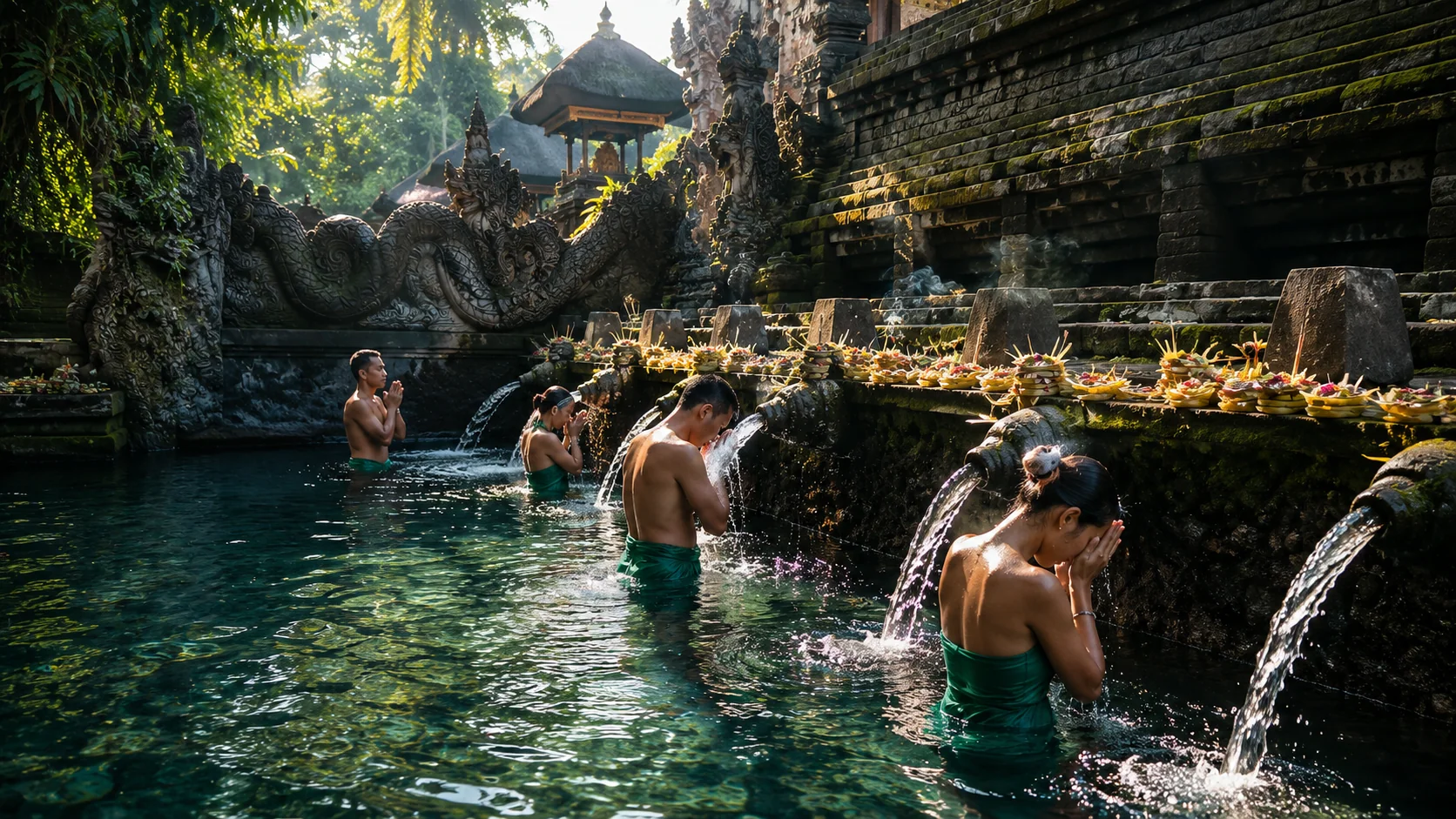
4.Tirta Empul
A water temple north of Ubud where a spring has fed purification pools since 962 CE. Balinese Hindus queue at each of the spouts in order for the melukat ritual.
Visitors may take part, and doing so respectfully with a guide who explains the sequence is better than watching from the wall.
If you bathe: a sarong is required, changing rooms and lockers are on site, and certain spouts are reserved for funeral rites and must be skipped. Women who are menstruating are asked not to enter the pools.
5.Mount Batur sunrise trek
An active volcano at 1,717 metres, climbed in the dark to reach the rim for sunrise over Lake Batur and Mount Agung beyond it.
The walk takes about two hours up on loose volcanic scree. It is not technical, but it is steep and it starts at two in the morning.
Reality check: pickup from Ubud around 2am, roughly 2 hours up, and cloud can mean no view at all. Licensed local guides are compulsory. Closed after volcanic activity warnings. Take a fleece; the rim is cold before dawn.
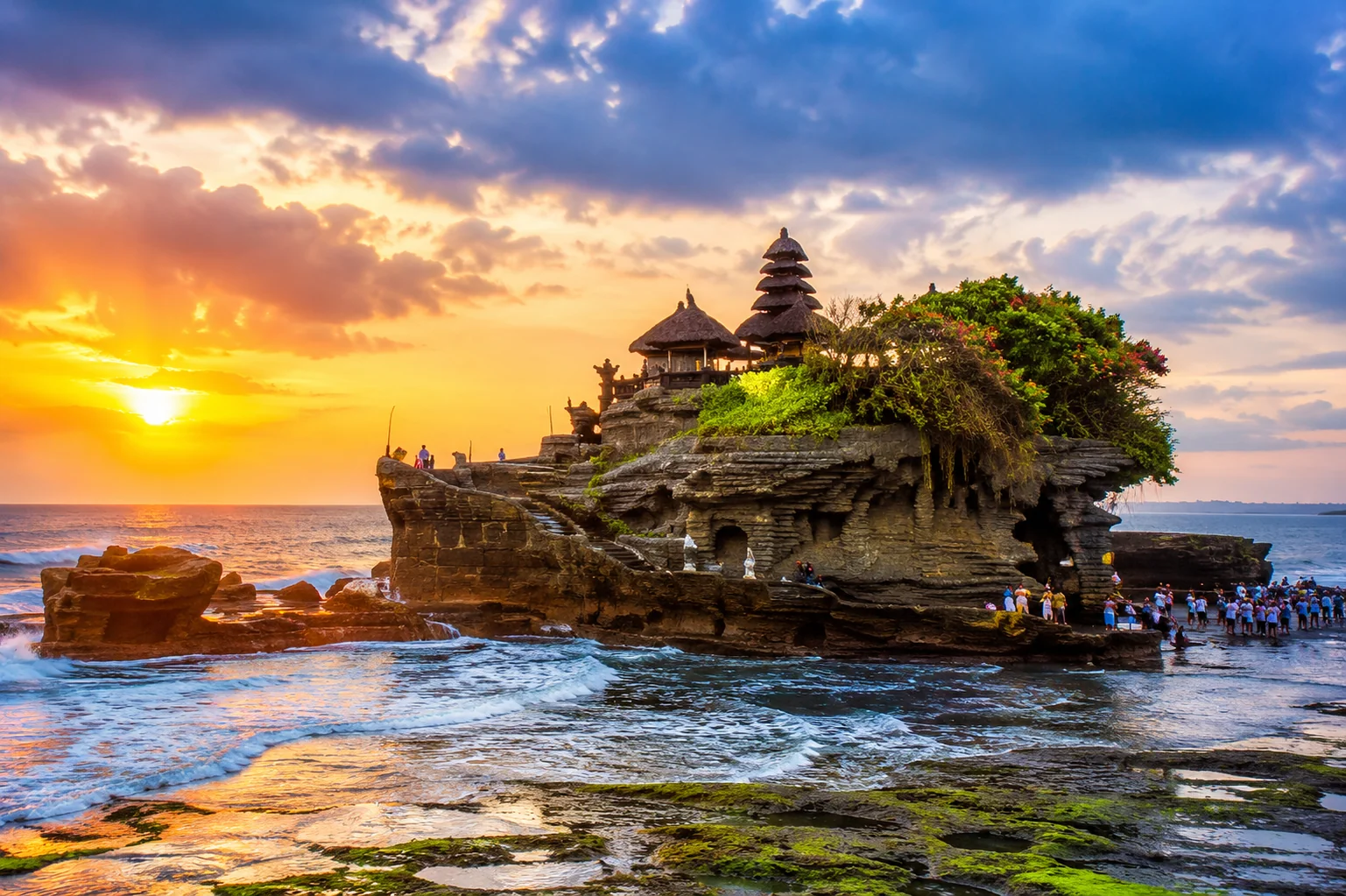
6.Tanah Lot
A temple on a rock formation in the sea on the southwest coast, built in the 16th century, cut off entirely at high tide and walkable at low.
It is the most photographed sunset in Bali and consequently very crowded. The crowd does not spoil it, but arriving an hour early makes a difference.
Tide matters: at high tide you cannot reach the base of the rock at all. Check the tide table for your date. Non-Hindus may not enter the temple itself in any case. Arrive by 5pm for sunset.
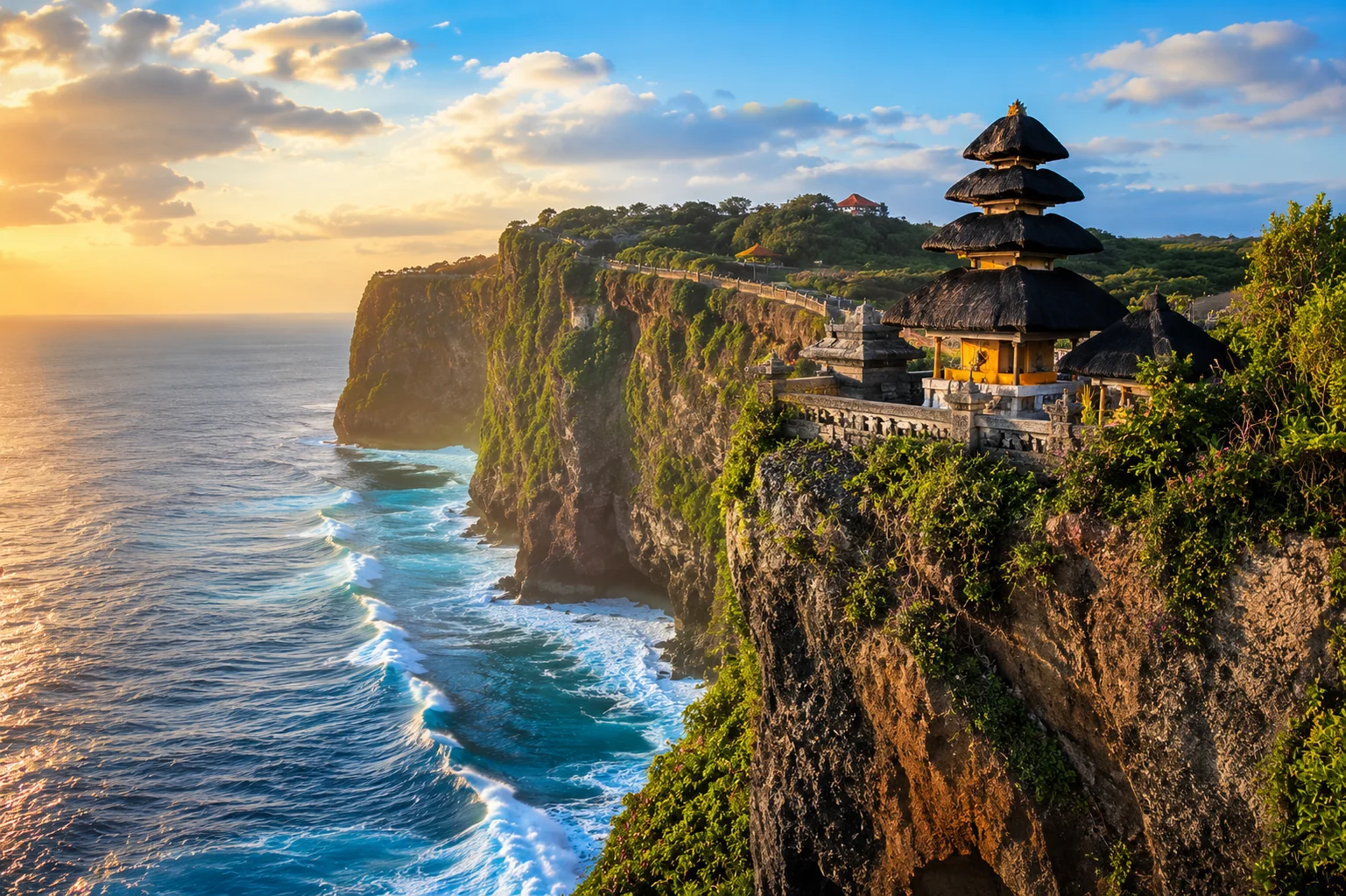
7.Uluwatu Temple and the Kecak dance
A sea temple on a 70-metre limestone cliff at the southern tip of the island, with the Kecak fire dance performed in an open amphitheatre on the cliff edge as the sun goes down.
The dance has no instruments at all. Around seventy men produce the entire soundtrack with a chanted chak rhythm.
Book ahead: Kecak starts around 6pm and tickets sell out in high season. The monkeys here are more practised thieves than Ubud's; hats and glasses go regularly. Sarongs are provided at the entrance.
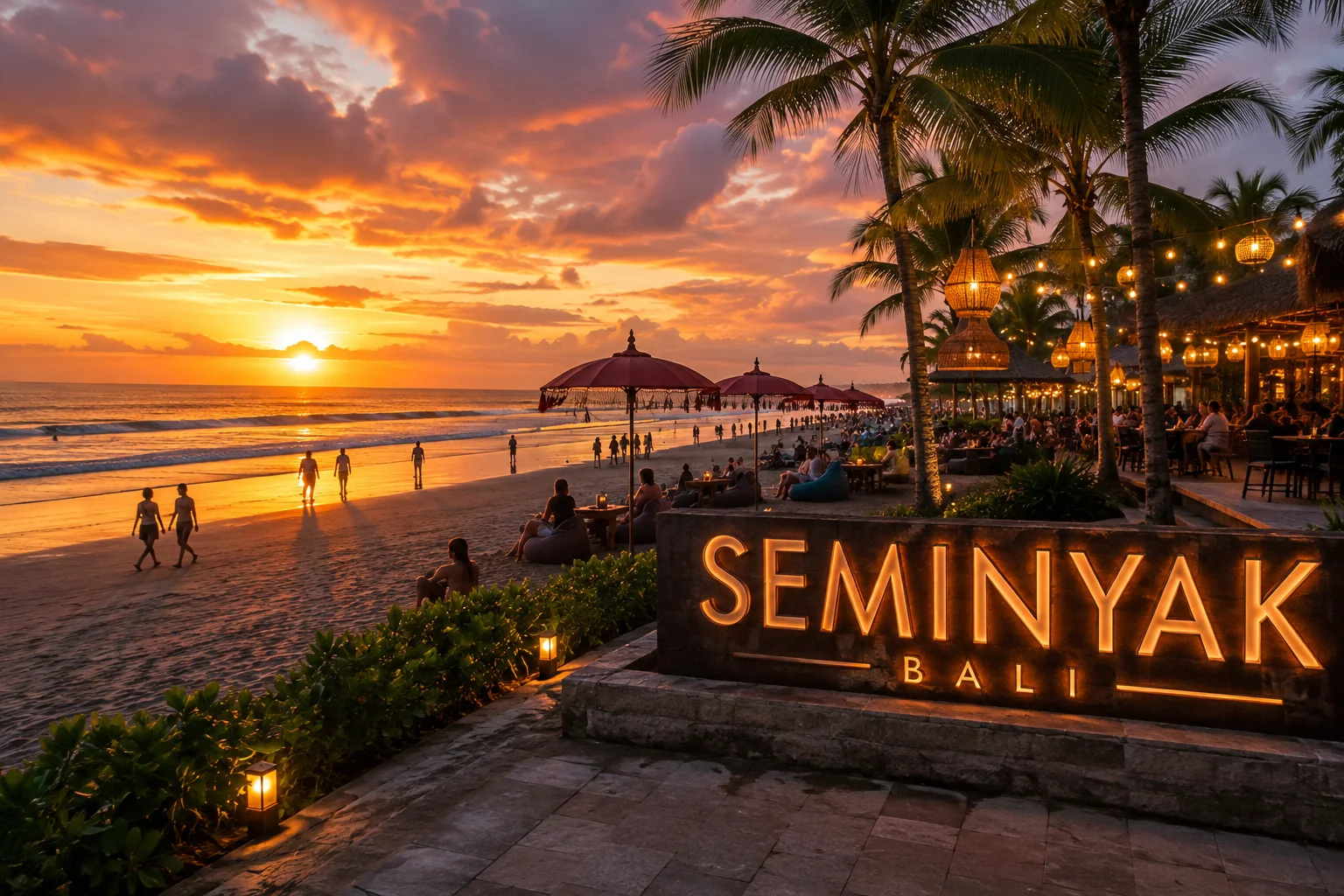
8.Seminyak
The developed stretch of the southwest coast, with the restaurants, beach clubs and shops. Sunsets over the water, and a beach better for walking than swimming.
It is where most first-time visitors stay, and it is a fair choice if you want to be able to walk to dinner.
Swimming caution: the west-coast beaches have strong rip currents. Swim between the flags where lifeguards are posted, and take red flags seriously. Petitenget and Double Six are the main patrolled stretches.
9.Canggu
North of Seminyak, black volcanic sand, surf breaks, and the centre of Bali's remote-working population. Rice fields still run between the villas, though fewer each year.
Better for surfing and cafés than for swimming or quiet.
Traffic: the Canggu shortcut roads are single-lane and gridlocked at peak hours. What looks like a 15-minute drive from Seminyak is often 45.
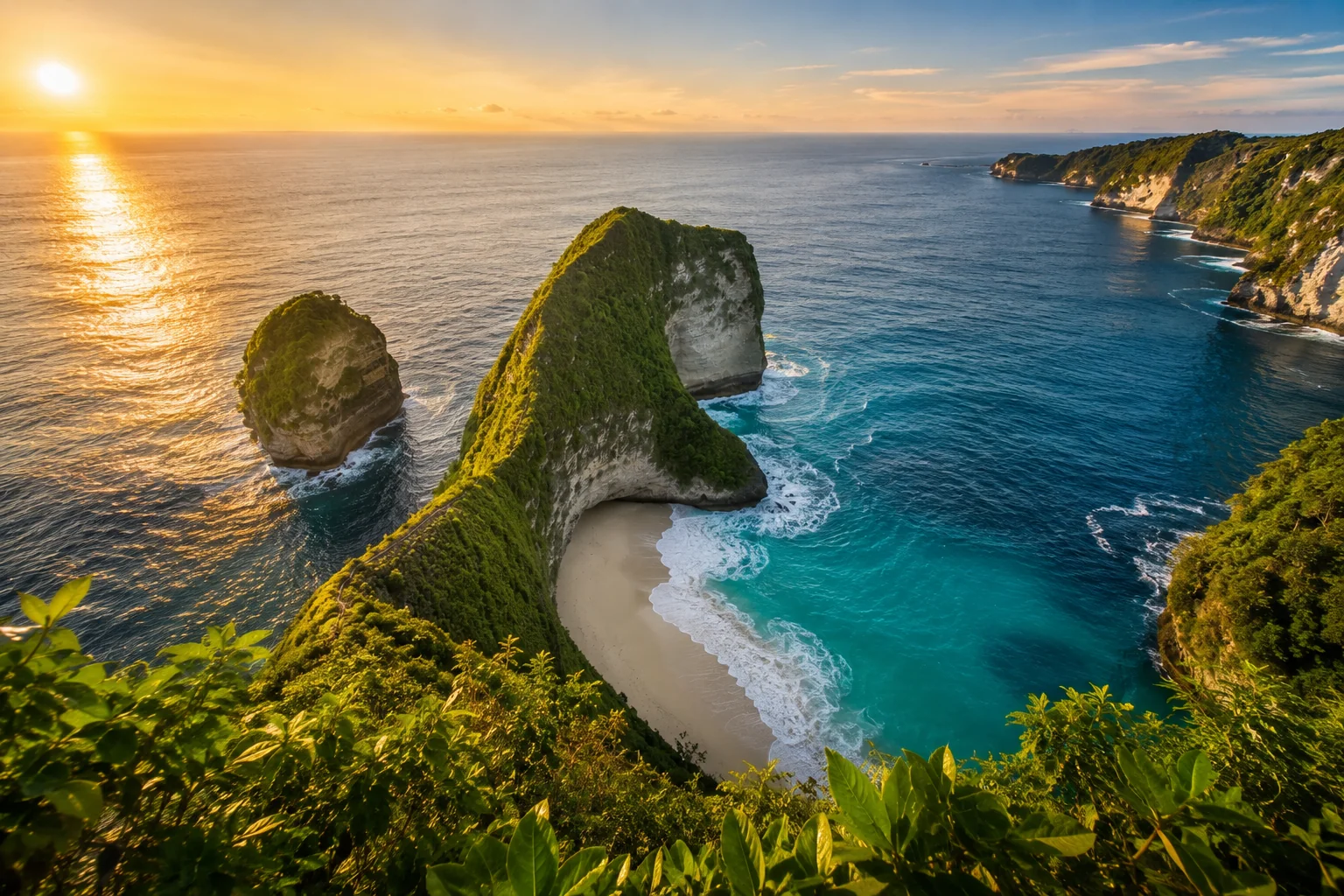
10.Nusa Penida
An island 45 minutes by fast boat southeast of Bali, with the Kelingking cliff, T-Rex shaped, on every Bali photograph you have ever seen. Also Angel's Billabong, Broken Beach and Crystal Bay.
The roads on Penida are poor and the distances take much longer than the map suggests.
Nusa Penida day trip from Ubud: a very long day. Boats leave Sanur early and the last returns mid-afternoon; the island's west-coast sites are 90 minutes of rough road from the harbour. Staying one night makes it a far better trip. Crossings are cancelled in rough seas.
11.Nusa Dua
A gated resort enclave on the southeast coast with calm, reef-protected water, which makes it the one part of southern Bali where swimming is genuinely easy.
It is manicured and self-contained and feels little like the rest of the island, which for families with small children is often exactly the point.
Why here: the reef flattens the swell, so unlike the west coast the water is safe for children. Roughly 20 minutes from the airport.
12.Sidemen Valley
East Bali, an hour from Ubud, with the rice terraces and river valleys that Ubud had thirty years ago and no longer has.
Very little to do, which is the entire recommendation. Mount Agung dominates the skyline on clear mornings.
Add two nights: if you want the Bali of the photographs without the traffic, this is where it still is. Bring cash; ATMs are scarce.
13.Lempuyang Temple
The Gates of Heaven, in east Bali, where the split gate frames Mount Agung behind it. The famous reflection photograph is produced with a mirror held under a phone by the attendant, and there is no lake.
The queue for that photograph regularly runs to two or three hours.
Know before you go: expect a long ticketed queue for the gate photograph, and the mirror trick is standard. The temple complex itself continues up over 1,700 steps and is far quieter above the gate.
14.Jatiluwih rice terraces
The UNESCO-listed terraces in central Bali, far larger and far less visited than Tegallalang, running across an entire hillside rather than one valley.
There are marked walking trails through the fields, and almost nobody on them.
Versus Tegallalang: Jatiluwih is about 2 hours from Ubud rather than 20 minutes, and gets a fraction of the visitors. If you want to walk in rice fields rather than photograph them, come here instead.
15.Amed and Tulamben
The northeast coast, black sand and quiet fishing villages, and the best diving and snorkelling on the island. The wreck of the USAT Liberty sits in shallow water 30 metres off the beach at Tulamben.
You can snorkel the wreck from shore without a boat, which is unusual anywhere.
The Liberty wreck: starts at 5m and drops to 30m, reachable by snorkellers as well as divers. Go early; boats and day groups arrive from about 9am. Best visibility April to November.
Best time to visit Bali
Bali has two seasons rather than four, and even the wet one is workable if you plan around afternoons.
| Months | What it is like | Verdict |
|---|---|---|
| April – June | Dry, warm, and quieter than peak. The best combination of weather and crowds all year. | Best overall |
| July – August | Dry and busy. Peak European holidays, highest prices, heaviest traffic in the south. | Good, expensive |
| September – October | Dry easing into wet. September is excellent; October begins to see afternoon rain. | Good |
| November – March | Wet season. Heavy afternoon downpours rather than all-day rain, humid, and rough seas can cancel Nusa Penida crossings. | Workable, cheaper |
How to get to Bali
One airport, in the south, and everything is measured in driving time from it.
By air. Ngurah Rai International at Denpasar takes direct flights from Delhi and Mumbai, with many more one-stop options through Singapore, Kuala Lumpur or Bangkok.
Transfer times. Airport to Seminyak is about 45 minutes, to Ubud 90 minutes to 2 hours, to Uluwatu about an hour. All of these worsen considerably at peak times, so an early arrival is worth a lot.
Entry. Indian nationals are eligible for a visa on arrival, extendable once. Since 2024 a separate tourist levy is also payable, and paying it online before you land avoids the queue at the airport counter.
Bali travel questions, answered
Official sources
Permit rules, fees and seasonal closures change. These are the government pages we check against, and the ones to confirm your own dates with before you travel.
- Directorate General of Immigration, Republic of Indonesia — e-visa on arrival applications and current entry requirements
- Love Bali, Bali Provincial Government — the official tourist levy payment portal